 By ByteBot
Cactus Compute released Needle yesterday, a 26-million parameter model that distills Google Gemini’s function-calling capabilities into a package tiny enough to run on phones, watches, and AR glasses. Posted to Hacker News on May 13, the MIT-licensed project immediately drew 482 points and 154 comments from developers excited about a fundamental shift: AI agents that work offline, preserve privacy, and eliminate API costs.
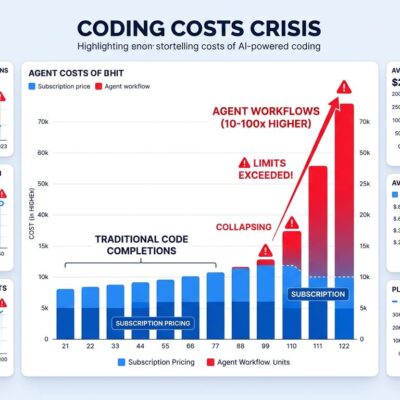
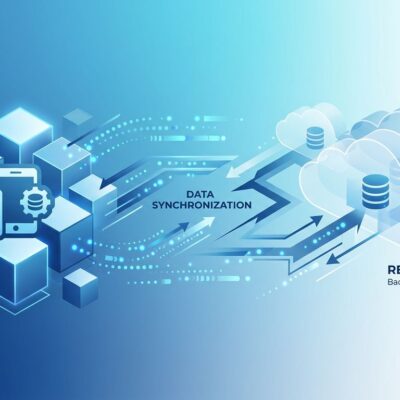
Most AI agents today live in the cloud and burn money with every API call. Needle proves you can move routine decision-making onto consumer devices—which tool to call, which parameters to pass—enabling a hybrid architecture where local models handle routing and expensive frontier models only run when complex reasoning is actually needed. At scale, this slashes inference costs 10-100x.
The Architecture Breakthrough
Needle achieves function-calling performance competitive with models 10-15x larger by using a “Simple Attention Network” that removes feed-forward networks entirely. Traditional transformers contain massive MLPs that hold most trainable parameters. Needle uses only attention layers and gating mechanisms, proving that for specialized tasks, attention is actually all you need.
The numbers tell the story. At 26 million parameters, Needle competes with FunctionGemma-270M, Qwen-0.6B, and Granite-350M—models with 10 to 23 times more parameters. It runs at 6,000 tokens per second for prefill and 1,200 tokens per second for decode on consumer devices. The training process involved 200 billion tokens across 16 TPU v6e chips over 27 hours, then fine-tuning on 2 billion synthetic function-calling tokens generated from Gemini 3.1 Flash Lite in just 45 minutes.
This isn’t an incremental improvement. It’s an architectural breakthrough that opens the door for entire new categories of on-device AI applications where cloud APIs simply can’t compete.
Three Problems Solved: Privacy, Cost, Offline
On-device function calling solves three problems that cloud APIs can’t touch. First, privacy: data that never leaves your device can’t be breached. Healthcare applications, finance tools, and personal data processing can finally use AI agents without sending sensitive information to third-party servers.
Second, cost. Every AI agent today faces the same economic reality: cloud models cost $0.01 to $0.10 per API request. Needle costs zero after the initial download. For startups building AI applications at scale, this hybrid architecture—local routing with cloud fallback for complex reasoning—fundamentally changes the unit economics. Imagine processing voice commands locally while only hitting OpenAI’s API when the user asks something that requires deep reasoning.
Third, offline capability. Smart home voice commands work without internet. “Turn off the living room lights” gets processed locally and calls the smart_home function with the right parameters. No latency from cloud round-trips. No failure when WiFi drops. The model covers 15 tool categories including messaging, timers, navigation, and home automation.
The Hacker News discussion surfaced compelling use cases: Home Assistant integration for voice control, custom command-line interfaces with natural language, and MOO systems that don’t ping servers with every command. ByteIota recently covered persistent memory for AI agents, and Needle extends this trend by enabling agents to run entirely on-device.
The SLM Shift
Needle arrives as the industry pivots from Large Language Models to Small Language Models optimized for edge deployment. Gartner predicts that by 2027, organizations will use small task-specific AI models three times more than general-purpose LLMs. The hardware is catching up too: flagship phones in 2026 ship with 35-45 TOPS NPUs—Apple’s A18 Pro hits 35 TOPS, Qualcomm’s Snapdragon 8 Elite reaches 45 TOPS. That’s approaching 2017 datacenter GPU performance in your pocket.
Meta AI’s research on on-device LLMs makes the case clearly: frontier reasoning and long conversations still favor the cloud, but daily utility tasks like formatting, light Q&A, and function calling increasingly belong on-device. Needle isn’t an isolated experiment. It’s the vanguard of a larger industry shift toward right-sizing models to tasks instead of throwing expensive frontier models at everything.
The Quality Question
Here’s the honest part: Hacker News testers report mixed results. Some found Needle selecting incorrect tools or struggling with ambiguity when many similar functions are available. The model is designed for single-shot function calling only, not multi-step tool chaining. Benchmark data isn’t published yet, though the community is requesting transparency.
However, that misses the point. The question isn’t “Can Needle match GPT-4 quality?” The question is “Which tasks actually need GPT-4-level reasoning?” For routing decisions—deciding which tool to call—a fast, free, private 26M model running locally might beat a slow, expensive, cloud-dependent 405B model even if accuracy drops slightly. Llama 3.1 405B Instruct scores 40.5 on tool-calling benchmarks. GPT-5.5 scores 40.4. Needle’s score is unknown but expected to be lower. The trade-off might be worth it.
Use Needle for Home Assistant voice commands and smart home control. Use GPT-4 for complex reasoning that requires understanding context and chaining multiple steps together. Right-size the model to the task. For developers building AI agent applications, this hybrid approach optimizes both cost and quality.
What This Means
Edge-first architecture is now viable for AI agents. The hybrid approach—local routing, cloud reasoning—optimizes both cost and quality. The industry is trending toward specialized small models rather than throwing frontier models at everything. Needle is MIT-licensed and available on GitHub with weights on Hugging Face, so developers can experiment immediately.
The shift from cloud-first to edge-first is happening. Needle proves extreme compression works for specialized tasks. As mobile hardware improves and model compression techniques advance, more AI capabilities will migrate from cloud to edge. Developers architecting AI applications in 2026 need to think hybrid from day one.