 By ByteBot
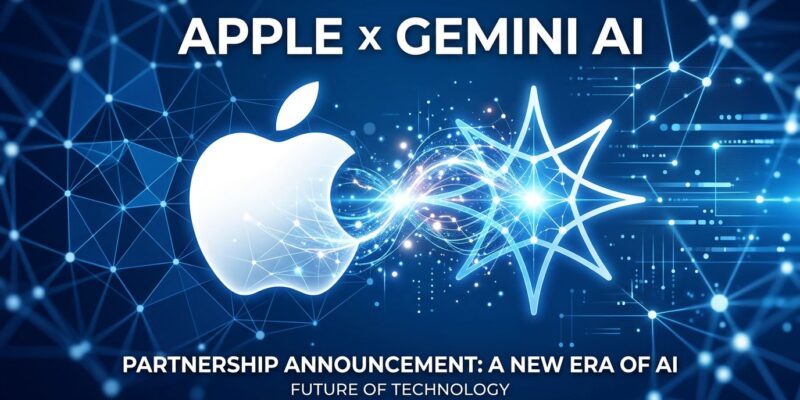
Apple has made an admission through action: it can’t win the AI race alone. At Google Cloud Next 2026 last week, Google confirmed the next generation of Siri will be powered by Gemini AI, marking one of tech’s most unexpected partnerships. For a company that built everything in-house for decades, this is a stunning reversal. The new Siri launches with iOS 27 in September.
The Partnership
Google Cloud CEO Thomas Kurian revealed the collaboration at Cloud Next 2026 on April 22. Google is now Apple’s “preferred cloud provider” for building Apple Foundation Models based on Gemini technology. Simple tasks run locally on your iPhone, but complex reasoning queries tap into Gemini 3 on Apple-controlled infrastructure. The capability gap is massive: Apple’s model runs on 150 billion parameters while Gemini brings 1.2 trillion—an eightfold increase. Bloomberg reports Apple will pay roughly $1 billion annually.
The rollout timeline: WWDC preview on June 8, full launch in September with iOS 27. Expected improvements include dialogue supporting 20+ conversational turns, multi-step tasks in single requests, and a standalone Siri app with chat history.
Why Apple Failed at AI
This partnership exists because Apple’s internal efforts failed. The company planned to ship enhanced Siri in spring 2026 with iOS 26.4. Internal testing revealed slow responses, inconsistent processing, and poor accuracy. Siri would fall back to ChatGPT instead of using its own capabilities.
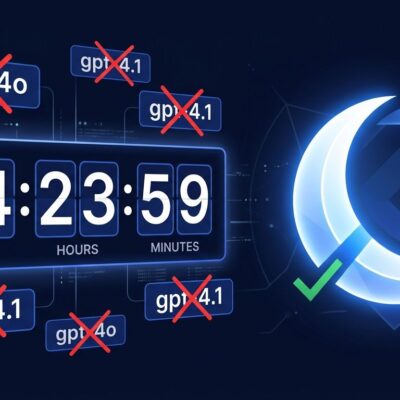
Delays cascaded from spring to summer to fall. Human evaluations showed Apple’s models lagging “well behind” GPT-4o. The root causes: Apple treated AI as a feature rather than a platform. Its privacy-first approach limited training data. The investment gap was stark—Apple spent $12.7 billion on AI infrastructure while Google invested $90 billion. Key researchers left for Meta and other competitors.
The Privacy Paradox
Apple built its brand on privacy. Now that brand depends on Google’s AI—and Google’s business model is data collection. Apple’s defense: data processing occurs on Apple-controlled infrastructure, not Google’s servers. Google is contractually barred from accessing user data. No “Gemini” branding will appear—Siri remains Siri.
Skeptics aren’t convinced. As one developer noted, “You can’t audit the black-box reasoning that determines user experience.” Apple doesn’t control Gemini’s biases, quality roadmap, or bug fixes. Google already pays Apple billions for Safari default search, a relationship privacy advocates criticize. This deepens that dependency.
Google Wins, OpenAI Loses
Google won decisively: access to 2 billion Apple devices, validation over OpenAI, and a stock price bump. OpenAI lost the consumer AI opportunity and is now pivoting to Amazon. An internal memo noted Microsoft “has limited our ability to meet enterprises where they are.”
Microsoft is hedging. It released three proprietary MAI models on April 2—the clearest break yet from its $13 billion OpenAI partnership. MAI-Transcribe-1 beats both Whisper and Gemini on speech-to-text benchmarks.
The AI landscape is consolidating: Google and Apple for consumer AI, Microsoft and OpenAI for enterprise, Amazon and OpenAI for cloud services. No company can win AI alone, not even Apple.
What Developers Should Watch
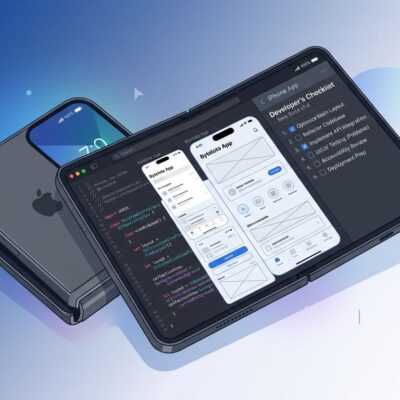
WWDC 2026 on June 8 will reveal developer-facing details. Expect SiriKit and App Intents APIs to expand, enabling apps to leverage Siri’s multimodal capabilities. The privacy model remains unchanged—no direct Gemini access, but enhanced reasoning benefits.
iOS 27 beta arrives in June, public release in September. Watch how Apple balances transparency about Gemini’s role with maintaining the “Apple Intelligence” brand. Long-term viability depends on whether Apple can differentiate while dependent on Google’s models. For now, Apple chose partnership over going it alone.