 By ByteBot
AI writes 41% of all code in 2026. Ninety-six percent of developers don’t trust it. Yet only 48% verify it before committing. That 48-point verification gap is crushing engineering teams, and SonarSource’s Agent Centric Development Cycle (AC/DC) framework, announced March 3 and now in open beta, proposes a radical fix: autonomous agents that verify code as fast as other agents generate it.
The Verification Debt Crisis
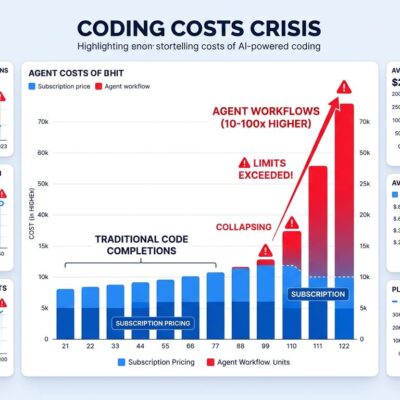
The problem isn’t that AI generates bad code. It’s that developers skip verification because it’s slow and manual while generation is fast and automated. AWS CTO Werner Vogels calls this “verification debt,” and the numbers back it up. AI-generated pull requests contain 1.7 times more issues than human-written PRs—10.83 versus 6.45 issues per request. Technical debt increased 30-41% after teams adopted AI coding tools. Thirty-eight percent of developers report that reviewing AI code takes MORE effort than reviewing code written by colleagues.
A Stanford-MIT study published in March 2026 found that 14.3% of AI-generated code snippets contain at least one security vulnerability, compared to 9.1% in human-written code. Meanwhile, 88% of developers report at least one negative impact of AI on technical debt. The toil paradox is real: time saved drafting code gets reinvested in debugging AI output. Stack Overflow data shows experienced developers seeing a 19% productivity decrease when using AI tools.
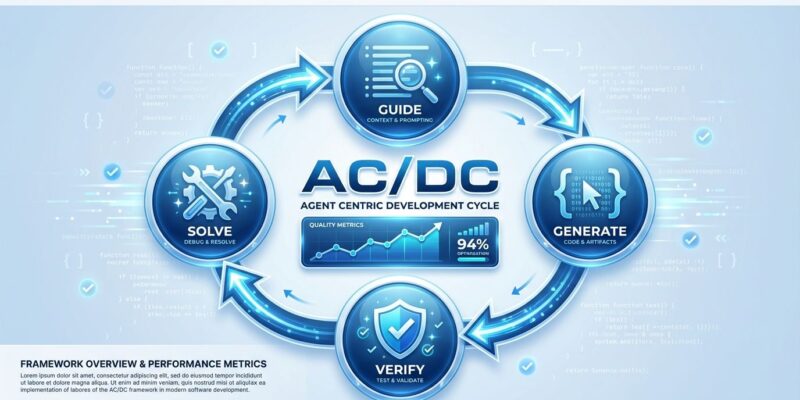
AC/DC: Guide, Generate, Verify, Solve
Sonar’s answer is a four-stage framework that replaces traditional CI/CD for AI-assisted development. The key difference: verification happens in a pre-commit sandbox environment, not a post-commit pipeline. Traditional CI validates small human commits after they’re merged. AC/DC validates large agent-generated payloads before they touch the codebase.
The four stages work as a loop. GUIDE injects repository context, coding standards, and architecture guardrails into agent prompts upfront, shaping behavior before generation starts. GENERATE uses any LLM-based tool—Cursor, GitHub Copilot, Claude Code, Devin—to create code in an isolated sandbox. VERIFY runs autonomous quality checks combining deterministic analysis from SonarQube with LLM-based code review and testing data. SOLVE deploys a remediation agent that automatically fixes quality gate blockers, tests the fixes, and feeds solutions back into the GUIDE phase for continuous improvement.
As Sonar puts it: “Production-grade validation must happen in an agentic sandbox environment, before the massive code payload is submitted.” It’s a paradigm shift from reactive quality gates to proactive autonomous verification.
Three Tools, Available Now
Sonar backed the framework with three products entering open beta this month. Sonar Context Augmentation implements the GUIDE stage by injecting real-time SonarQube knowledge into AI workflows, making agents “repo-aware” before they generate a single line. It reduces rework by aligning generated code with project standards upfront. SonarQube Agentic Analysis brings code quality checks natively into any agentic workflow via the Model Context Protocol or CLI, enabling agents to self-verify as they work. SonarQube Remediation Agent autonomously repairs quality blockers in pull requests, testing fixes in a sandbox before proposing changes.
Unlike code generation tools, these are tool-agnostic. They work with Cursor, GitHub Copilot, Claude Code, or any LLM-based generator. Sonar isn’t competing with generation—it’s selling the verification layer that sits above it.
Everyone’s Going Agentic
Sonar isn’t alone. Q1 2026 brought an explosion of agentic development tools. Cursor launched Automations on March 5, building always-on agents triggered by events like Slack messages, Linear issues, or PagerDuty incidents. Cursor runs hundreds of automations per hour. Bugbot, its code review automation, upgraded from reviewer to fixer in February—it now proposes fixes directly on PRs instead of just flagging issues. GitHub Copilot’s Agent Mode lets developers describe features in natural language and watch the AI autonomously create files, run commands, and iterate until complete.
The shift is from AI assistants that autocomplete code to autonomous agents handling full workflows. From “human writes, AI helps” to “AI generates, human governs.” As Gergely Orosz of The Pragmatic Engineer noted at Sonar Summit 2026: “Traditional workflows like the standard pull request are starting to feel unfit for the new pace of development.”
Necessary or Vendor Hype?
The problem is real. The 96%/48% verification gap isn’t manufactured—it’s backed by Sonar’s survey data, Stanford-MIT security research, and Stack Overflow productivity analysis. But is AC/DC the solution, or is Sonar creating a framework to sell verification tools?
The case for AC/DC: Manual verification is collapsing under the weight of AI-generated code volume. Autonomous generation demands autonomous verification. The data—1.7x more issues, 30-41% debt increases, 14.3% vulnerability rates—proves the crisis is here. The parallel movement from Cursor, GitHub, and other major players validates the agentic approach.
The skeptical view: Does adding more autonomous agents to verify autonomous agents reduce complexity or create new failure modes? Could better prompting and tighter integration with existing tools achieve similar results without a new framework? Financial institutions cited at Sonar Summit are already implementing deterministic analysis and quality profiles for all AI code. If enterprises are betting on this approach, there’s substance beyond vendor positioning.
Whether AC/DC becomes the standard or not, the shift to agentic verification is happening. Watch Q2 2026 for early adopter signals. The question isn’t if autonomous quality gates arrive—it’s which implementation wins.