
 By
By Your team is writing code 2x faster with AI assistants. So why are you shipping slower? The answer is the verification bottleneck, and the data is stark. The 2026 State of Code Developer Survey reveals that while 42% of code now includes AI assistance, 96% of developers don’t trust it. Teams spend 9% of their time—roughly four hours per week—just reviewing and cleaning AI output. Faster code creation led to slower deployment, a productivity paradox nobody saw coming.
On March 9, 2026, Anthropic launched Code Review for Claude Code, a multi-agent system designed to automate the very bottleneck AI coding tools created.
The Verification Bottleneck Is Real
The survey of 1,100+ developers exposes a fundamental shift in software development. Work moved from creation to validation. When asked what skills matter most in the AI era, 47% of developers answered: “reviewing and validating AI-generated code for quality and security.” That’s now the #1 developer competency, not writing code.
The numbers tell the story. Nearly all developers (95%) spend at least some effort reviewing, testing, and correcting AI output, with 59% rating that effort as “moderate to substantial.” Here’s the kicker: 38% say reviewing AI-generated code takes more effort than reviewing human code, compared to just 27% who say it takes less.
The productivity gains from AI-assisted coding evaporate during code review. Anthropic’s own data confirms this: “Code output per Anthropic engineer has grown 200% in the last year, and code review has become a bottleneck.” More code, slower reviews, longer shipping cycles. The paradox compounds itself.
How Code Review Works
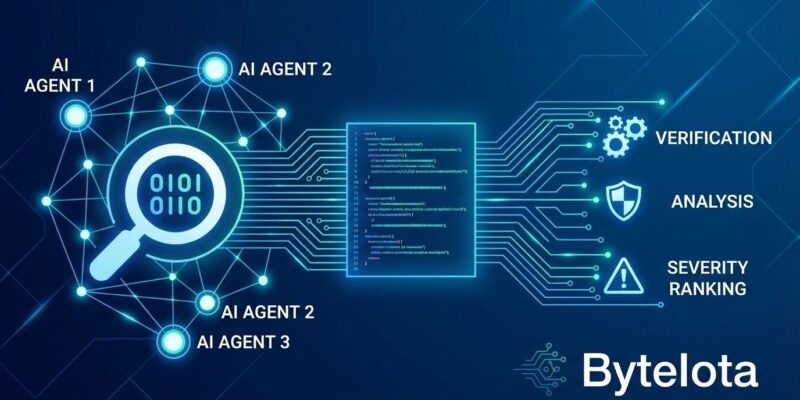
Anthropic’s solution deploys a team of specialized AI agents that work in parallel when a pull request opens. Each agent targets a different class of issue: logic errors, boundary conditions, API misuse, authentication flaws, and violations of project-specific conventions. This isn’t a single model scanning for bugs—it’s multiple agents reasoning about code simultaneously.
The system includes a deliberate verification step that attempts to disprove each finding before posting results. This false-positive filter separates Code Review from earlier automation attempts that flagged nine false alarms for every real bug. Surviving findings get deduplicated, ranked by severity, and posted as inline comments on the PR.
The severity system uses color coding. Red flags critical bugs and security flaws. Yellow marks potential problems worth human review. Purple highlights issues tied to pre-existing code or historical bugs, providing context rather than demanding immediate action.
Reviews take roughly 20 minutes and scale with PR complexity. The system doesn’t approve pull requests automatically—human judgment remains the final gate.
Real Results from Production
Anthropic runs Code Review on nearly every PR internally, and the metrics are striking. Before deploying the system, 16% of pull requests received substantive review comments. After deployment, 54% do. That’s a 3.4x increase in review coverage.
Large pull requests (1,000+ lines changed) receive the most scrutiny: 84% get findings, averaging 7.5 issues per PR. Smaller PRs under 50 lines see findings on 31% of reviews, averaging 0.5 issues. The system adjusts depth to match PR complexity.
The accuracy stands out. Engineers marked less than 1% of findings as incorrect. Industry benchmarks for automated code review tools typically show false-positive rates between 5% and 15%. Code Review’s sub-1% rate is exceptional, likely due to the multi-agent verification architecture.


