JavaScript’s Temporal API officially reached Stage 4 in the TC39 process this month, marking the end of a 9-year journey to replace the language’s fundamentally broken Date object. Expected to be formally announced at the March 2026 TC39 plenary at Google in New York, Temporal becomes part of the ECMAScript 2026 specification. Bloomberg led the effort, funding Igalia engineers as full-time champions because the Bloomberg Terminal runs JavaScript at global scale across every timezone—requiring user-configurable timezones and nanosecond precision for financial data. Browser support already shipped: Firefox 139 in May 2025, Chrome 144 and Edge 144 in January 2026, with Safari support in Technology Preview.
Thirty Years of Broken Dates
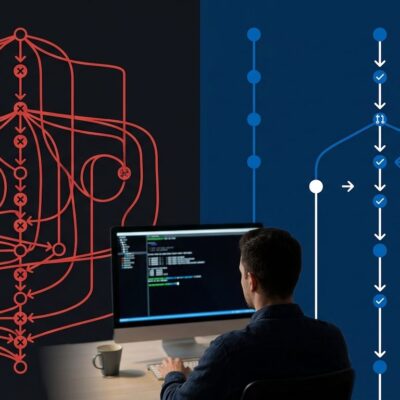
JavaScript’s Date object was directly ported from Java in 1995 during Brendan Eich’s 10-day sprint to create the language. That pragmatic shortcut created lasting problems: mutability means objects change in place, causing accidental bugs when developers intended to create new instances. Timezone handling relies exclusively on the system’s local timezone with no override. Parsing is inconsistent—non-standard date strings behave differently across browsers. Calendar support is nonexistent. The State of JS survey identified dates as the #2 developer pain point, second only to lack of static typing.
The workaround ecosystem is massive. Libraries like Moment.js (39.6 million weekly downloads), date-fns, and Luxon collectively exceed 84 million weekly downloads. Moment.js alone is 4.15 MB—developers ship entire locale and timezone databases because the language fails at the basics. Mobile users on slow connections pay the price. The bundle size economics are staggering: libraries patching language-level failures waste massive bandwidth at scale.
Bloomberg’s Nine-Year Push
The journey began in 2017 when Maggie Johnson-Pint, a Moment.js maintainer frustrated by bundle size complaints, proposed standardizing dates through TC39. Bloomberg stepped up as primary driver, partnering with Igalia and funding engineers Philipp Dunkel (spec champion), Philip Chimento, and Ujjwal Sharma as full-time champions. Bloomberg’s motivation was concrete: the Terminal runs JavaScript at global scale—Chromium, Node.js, SpiderMonkey—across every timezone on earth. Financial systems demand user-configurable timezones, nanosecond precision for trade timestamps, and correct historical timezone behavior using IANA Time Zone Database.
This wasn’t Bloomberg complaining—it was Bloomberg funding the fix. Collaboration spanned competing companies: Microsoft (Maggie Johnson-Pint, Matt Johnson-Pint, Brian Terlson), Google (Shane Carr focusing on internationalization), Mozilla (André Bargull’s early implementation), and independent developers like Justin Grant. In June 2024, Google’s Internationalization team and Boa engine created temporal_rs, a shared Rust library implementing Temporal. That unconventional move reduced engine duplication and improved consistency—new language features don’t require duplicated effort across browsers.
Related: TypeScript 6.0 RC: Temporal API and Breaking Changes
What Temporal API Fixes for JavaScript
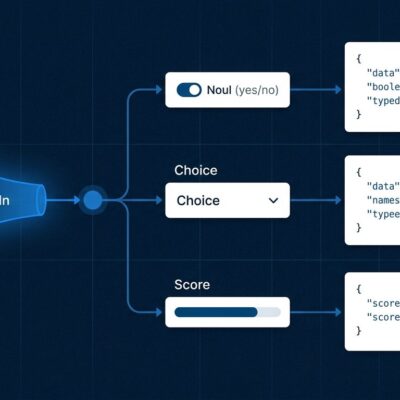
Temporal provides immutable, timezone-aware datetime objects with separate types for different use cases. Temporal.Instant represents exact moments in nanoseconds since Unix epoch—no timezone complications. Temporal.ZonedDateTime handles full replacement for Date with explicit timezone and calendar awareness. Plain types (PlainDate, PlainTime, PlainDateTime) represent “wall time” without timezone baggage—a birthday is January 15 regardless of timezone. Temporal.Duration spans time periods for arithmetic operations.
Immutability eliminates entire bug classes. Every operation returns a new instance. Month indexing is human-friendly: January is 1, not 0. DST handling is intelligent: when DST begins in London on March 29, 2026, adding one hour to 00:30 produces 02:30, not 01:30, because 01:30 doesn’t exist that day. Temporal adjusts correctly. Calendar support is first-class—Hebrew, Islamic, Japanese calendars operate under their own rules, not approximated through Gregorian arithmetic.
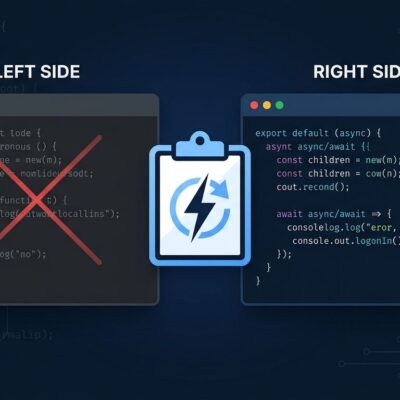
The contrast is stark:
Date (Broken):
const date1 = new Date('2026-03-15');
const date2 = date1; // Reference, not copy!
date2.setMonth(5); // Accidentally mutates date1 too!
console.log(date1); // Now June 15, not March 15 😱
Temporal (Fixed):
const date1 = Temporal.PlainDate.from('2026-03-15');
const date2 = date1.with({ month: 6 }); // Returns NEW object
console.log(date1); // Still March 15 ✓
console.log(date2); // June 15 ✓
Temporal is the largest addition to ECMAScript since ES2015. The spec contains 4,496 tests in Test262 versus Date’s 594 tests—7.5× more coverage.
Browser Support and Ecosystem Impact
Browser support is production-ready. Firefox 139 shipped in May 2025. Chrome 144 and Edge 144 followed in January 2026. Safari has partial support in Technology Preview, with full support expected late 2026. TypeScript 6.0 Beta added Temporal types in February 2026. Node.js v26 will ship Temporal soon. The polyfill exists for legacy support (~100 KB gzipped), but native support eliminates bundle bloat entirely.
Developer reaction on Hacker News (646 points, 204 comments) mixed relief with adoption anxiety. “Finally!” competes with “API is huge”—the learning curve is real. One developer noted the API takes inspiration from chrono (Rust) and Joda Time (Java), both high-quality time libraries. The complexity is necessary: separating naive time, instant, and zoned time prevents category errors. Immutability is worth the learning investment.
The ecosystem is shifting. Moment.js, already deprecated at 39.6 million weekly downloads, accelerates toward obsolescence. date-fns and Luxon may evolve into convenience wrappers around Temporal rather than patching language failures. Libraries will move up the stack—opinionated formatting, domain-specific utilities like business day calculations—while Temporal provides low-level primitives. The 84 million weekly downloads of date libraries represent bandwidth waste that Temporal’s zero-byte cost (built-in) eliminates at scale.
Key Takeaways
- Temporal reached Stage 4 in June 2024 and becomes part of ECMAScript 2026 specification, formally announced at the March 2026 TC39 plenary—ending JavaScript’s 30-year date handling problem that forced 84 million weekly downloads of workaround libraries
- Bloomberg funded the 9-year effort because the Terminal runs JavaScript globally across every timezone, requiring nanosecond precision and user-configurable timezones that Date couldn’t provide—action over complaining
- Immutability eliminates accidental mutation bugs, explicit timezone handling prevents silent conversions, nanosecond precision enables financial systems, and calendar-aware operations make international apps work correctly without Gregorian approximations
- Browser support is production-ready: Firefox 139 (May 2025), Chrome 144 (January 2026), Edge 144 (January 2026), Safari Technology Preview—native support means zero bundle cost versus Moment.js’s 4.15 MB
- The ecosystem shifts from patching language failures (Moment.js, date-fns, Luxon) to convenience layers—Temporal provides low-level primitives while libraries move up the stack to opinionated formatting and domain utilities