 By ByteBot
Windsurf’s January 2026 Bet on Agentic Coding
Windsurf added OpenAI’s GPT-5.2-Codex and Google’s Gemini 3 Flash in mid-January 2026, positioning itself as an “agentic IDE” that goes beyond autocomplete. The company claims 90% of user code is AI-generated and markets itself as “the world’s first agentic IDE.” But what does “agentic” actually mean, and do these updates deliver on promises that crash against user reports of instability?
What “Agentic” Actually Means
Traditional AI coding assistants like GitHub Copilot offer autocomplete and suggestions. Agentic IDEs claim something different: autonomous multi-file edits, terminal commands, and multi-step task execution.
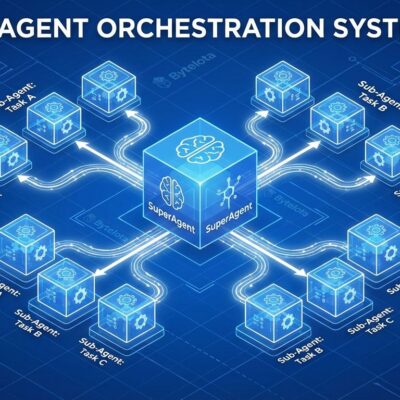
Windsurf’s Cascade delivers this through real-time action awareness—monitoring file edits, terminal commands, and clipboard activity without forcing re-explanation. Type “Continue” and Cascade picks up where it left off. The system learns your project’s tech stack across sessions through autonomous memory, while a planning agent handles long-term strategy.
Cascade reasons across entire repositories, automatically identifies relevant files, and applies coordinated edits. It auto-lints changes and fixes errors in subsequent passes. Turbo Mode executes terminal commands autonomously—though that introduces security risks on untrusted codebases.
January 2026 Updates: Two Major Models
GPT-5.2-Codex, which OpenAI calls its “most advanced agentic coding model yet,” arrived January 14. The model offers four reasoning efforts—low, medium, high, and xhigh—optimized for context compaction, large refactors, Windows environments, and cybersecurity. Cursor, Factory, and GitHub already integrated it.
Gemini 3 Flash joined the same day, bringing Pro-grade reasoning at 3x faster speeds. It scored 78% on SWE-bench Verified, outperforming some Pro-tier models. That combination makes it ideal for iterative development where near-instant feedback matters.
Both additions signal industry direction. When major tech companies bet on agentic coding models and leading IDEs race to integrate them, the trend becomes hard to ignore.
Features Versus Execution
Cascade’s feature list impresses. Multi-file reasoning works for monorepos. Web integration creates smooth browser-to-IDE context flow. One-click deployment handles packaging and hosting. The unlimited free tier undercuts Cursor’s $20/month and Copilot’s $10-20/month.
But user feedback tells a different story. Trustpilot reviews skew toward one star, citing wasted credits and unstable performance. Reddit developers report “admiring the vision but criticizing execution.” Complaints include long delays, crashes during extended sequences, shell path bugs, and AI consistency that fluctuates between releases. Lower-tier models produce verbose code. Premium models hit rate limits frequently.
There’s a learning curve. You must learn how to “talk” to Cascade effectively, and over-reliance makes it easy to miss logic errors. One reviewer noted Windsurf “falls short of maintaining developer flow states”—ironic for a product marketed around flow.
How Windsurf Compares
All three major agentic IDEs now offer full codebase context (32K-64K tokens), fast autocomplete, and multi-file reasoning. Differentiation comes down to execution and economics.
Windsurf’s unique edge is real-time action awareness—no other IDE eliminates re-prompting as effectively. Its free unlimited tier suits students and learners tolerating stability issues. Cursor offers the most advanced capabilities and consistent performance at $20/month for power users. GitHub Copilot hits the sweet spot for professional developers valuing stability at $10/month.
Practical guidance: Try Windsurf’s free tier to test its approach, but keep Cursor or Copilot as backup when stability matters.
Where AI Coding Is Going
Multiple sources tag 2026 as “the year of agentic AI.” AI now writes 30% of Microsoft’s code and over 25% of Google’s. GitHub activity jumped 23% to 43 million pull requests monthly, with commits climbing 25% to 1 billion. Meanwhile, 84% of developers use or plan to use AI solutions, with 51% relying on these tools daily.
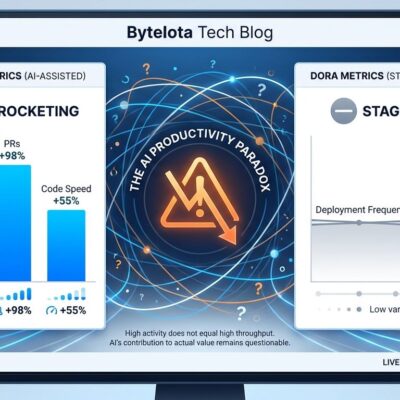
The developer role shifts from implementer to architect. Model Context Protocol becomes standard infrastructure for agent interactions. But questions emerge about whether claimed productivity gains are “illusory,” and a trust gap around AI-generated code remains unresolved.
Whether Windsurf wins this race or not, agentic IDEs are where coding is heading. These January updates show major tech companies doubling down on that bet.
Should You Try Windsurf?
The free unlimited tier makes this low-risk to test. Download it, run it on a side project, and see if the real-time awareness and autonomous capabilities match your workflow. But temper expectations. The vision is compelling—autonomous coding agents that understand your intent and execute across your entire codebase. The execution has gaps—crashes, inconsistency, and rate limits that interrupt flow.
Windsurf is betting early on an agentic future that’s arriving whether we’re ready or not. Just don’t bet your production codebase on it yet.