
 By
By The vibe coding party is over, and the hangover is brutal. Fast Company reported in September 2025 that senior software engineers are calling AI-generated code “development hell,” with analysts predicting $1.5 trillion in technical debt by 2027. What started as the hottest trend in software development—with 25% of Y Combinator’s Winter 2025 startups running on 95% AI-generated codebases—has crashed into a complexity ceiling that’s turning early wins into expensive rebuilds.
The Vibe Coding Explosion
For the uninitiated: AI researcher Andrej Karpathy coined “vibe coding” in early 2025. The concept? Tell an AI what you want, fully trust it to write the code, don’t even read what it generates—just “follow the vibes.” The approach exploded. Y Combinator’s Winter 2025 batch saw 25% of startups building on 95% AI-generated codebases. Replit hit 40 million users. Vercel and Netlify reported massive user base surges. Tools like Cursor, GitHub Copilot, and Replit Agent became essential startup infrastructure.
YC CEO Garry Tan declared in March: “This isn’t a fad. This is the dominant way to code.” That confidence aged poorly.
Development Hell at Scale
Enter Jack Zante Hays, a senior software engineer at PayPal who works on AI development tools. His assessment cuts through the hype: “Code created by AI coding agents can become development hell.” The problem isn’t the tools themselves—it’s what happens when you scale. “Small code bases might be fine up until they get to a certain size, and that’s typically when AI tools start to break more than they solve.”
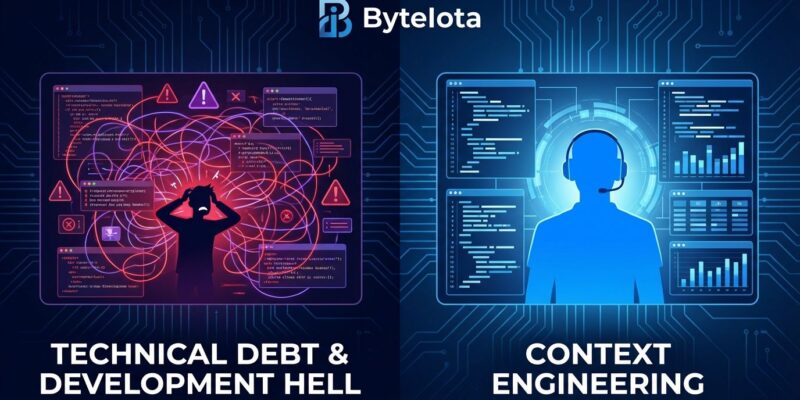
He’s describing what researchers call the complexity ceiling. AI tools spin up features fast, generating impressive demos. But they accumulate technical debt: architectural inconsistencies, buried security vulnerabilities, maintenance burdens that compound over time. When the codebase grows past a certain threshold, adding new features risks breaking existing ones. The demo ends, and real engineering begins.
The data backs him up. Stack Overflow’s 2025 Developer Survey found that while over half of professional developers now use AI coding tools daily, 46% distrust their accuracy compared to just 33% who trust them. Positive sentiment dropped from 70% in 2024 to 60% in 2025. Only 30% of developers said the tools handle complex coding tasks well.
Even more revealing: a rigorous METR study published in July 2025 found that experienced developers using tools like Cursor and Claude actually took 19% longer to complete tasks, despite believing they were 20% faster. Vibe coding creates an illusion of productivity—a 39 percentage point gap between perception and reality.
The $1.5 Trillion Problem
The financial implications are staggering. Analysts predict $1.5 trillion in technical debt by 2027, driven by what one report called the “code first, understand later” approach championed by vibe coding advocates. Forrester warns that 75% of technology decision-makers will face moderate to severe technical debt by 2026.
It’s already happening. More than 8,000 startups now need rebuilds or rescue engineering, with total cleanup costs estimated between $400 million and $4 billion. The AI-generated code that enabled rapid launches is now a “digital time bomb” beneath their success stories. The short-term savings from faster development and smaller teams are being erased by long-term maintenance costs, bug fixes, and security patches.
This is the vibe coding trade-off made visible: speed now, expense later.
From Vibes to Context Engineering
The industry is responding. MIT Technology Review documented the shift in November 2025: “2025 has seen a significant shift in the use of AI in software engineering—a loose, vibes-based approach has given way to a systematic approach to managing how AI systems process context.”
This evolution—from vibe coding to “context engineering”—isn’t about abandoning AI tools. It’s about using them intelligently. Context engineering emphasizes systematic context management over blind trust, with research suggesting AI is more effective when properly abstracted from underlying systems. Critically, human developers remain “absolutely critical” to the process.
Even Garry Tan has moderated his stance, now warning that AI-generated code may face challenges at scale and that developers need classical coding skills to sustain products. The narrative is shifting from AI as replacement to AI as assistant.
The Sobering Reality
Vibe coding isn’t going away. The tools are too powerful, the productivity gains (when used correctly) too significant. But the honeymoon is definitively over. The developers who will thrive in 2026 and beyond aren’t the ones blindly trusting AI to handle everything—they’re the ones who combine AI speed with human judgment, who understand that architectural decisions still matter, who can read and critique the code their tools generate.
The senior engineers were right to sound the alarm. Development hell is real, the complexity ceiling exists, and $1.5 trillion in technical debt is more than a prediction—it’s a warning. The future belongs to context engineering, not vibe coding. Classical fundamentals aren’t obsolete. They’re more essential than ever.


