 By ByteBot
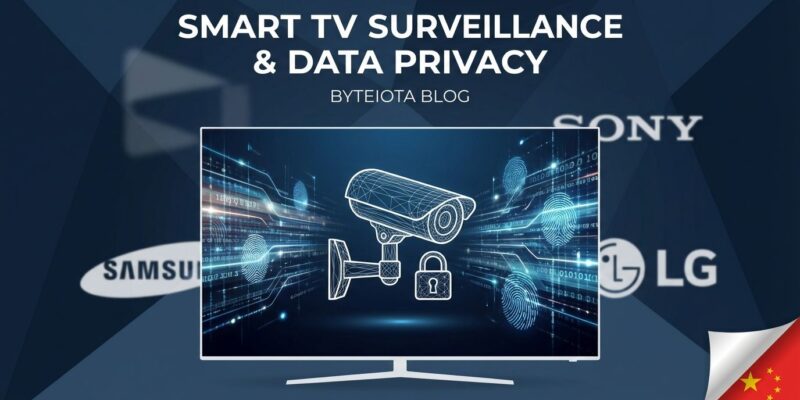
On December 16-17, 2025, Texas Attorney General Ken Paxton filed lawsuits against five major television manufacturers—Sony, Samsung, LG, Hisense, and TCL—alleging they violated the Texas Deceptive Trade Practices Act through Automated Content Recognition (ACR) technology that captures screenshots of viewing activity every 500 milliseconds without proper consent. The lawsuits describe smart TVs as “a mass surveillance system sitting in millions of American living rooms.”
This affects millions of smart TV owners who unknowingly invited surveillance devices into their homes. Moreover, ACR doesn’t just track streaming apps—it monitors everything connected to the TV, including game consoles, cable boxes, and Blu-ray players via HDMI. For Chinese-owned Hisense and TCL, there’s an additional national security dimension: China’s National Security Law could allow the CCP to access American viewing data.
ACR: The Invisible Surveillance Tech in Your Living Room
Automated Content Recognition technology, built into smart TVs at the chipset level, samples video and audio every 500 milliseconds—twice per second. It creates fingerprints from these samples, matches them against reference databases, and transmits viewing data to manufacturers on a second-by-second basis. According to the Texas AG lawsuit filing, ACR operates as “an uninvited, invisible digital invader.”
Here’s what most consumers don’t know: ACR tracks ALL inputs to your TV, not just smart TV apps. Furthermore, your Xbox, PlayStation, cable box, Blu-ray player—everything connected via HDMI is being monitored. Manufacturers then combine this viewing data with purchased demographic information (age, income, education level, household value) and sell it to advertisers for cross-device targeting.
Samsung and LG have deployed ACR since 2014, with the feature turned ON by default during setup. According to the lawsuits, companies designed opt-in systems to favor maximum data extraction while making opt-out difficult. Consequently, you paid $1,000 for a TV that spies on you every half-second and sells your data.
Hisense and TCL’s CCP Problem
Hisense and TCL aren’t just Chinese companies—they’re state-owned enterprises controlled by the Qingdao and Guangdong governments, respectively. This matters because China’s National Security Law allows the CCP to compel Chinese companies to provide data, install backdoors, and grant logical access to their systems.
The Texas lawsuits claim the CCP could exploit ACR data “to influence or compromise public figures in Texas, including judges, elected officials, and law enforcement, and for corporate espionage by surveilling those employed in critical infrastructure.” In 2020, Acting DHS Secretary Chad Wolf stated in a data security advisory that TCL “incorporated backdoors into all of its TV sets exposing users to cyber breaches and data exfiltration.”
Despite these national security warnings, the Army and Air Force Exchange Service and Navy Exchange Service Command currently sell TCL and Hisense smart TVs on U.S. military installations. In fact, American military families are watching TV on devices that could funnel viewing data to Beijing.
Related: iRobot Bankruptcy: EU Blocked Amazon, Delivered iRobot to China
Texas’s $2.75B Privacy War
This lawsuit isn’t an isolated case—it’s part of AG Paxton’s broader data privacy enforcement campaign. In 2024, he secured a record $1.375 billion settlement from Google and a $1.4 billion settlement from Meta (the largest ever obtained by a single state). Moreover, on June 4, 2024, Paxton created a specialized data privacy enforcement team positioned to become “among the largest in the country.”
The Texas Deceptive Trade Practices Act (DTPA), a “mini-FTC act” from the 1970s, gives Paxton broad enforcement authority and significant penalty powers. The lawsuits seek civil penalties, injunctive relief, and potential amendments to include Texas privacy law violations if companies don’t cure violations within 30 days. As a result, Texas has emerged as a national leader in data privacy enforcement, and these TV manufacturer lawsuits signal Paxton’s enforcement isn’t limited to software companies—hardware manufacturers are now in the crosshairs.
The Vizio Precedent Nobody Followed
The FTC settled with Vizio in 2017 for $2.2 million over identical ACR violations. The settlement established that TV viewing data is “sensitive personal information” requiring opt-in consent (not just opt-out). Vizio tracked 11+ million TVs since 2014, sold viewing data combined with demographic information to advertisers, and was required to destroy collected data and maintain 20-year third-party monitoring.
The FTC added TV viewing history to its sensitive information list alongside health data, financial data, Social Security numbers, geolocation data, and children’s data. However, despite this 2017 precedent requiring prominent disclosure and express consent, the practice continued industry-wide. Eight years later, manufacturers are still deploying default-enabled surveillance. Therefore, the Texas lawsuits suggest state enforcement is stepping in where federal action stalled.
Related: Meta $3B Scam Ad Revenue: Platform Economics Beat Safety
Disabling ACR on Samsung, LG, and Sony TVs
ACR can be disabled in TV settings, though the process varies by manufacturer and firmware updates may reset privacy preferences. For Samsung: Settings > Terms & Privacy > Privacy Choices > Turn off “Viewing Information Services.” For LG: Settings > All Settings > General > About This TV > User Agreements > Turn off “Viewing Information.” For Sony: Settings > Device Preferences > Turn off “Samba Interactive TV.”
Consumer Reports and security researchers note that Samsung captures screen data every 500ms even from external HDMI devices, but opting out of ACR completely stops this network traffic. For maximum privacy, disconnect TVs from Wi-Fi when smart features aren’t needed or use network-level blocking tools like Pi-hole.
Developers and tech professionals should regularly check privacy settings after firmware updates. Indeed, manufacturers have been known to reset preferences or add new tracking features without user consent—LG recently added Microsoft Copilot to smart TVs via firmware update, sparking community backlash over forced software installations.
Key Takeaways
- Texas sued five TV makers (Sony, Samsung, LG, Hisense, TCL) on December 16-17, 2025 for hidden ACR surveillance violating the Texas Deceptive Trade Practices Act
- ACR captures screenshots every 500 milliseconds of ALL content, including HDMI-connected devices like game consoles and cable boxes, not just smart TV apps
- Chinese manufacturers Hisense and TCL pose national security risks—China’s National Security Law could allow CCP access to American viewing data for espionage or influence operations
- AG Paxton extracted $2.75 billion from Google and Meta in 2024 settlements—these TV lawsuits continue his aggressive data privacy enforcement campaign
- Disable ACR immediately in TV settings (paths vary by manufacturer) and check privacy settings after firmware updates, as manufacturers often reset preferences
The Vizio FTC settlement in 2017 established clear legal precedent for opt-in consent, yet manufacturers ignored it for eight years. Nevertheless, Texas is forcing the issue with civil penalties and injunctive relief. If you own a smart TV, assume it’s watching you—and take action.