
 By
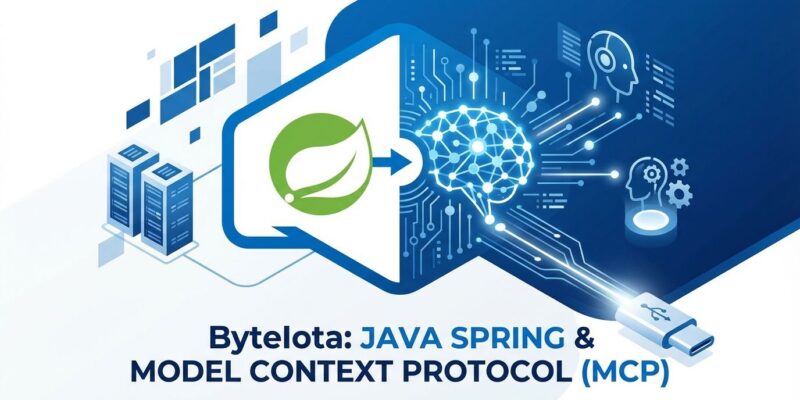
By Spring AI has been elevated to lead developer of the official Model Context Protocol (MCP) Java SDK. Announced in Spring’s December 30 year-end update, this caps a rapid journey from experimental project in November 2024 to official SDK maintainer alongside Python and TypeScript. With MCP reaching 10,000+ servers and 28% Fortune 500 adoption, Java developers finally have enterprise-grade AI tooling.
From Experiment to Industry Standard in 12 Months
What started as an experimental collaboration between Spring and Anthropic in late 2024 evolved into official SDK leadership. Spring donated its work to the Model Context Protocol project, becoming lead maintainer for Java alongside Python and TypeScript SDKs at modelcontextprotocol.io.
The timing aligns with MCP’s mainstream adoption. On December 9, the protocol joined the Agentic AI Foundation under the Linux Foundation, backed by AWS, Google, Microsoft, OpenAI, and Anthropic. When a protocol attracts that industry support, accessible SDKs matter.
Production-Ready Features Java Developers Actually Want
Spring AI 1.1 GA ships with developer experience Java programmers expect. Annotations like @McpTool, @McpResource, and @McpPrompt automatically generate JSON schemas and expose functionality to AI agents—no manual callback registration required.
Spring Boot starters handle auto-configuration. The spring-ai-starter-mcp-client and spring-ai-starter-mcp-server-webmvc dependencies let developers configure connections via application.yml like any Spring Boot service, supporting STDIO, HTTP SSE, and Streamable HTTP transports.
This integration separates the Java SDK from Python and TypeScript counterparts. Spring’s dependency injection, configuration management, and AOT compilation for GraalVM native images come standard. One Fortune 100 manufacturing company already runs Spring AI in production with 500+ developers building AI applications.
MCP’s Enterprise Traction Makes This Matter
Model Context Protocol is the universal standard for connecting AI models to tools and data—USB-C for AI. Developers write one MCP server that works with Claude, ChatGPT, Cursor, and other AI coding tools.
Enterprise adoption accelerated in its first year. Q1 2025 saw 28% Fortune 500 adoption, up from 12% in 2024. Fintech leads at 45%, followed by healthcare (32%) and e-commerce (27%). Over 10,000 published servers now handle use cases from developer tools to enterprise data integration.
OpenAI’s official MCP integration in ChatGPT desktop (March 2025) validated the protocol. When major platforms converge on a standard, fragmented alternatives fade.
Java Closes the AI Tooling Gap
TypeScript overtook Python on GitHub in August 2025, while Python dominates AI repositories with 582,000 projects. Java added 100,000+ contributors but trailed in AI tooling despite its enterprise presence.
MCP SDK leadership closes that gap. Combined with Spring Framework 7’s virtual threads, Java now delivers Go-like scalability for I/O-heavy AI workloads—300 requests per second versus 200 with platform threads. Azul Systems’ 2025 survey found 50% of AI developers already use Java. They finally have first-class tools.
Enterprise developers building AI applications no longer need to switch to Python for agent integration. Spring Boot patterns that run microservices now orchestrate AI workflows. For organizations with Java investments, that consistency beats experimentation frameworks.
What This Unlocks
Java developers can build MCP servers and clients with familiar Spring conventions and production-grade features. Boot starters eliminate configuration friction, annotations eliminate boilerplate, virtual threads eliminate scaling bottlenecks, and MCP standardization eliminates vendor lock-in.
The Spring AI MCP documentation covers implementation details. The strategic unlock: Java’s enterprise credibility now includes first-class AI integration. Five hundred developers at a Fortune 100 manufacturer are already proving this in production.


