 By ByteBot
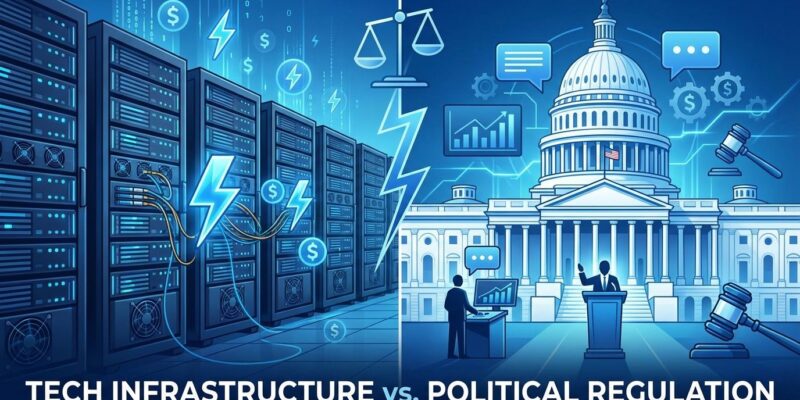
Bernie Sanders and Alexandria Ocasio-Cortez just proposed banning all new AI data center construction until Congress passes comprehensive AI regulation. The AI Data Center Moratorium Act, announced March 25, would freeze projects from Amazon, Microsoft, Google, and Meta—$50 billion in planned investments.
This isn’t theoretical. Household electricity bills in the PJM region are already up $18 per month because of data centers. Virginia’s data centers consume 40% of the state’s electricity. By 2028, households could pay $70 more monthly.
Democratic Senator John Fetterman called it “waving a surrender flag to China.” The bill won’t pass, but the fight reveals the collision between AI ambitions and infrastructure costs.
The Energy Crisis Is Real
Data centers are measurably driving up electricity bills now. Virginia households face an additional $11.24 monthly in 2026 through Dominion Energy rate increases. PJM region households in Maryland pay $18 more monthly, Ohio households $16 more. PJM auction prices increased 833% driven by AI data center demand.
By 2028, regional households are projected to pay $70 more monthly. U.S. data center energy demand is projected to nearly double from 80 GW in 2025 to 150 GW by 2028.
This affects every developer using AWS, Azure, or GCP. Cloud costs will rise as providers pass through energy expenses. It’s not environmentalism—it’s money.
What Sanders and AOC Proposed
The moratorium isn’t permanent—it’s a pause until three safeguards exist: safety assurance preventing harmful AI products, economic equity ensuring workers benefit, and environmental protection limiting electricity price increases. Additional provisions ban AI infrastructure exports to countries without safeguards and require union workers for data center construction.
Sanders: “We cannot sit back and allow a handful of billionaire Big Tech oligarchs to make decisions that will reshape our economy.” Ocasio-Cortez: “Congress has a moral obligation to stand with the American people and stop the expansion of these data centers.”
The political reality: this won’t pass the House or Senate. Bipartisan opposition is strong. But it signals growing pressure on AI infrastructure costs.
The Opposition Is Bipartisan
Democrats are split. Senator Fetterman, a Pennsylvania Democrat, agreed with Trump’s Interior Secretary Doug Burgum that the moratorium amounts to waving a “surrender flag” to China. Fetterman posted: “I refuse to help hand the lead in AI to China.”
Amazon, Microsoft, Google, and Meta committed to Trump’s pledge to protect ratepayers by building their own power generation and covering infrastructure upgrades. The Data Center Coalition warned the moratorium would “eliminate hundreds of thousands of high-wage jobs, drain billions in local tax revenue.”
The China framing is politically effective. Moderate Democrats broke with progressives over this. Tech companies learned to offer solutions instead of just opposing regulation.
Virginia’s Pragmatic Alternative
Virginia is trying a different approach: shift costs to data centers instead of banning them. Senate Bill 253 shifts grid upgrade costs from residential ratepayers to data centers, cutting average household bills by $5.52 monthly while raising data center rates by 15.8%.
In 2026, lawmakers in 30+ states introduced over 300 bills on data center issues. States aren’t waiting for federal action. The Virginia approach addresses costs without killing infrastructure—a pragmatic middle ground.
Who Pays for AI Infrastructure?
The Sanders-AOC bill won’t pass, but they’re asking the right question: Who pays for AI infrastructure?
Three solutions exist. The moratorium approach pauses until safeguards exist—protects consumers but risks competitive disadvantage. Rate restructuring makes data centers pay infrastructure costs—pragmatic but limited scope. Industry self-regulation through building own power generation is market-driven but unproven.
Sanders and AOC are right about the problem. Virginia’s approach makes more sense: shift infrastructure costs to data centers, require them to build their own power generation, but don’t kill the industry. The moratorium is political theater. Cost shifting is policy.
For developers, the implications are clear. Cloud costs will rise regardless of which solution wins. Energy efficiency becomes more important for AI workloads. Regional data center availability may shift based on state policies.
The fight over data centers isn’t about technology—it’s about who bears the cost of progress. Right now, households are paying through electricity bills. That’s not sustainable politically. Something will change: federal legislation, state-level regulation, or industry commitments. The only question is which approach wins.