 By ByteBot
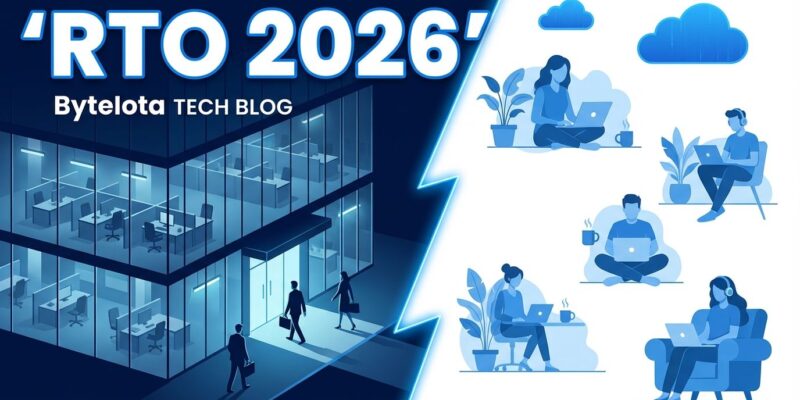
The remote work revolution lasted exactly four years. Now it’s over.
Instagram is forcing 20,000 employees back five days a week starting February 2. Microsoft is mandating three-plus days, rolling out in February. Ontario and Alberta governments are requiring tens of thousands back full-time. The Trump administration directed federal agencies to “terminate remote work.”
Nearly 30% of U.S. companies plan to fully eliminate remote work by 2026. Fortune 100 companies requiring five-day attendance jumped from 5% in 2021 to 55% today. Remote work is dying fast.
The Productivity Lie
Companies claim productivity and culture. Instagram CEO Adam Mosseri says employees are “more creative and collaborative” in person. Ontario Premier Doug Ford believes they’re “more productive” in the office.
Research says otherwise. Stanford studied 1,600+ hybrid employees and found them just as productive as office workers, with the same promotions and 33% fewer resignations. Great Place To Work’s study of 800,000 employees found stable or improved productivity after going remote. The Bureau of Labor Statistics identified “slight increases in output per worker.”
Companies had four years to prove remote doesn’t work. They couldn’t. So if this isn’t about productivity, what is it about?
The Real Reasons
A quarter of C-suite executives admitted they hoped for voluntary turnover from RTO policies. One in five HR professionals said their mandate was meant to make staff quit. Nearly 40% of managers reported doing layoffs because not enough workers quit from RTO.
This isn’t collaboration. It’s layoffs without severance.
When Elon Musk proposed cutting federal costs, he explicitly suggested RTO would help through attrition. Workplace experts told CNBC that “companies are daring employees to quit.”
The timing reveals the calculation. Companies mandate RTO when the job market is weak and workers have few options. Remote jobs dropped from 21% to 7% of positions. Employers have leverage and they’re using it.
There’s also office real estate. Companies stuck with expensive leases need to justify empty buildings. Forcing employees back provides that justification.
The Cost: Brain Drain
Here’s what companies miscalculate: who leaves and who stays.
Baylor University found RTO mandates “lead to the departure of employees who are hardest to replace.” Female employees are three times more likely to leave. Mid- and top-level managers show greater attrition. High-skilled employees are more likely to leave.
Companies get adverse selection. The best employees – those with options – leave. Those who stay have no alternatives.
99% of companies saw satisfaction drop after RTO mandates. At Amazon, 91% reported dissatisfaction and 73% are considering leaving. Stanford professor Nick Bloom predicted “a jump in quit rates.”
Why This Will Backfire
Employers push unpopular policies during downturns, then reverse when talent becomes scarce. We’ve seen this before. The difference: companies just proved remote work succeeds.
When the job market recovers, the exodus begins. The best employees remember being forced back to justify office leases. They remember productivity claims contradicted by evidence.
Experts predict reversal. Inc. magazine: “Return-to-Office Mandates Are About to Backfire.” Career advisors warn companies “may be writing future resignation letters for their best employees.”
When tech companies compete for talent again, executives who mandated RTO will suddenly discover “flexibility” is a core value. The mandates will quietly disappear.
What Developers Should Do
Document productivity metrics now. Build relationships with remote-first companies. Network aggressively. When companies announce RTO, they’re showing what they value – and it’s not your output.
Consider switching before the mandate hits. Remote-first companies still hire talent that larger companies push away.
Remote work isn’t dead, just wounded. The pendulum swung toward employees during COVID, now back toward employers. But pendulums swing. When the market turns, it’ll swing again.
Companies forcing RTO today will beg for remote talent tomorrow. Don’t forget who trusted you and who didn’t.