 By ByteBot
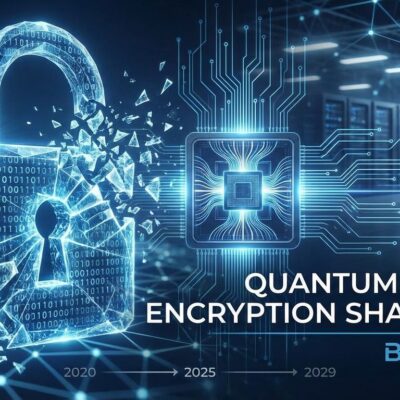
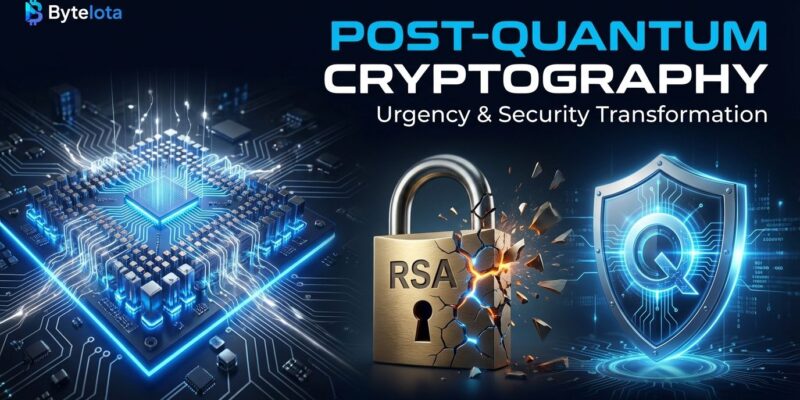
“Q-Day” isn’t a future threat waiting for quantum computers to mature—it’s happening right now, in server logs and database exports you’ll never see. On January 12, 2026, federal agencies declared this the “Year of Quantum Security” at a Washington D.C. convening, signaling a shift from awareness to active preparation. The “harvest now, decrypt later” attacks have flipped the entire threat model: attackers don’t need working quantum computers today—they just need patience and storage.
Federal Agencies Draw the Line
The January 12, 2026 convening in Washington wasn’t a theoretical discussion—it was a mandate. Senior officials from the FBI, NIST, and CISA outlined phased, mandatory approaches to cryptographic migration, citing “harvest now, decrypt later” as the primary risk driver. The message was clear: quantum security is now an active infrastructure challenge, not a distant technical risk.
The timeline is compressing fast. The NSA requires federal agencies to support and prefer CNSA 2.0 by 2026 and exclusive use by 2030. NIST will deprecate vulnerable systems after 2030 and prohibit them after 2035. The European Commission wants national transition roadmaps completed by December 31, 2026. Canada requires federal departments to develop PQC migration plans by April 2026. This isn’t a slow-moving bureaucratic initiative—it’s regulatory pressure building across jurisdictions.
The “Harvest Now, Decrypt Later” Threat
Here’s how it works: adversaries steal your encrypted data today, store it on cheap drives, and wait. When quantum computers mature in the 2030s, they decrypt everything. Your TLS-protected API traffic from 2026? Readable in 2032. That encrypted database backup? Plaintext by 2034. The threat model has inverted—defense must come before the attack capability exists.
Any data encrypted with RSA, elliptic curve cryptography, or Diffie-Hellman is exposed. The Federal Reserve published research showing a concrete scenario: data harvested in 2025, systems migrate to post-quantum cryptography in 2027, Q-Day happens in 2030, and the adversary decrypts in 2030. For blockchain and distributed ledger systems, the problem is worse—you can’t retroactively re-encrypt immutable transaction history.
Quantum computing progress is accelerating. In May 2025, Google Quantum AI showed that RSA-2048 could be broken in under a week using fewer than one million noisy qubits—a 95% reduction from Google’s 2019 estimate of 20 million qubits. Credible estimates place cryptographically relevant quantum computers arriving by the mid-2030s, with some predictions as early as 2028. From a risk perspective, Q-Day is already here.
91.4% of the Web Is Unprepared
Meanwhile, adoption of post-quantum cryptography is devastatingly low. As of 2026, 91.4% of the top one million websites don’t support PQC. The critical sectors aren’t much better: banking sits at 2.9% adoption, healthcare at 8.5%, and government at 7.1%. These are the sectors handling the most sensitive, long-lived data—medical records, financial transactions, state secrets—and they’re almost entirely unprotected against quantum threats.
NIST published the first three finalized post-quantum cryptography standards in August 2024—FIPS 203, 204, and 205. The standards have been available for over a year. The gap between urgency and action is massive, and organizations treating this as a future problem are fundamentally misunderstanding the threat.
What Developers Need to Do Now
Migration to post-quantum cryptography isn’t a quick fix. Realistic timelines run 5-7 years for small enterprises, 8-12 years for medium enterprises, and 12-15+ years for large enterprises. That means organizations need to start now. Here’s the action plan:
First, inventory your cryptographic dependencies. Map every system using public-key cryptography across your stack—TLS connections, SSH authentication, database encryption, API authentication, code signing. You can’t migrate what you haven’t identified.
Second, assess vulnerability. Identify systems using RSA, ECC, or Diffie-Hellman. Evaluate the sensitivity and lifetime of the data they protect. Prioritize long-lived sensitive data—anything that could cause harm if decrypted in 2035.
Third, develop a migration plan. Set realistic timelines aligned with your organization’s size and risk tolerance. Plan for hybrid approaches that combine classical and post-quantum algorithms—pure quantum-resistant deployments remain rare in 2026. Use the “3Ps” strategy: be proactive, preventive, and practical.
Fourth, test the NIST standards. Implement FIPS 203 (ML-KEM for key encapsulation), FIPS 204 (ML-DSA for digital signatures), and FIPS 205 (SLH-DSA as an alternative signature scheme) in development and staging environments. Measure performance impact—post-quantum algorithms carry computational overhead that affects network performance and latency-sensitive applications.
Fifth, stay informed. Monitor NIST guidance updates, track regulatory requirements in your jurisdictions, and follow quantum computing progress. The timeline is compressing, and migration strategies will evolve.
The Window Is Now
From a risk perspective, Q-Day is already here. Organizations waiting for quantum computers to mature before migrating to post-quantum cryptography are fundamentally misunderstanding the threat model. The encrypted data being stolen today will be vulnerable tomorrow. The window to act is narrowing, the regulatory pressure is building, and the migration timelines are long. The federal agencies said it clearly in January 2026: this is the year quantum security becomes mandatory. Start your inventory today.