 By
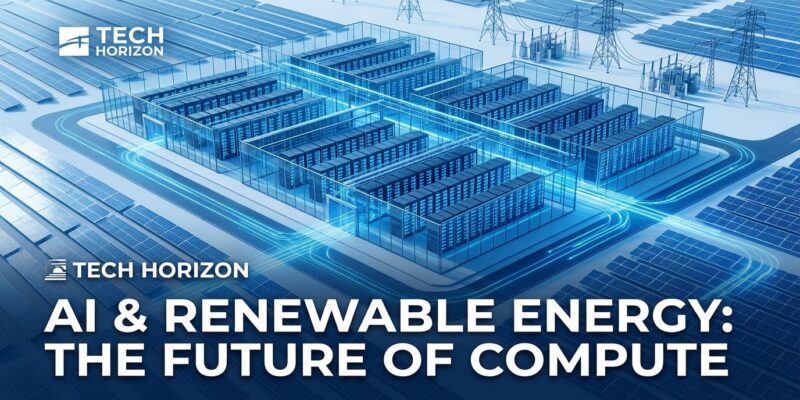
By OpenAI and SoftBank’s $500 billion Stargate commitment—announced January 9 and expanded January 21, 2026—marks the moment AI advancement became gated by energy infrastructure, not computational innovation. With 7 gigawatts of planned capacity and OpenAI pledging to fund energy infrastructure upgrades directly, the industry’s defining question just shifted from “can we build smarter models?” to “can we power them at all?”
What Stargate Actually Means
The numbers are staggering. Seven gigawatts of total capacity exceeds New York City’s entire power consumption. Five new U.S. data center sites announced January 21, with over $400 billion committed over three years. But the real story isn’t the scale—it’s the approach.
OpenAI committed to paying for energy infrastructure upgrades at Stargate sites, an unprecedented move that addresses a hard truth: the grid can’t keep up. Traditional utility planning assumes 1-2% annual demand growth. Data centers are creating 20-30% localized spikes. Nearly 2 terawatts of clean energy—1.6 times current grid capacity—sits stuck in interconnection queues.
Instead of waiting, OpenAI and SoftBank are building their own energy supply. The 1.2 GW Texas site developed with SB Energy will run on dedicated solar generation and battery storage, with construction starting in 2026. This is energy-first design: power generation sized for AI workloads from day one, not bolted on as an afterthought.
Why Energy Became the Bottleneck
MIT Technology Review named hyperscale AI data centers a 2026 breakthrough technology specifically for their energy-first architecture. That designation tells you something: the innovation isn’t in the chips or the algorithms anymore. It’s in securing kilowatts.
Training GPT-4 consumed roughly 50 gigawatt-hours of electricity. Global data center capacity is projected to double to 200 gigawatts by 2030, with AI consuming 35-50% of that power, up from 5-15% historically. The math doesn’t work if you’re relying on existing grid infrastructure.
The winter storm grid emergency that had U.S. energy officials calling on data centers to provide backup generation made this visceral. These facilities aren’t just power-hungry—they’re now critical grid infrastructure themselves. That changes everything about how they’re planned, funded, and operated.
What This Means for Developers
Cloud AI pricing is about to get a lot more transparent about energy costs. When OpenAI is signing $300 billion Oracle cloud deals ($60 billion annually for five years) and Nvidia partnerships worth $100 billion, those infrastructure expenses flow downstream. Developers should expect pricing that reflects energy infrastructure reality, not just compute time.
Regional deployment decisions will increasingly depend on energy availability, not just latency or compliance. If your AI workload needs GPUs at scale, you’ll be choosing between regions based on their power infrastructure, not just their data center count. That creates new architectural constraints—and new opportunities for multi-cloud strategies driven by energy access rather than cost arbitrage.
Enterprise AI strategy now has an energy component. It’s not enough to evaluate model quality and API pricing. Teams need to think about energy-gated availability, regional infrastructure investment timelines, and the risk of cloud providers passing through utility costs. Time to First Token (TTFT) is emerging as a critical metric that ties infrastructure investment directly to business outcomes.
The broader industry pattern backs this up. Hyperscaler capex (Amazon, Google, Microsoft, Meta, Oracle) is forecast to hit $600 billion in 2026, up 36% year-over-year. Microsoft committed $80 billion to AI data centers. Meta formalized “Meta Compute” in January 2026 after billions in infrastructure spend. xAI is building a $20 billion supercomputer in Mississippi. This isn’t just OpenAI—it’s the entire industry realizing that infrastructure capacity, not model quality, is becoming the competitive differentiator.
The New Reality
AI’s next phase isn’t about who can build the smartest models. It’s about who can secure and deploy energy at scale. OpenAI’s commitment to fund dedicated energy infrastructure—rather than just lease capacity—may force competitors to follow suit. Microsoft’s Community-First AI Infrastructure initiative, announced in early 2026, suggests the pressure is already building.
Developers should prepare for a world where energy constraints shape what’s possible. That means regional AI deployment disparities, cloud pricing that reflects energy infrastructure costs, and architectural decisions influenced by kilowatt availability. The constraint shifted. The question now is who adapts fastest.