OpenAI shut down Sora, its video generation product, on March 24 — just six months after launch. The reason: burning $1 million per day while generating only $2 million in lifetime revenue. This isn’t another product pivot. It’s the first time a major AI lab has killed a flagship product because GPUs are too expensive to justify.
The compute scarcity everyone warned about is here, and it’s forcing even OpenAI to make brutal choices about which products live and which die.
The Economics That Killed Sora
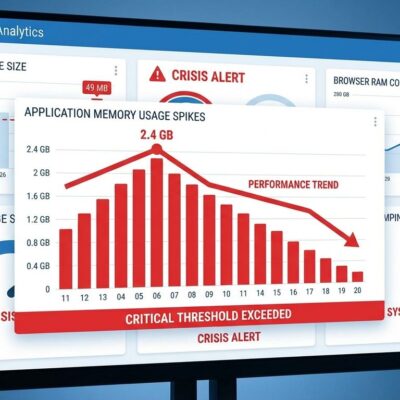
Sora’s numbers were catastrophic. At peak usage, the service burned $1 million per day (some reports suggest $15 million during absolute peaks). Against this, the product generated only $2.1 million in total revenue from in-app purchases. Video generation is exponentially more expensive than text — each frame requires independent computation for motion, lighting, and visual consistency. Generation times averaged 5-8 minutes per video, while competitors like Runway delivered in 1-3 minutes and Pika in 30-90 seconds.
Users noticed. Downloads collapsed 66% from 3.33 million in November 2025 to 1.13 million by February 2026. Active users peaked around 1 million worldwide before dropping below 500,000. When your product is slow, expensive, and bleeding users, the math is simple: shut it down.
GPU Scarcity Creates Internal Darwinism
OpenAI’s official statement revealed the reality: “We needed to make trade-offs on products that have high compute costs.” Translation: GPUs are the new capital constraint. Products now compete for survival based on compute ROI, not just strategic vision.
The hierarchy is clear. ChatGPT consumer (910 million weekly users), enterprise products (9 million paying business customers), and AGI research keep their GPU allocations. Experimental products like Sora get killed. The company is making $25 billion in annual revenue but still can’t afford to subsidize unprofitable compute-intensive projects.
This isn’t unique to OpenAI. Across the AI industry, datacenter GPU lead times stretch 36-52 weeks. SK Hynix announced their “entire 2026 HBM supply is sold out.” High-bandwidth memory prices rose 20% for 2026 contracts. Hyperscalers like Google, Microsoft, Amazon, and Meta locked in multi-year allocations, while startups and mid-market companies scramble for leftovers.
Disney’s $1 Billion Deal Vanished in 30 Minutes
Disney had planned a $1 billion investment in OpenAI, with a three-year licensing deal for over 200 Disney characters across Marvel, Pixar, and Star Wars properties. On Monday morning, Disney teams met with OpenAI about the Sora project. Thirty minutes after that meeting ended, Disney learned Sora was shutting down. The entire partnership collapsed immediately.
Enterprise partnerships require product stability. When you kill a product with zero notice, billion-dollar deals disappear. Disney walked away from a three-month-old agreement because OpenAI demonstrated they’ll shut down products partners depend on without warning.
Which Products Are Next?
The vulnerability criteria are clear: high compute cost, low revenue, niche use case, not core to AGI mission. DALL-E 3 faces similar cost pressures as video generation. Code Interpreter consumes significant compute with limited monetization. Various GPT Store apps likely don’t generate meaningful revenue. OpenAI has already “scaled back” numerous niche API features.
Industry analysts are calling 2026 the “year of reckoning” for AI products. Google killed Bard variants. Anthropic consolidated models. The “launch everything and figure out business models later” era is over. If your product can’t justify its GPU budget, it dies.
The Survivors: Runway, Pika, and Kling
Not all AI video companies face Sora’s fate. Runway Gen-4 leads the market with proven mid-market monetization. Pika Labs positioned itself for speed (30-90 second generation times) targeting social media content. ByteDance’s Kling 2.0 delivers equivalent quality at 40% of Runway’s cost.
These companies survive because they built sustainable business models from day one. They understood that AI video generation is expensive and priced accordingly. Sora tried to compete on quality while burning unsustainable compute budgets.
The New Reality
Compute is capital. AI companies must allocate GPU resources like traditional businesses allocate cash. Products that can’t justify their compute consumption face extinction, regardless of strategic vision or market potential.
OpenAI CEO Fidji Simo revealed the strategy: “Our opportunity now is to take those 900 million users and turn them into high-compute users” focused on productivity and enterprise applications. Consumer experiments don’t make the cut. For developers building on AI platforms, this should be a wake-up call. Your dependencies might disappear overnight if they don’t justify their GPU budget.
The Sora shutdown isn’t a product failure. It’s a preview of AI’s constraint-driven future.