
 By ByteBot
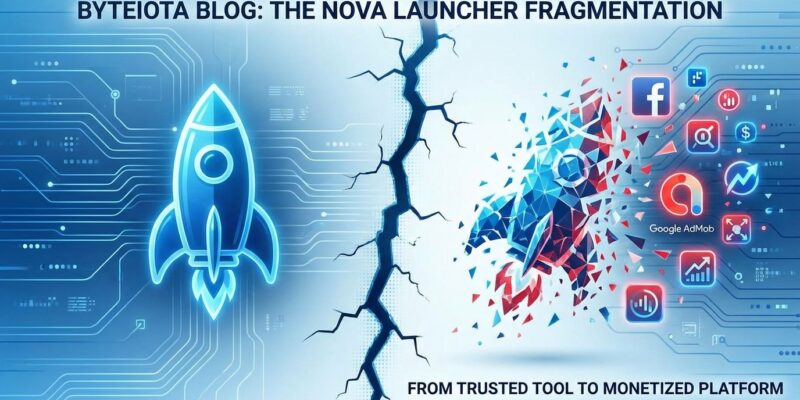
Swedish company Instabridge acquired Nova Launcher on January 20, 2026, and within 24 hours users discovered Facebook Ads and Google AdMob trackers embedded in version 8.2.4. The revelation triggered immediate backlash on Hacker News, where the acquisition post garnered 107 points and 81 comments from developers sharing a familiar frustration: another beloved tool acquired and immediately monetized.
This marks the final chapter in Nova Launcher’s four-year decline. The Android launcher, which served 50 million users over 13 years, now exemplifies “enshittification”—the pattern where trusted developer tools get acquired, development stalls, and aggressive monetization replaces quality. For Android developers who relied on Nova’s customization since 2011, the trackers confirm what Wunderlist and Mailbox users learned the hard way: you can’t trust post-acquisition promises.
The Four-Year Decline: From Indie Darling to Corporate Asset
Nova Launcher operated independently from 2011 to 2022 under founder Kevin Barry. Users paid $4.99 for Nova Prime to unlock premium features, generating an estimated $32.5 million from 6.5 million purchases. The model worked—Barry maintained the launcher without ads or tracking for over a decade.
Then analytics company Branch Metrics acquired Nova in July 2022. Branch promised continued development and community focus. Instead, the company laid off over 100 employees in 2024, leaving Barry as the sole developer. When Barry announced his departure in September 2025, he revealed that Branch had blocked him from open-sourcing the code despite contractual promises to do so.
Instabridge—a Swedish WiFi sharing and eSIM company with 200 million downloads—filed trademark paperwork in November 2025 and completed the acquisition this week. The deal raises an obvious question: why would a WiFi app company buy an Android launcher? The answer arrived within 24 hours when users decompiled v8.2.4 and found ad tracking SDKs pre-installed.
Trackers Before Promises: The Bad Faith Timeline
The sequence of events reveals calculated deception. Instabridge announced the acquisition on January 20, 2026, with reassuring PR language about being “a responsible owner” committed to keeping “Nova stable and compatible with modern Android.” The same day, version 8.2.4 shipped with Facebook Ads and Google AdMob code embedded in the binary.
Users on Hacker News didn’t wait for official monetization announcements—they decompiled the APK and published their findings. The trackers were already installed, infrastructure ready for ads even if none displayed yet. Android Authority confirmed the discovery through technical analysis.
The community response was swift and unforgiving. If Instabridge planned to “evaluate options” responsibly, why install tracking infrastructure on day one? The answer is obvious: the acquisition was about monetizing an established user base, not maintaining product quality. Installing trackers before announcing monetization plans signals bad faith, not responsible ownership.
The Broken Open Source Promise That Sealed Nova’s Fate
When Branch acquired Nova in 2022, the CEO stated on Reddit: “If Kevin were to leave Branch, it’s contracted that the code will be open-sourced and put in the hands of the community.” This promise appeared in official communications and reassured users worried about acquisition risks.
Four years later, Barry attempted to honor that commitment. Branch blocked him, citing legal and contractual complications. The broken promise demonstrates why post-acquisition commitments are worthless—when economics demand it, companies ignore their word. Instabridge now promises “Nova Prime stays ad-free,” but the Branch precedent shows such guarantees dissolve when revenue targets aren’t met.
The pattern extends beyond Nova. Microsoft acquired Wunderlist in 2015 for up to $200 million, promising continued development. Five years later, Microsoft shut it down entirely. The Wunderlist founder later admitted feeling “depressed” and “really unhappy” after the sale, echoing Barry’s experience. Dropbox acquired Mailbox in 2013 and killed it two years later. Google acqui-hired Sparrow Email in 2012 and halted development immediately. The cycle repeats with depressing regularity.
The Acquisition Graveyard: Wunderlist, Mailbox, Now Nova
Nova joins a growing list of developer tools that followed the same arc: independent success → acquisition with promises → development stalls → founder exits → monetization or shutdown. The pattern has become so predictable that developers now expect it when acquisition news breaks.
Microsoft, Dropbox, and Google all promised to maintain and improve the tools they acquired. None delivered. Branch promised open-source release if Barry left. They blocked it. Instabridge promises ads only in the free version. How long before “Nova Prime Plus” appears with a higher price point, or existing Prime users face subscription conversions?
The lesson isn’t that individual companies are uniquely evil—it’s that the incentive structures of acquisitions create enshittification. Acquiring companies buy user bases, not products. Once ownership transfers, maximizing short-term revenue extraction makes economic sense even when it destroys long-term trust. Users are the collateral damage.
Export Your Settings and Try Lawnchair
Developers still using Nova should act immediately. Open Settings → Backup → Save to file and export your configuration to external storage or cloud backup. Years of customization—gestures, icon packs, drawer layouts—can be preserved even if Nova becomes unusable.
Lawnchair is the top recommended alternative: an open-source Pixel Launcher fork with Nova-like customization. It supports Material You theming, automatic app grouping via the “Caddy” feature, and active development without acquisition risk. Migration takes 2-4 hours to replicate a Nova setup, but the investment breaks the cycle of trusting proprietary tools that get acquired and enshittified.
Other options include Niagara Launcher for minimalist one-handed operation, KISS Launcher for ultra-lightweight search-first interface (only 250 KB), and Action Launcher for unique features like Shutters and Quicktheme. All represent viable paths away from Nova’s monetization trajectory.
The broader lesson transcends launchers. When a tool you rely on gets acquired, start looking for alternatives immediately. Don’t trust promises about “nothing will change” or “we’ll invest in development.” Branch made those promises in 2022. Instabridge made similar commitments this week while simultaneously shipping tracking code. The pattern is consistent: acquisition → extraction → abandonment.
Key Takeaways
- Instabridge acquired Nova Launcher on January 20, 2026, and embedded Facebook Ads and AdMob trackers in v8.2.4 within 24 hours—before announcing monetization plans.
- Branch Metrics promised to open-source Nova if founder Kevin Barry left, then blocked him from doing so in September 2025, demonstrating why post-acquisition commitments can’t be trusted.
- Nova joins Wunderlist (Microsoft), Mailbox (Dropbox), and Sparrow (Google) in the acquisition graveyard—beloved tools that got acquired, stalled, and either shut down or enshittified.
- Export Nova Launcher settings immediately (Settings → Backup → Save to file) to preserve years of customization before the situation deteriorates further.
- Lawnchair offers the best open-source alternative: Pixel Launcher fork with Nova-like customization, Material You theming, and no acquisition risk since it’s community-driven.
Nova Launcher lasted 13 years as an independent project. Branch and Instabridge needed just four years to destroy that legacy. The timeline is a warning: when tools get acquired, the clock starts ticking on enshittification. Support open-source alternatives that can’t be bought and monetized. It’s the only sustainable defense.


