 By ByteBot
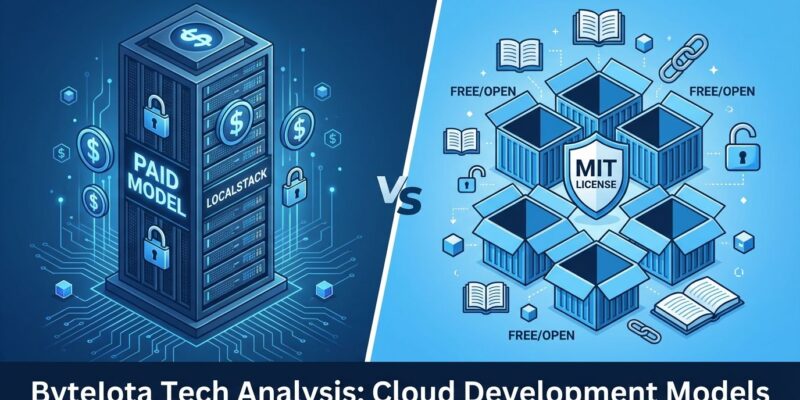
LocalStack ended its free Community Edition on March 23, 2026, moving core AWS services like S3, SQS, and Lambda behind a $39-per-month paywall. Within days, MiniStack emerged as a free MIT-licensed alternative, trending on Hacker News today with a technical twist: it runs real database containers instead of mocks. This is the third major open-source fork to emerge in 2026 after a popular developer tool went paid—following Redis to Valkey and Terraform to OpenTofu.
The shift affects thousands of developers who relied on LocalStack Community Edition to test AWS integrations locally and in CI/CD pipelines. MiniStack positions itself as a drop-in replacement, supporting 33 AWS services on the same port (4566) with the same endpoint pattern. However, there’s a caveat: the project is only seven days old, and its creator explicitly states he’s “not aiming to be the next LocalStack.”
The Pattern: Open Source Fights Back
This is becoming familiar. A popular open-source tool gains developer adoption, commercializes by moving free features behind paywalls, and the community responds with forks or alternatives. Moreover, it happened twice already in 2026.
Redis changed its license to RSALv2 and SSPLv1, triggering Valkey—a community fork backed by Amazon, Oracle, and Microsoft, now hosted by the Linux Foundation. Terraform moved to the Business Source License, spawning OpenTofu, which joined the Cloud Native Computing Foundation and maintains 100% backward compatibility. Consequently, LocalStack’s paywall has triggered MiniStack.
The pattern reveals developer frustration with “open core” monetization. Tools that developers integrate into their workflows become essential infrastructure. When that infrastructure suddenly requires payment, the community builds alternatives rather than accept vendor lock-in. Furthermore, MiniStack’s MIT license guarantees it stays free forever, at least in principle.
Real Containers vs Mocks: The Technical Bet
MiniStack’s key differentiation is its “real infrastructure” approach. Where most AWS emulators fake everything in memory with simplified behavior models, MiniStack spins up actual containers for critical services.
For RDS, it provisions real Postgres or MySQL containers. ElastiCache runs genuine Redis or Memcached instances. ECS executes actual Docker containers. Athena queries run through DuckDB for legitimate SQL execution. Additionally, the trade-off is higher resource usage—but still minimal at 30MB RAM idle—for closer production parity.
Compare resource footprints: MiniStack’s Docker image is 150MB with a 2-second startup time. In contrast, LocalStack’s image exceeds 1GB, idles at 500MB RAM, and takes 15-30 seconds to start. For CI/CD pipelines running on GitHub Actions’ free tier, those differences compound across dozens of test runs daily.
The real containers approach aims to reduce the drift between local tests and actual AWS behavior. Mocks simplify edge cases, eventual consistency models, and service exceptions—exactly where bugs hide. Nevertheless, whether MiniStack delivers on this promise remains unclear because the project is brand new.
The Skepticism Is Warranted
Hacker News commenters aren’t buying the hype yet. The project drew 40 comments, most expressing caution rather than enthusiasm. A developer with detailed DynamoDB knowledge bluntly stated: “This code does not properly mimic the service exceptions, input validations, eventual consistency, or edge cases.”
The historical drift problem plagues all AWS emulators. One commenter summarized the frustration: “Tests pass locally, then something breaks in staging because the S3 response format is slightly different.” Indeed, no emulator perfectly replicates AWS, and edge case failures are expensive to debug after they reach production.
Quality concerns add to the skepticism. Users flagged AI-generated content with insufficient human review, including misaligned ASCII diagrams and copied boilerplate copyright notices from unrelated repositories. For a tool handling developer infrastructure, that raises trust issues.
Most telling is the creator’s own caveat. Nahuel Nucera clarified he’s “not aiming to be the next LocalStack” and won’t support larger or more complex services. The website markets MiniStack as a “drop-in replacement,” but the creator contradicts that messaging. It’s a pragmatic positioning—underpromise to avoid backlash—but it signals limited long-term ambitions.
Many experienced developers in the discussion recommend skipping local emulators entirely for integration testing. Their advice: use short-lived real AWS environments, accept the higher cost, and avoid unpredictable emulator failures. Therefore, emulators work for fast local development feedback, but real AWS is the gold standard for testing.
LocalStack’s Bet on Enterprise Revenue
LocalStack’s changes weren’t arbitrary. The company ended Community Edition support on March 23, consolidating to a single image requiring user accounts and auth tokens. The free tier still exists but restricts usage to non-commercial purposes with mandatory registration. Meanwhile, commercial projects pay $39 per month per license with annual billing.
The business model makes sense. LocalStack invested years building comprehensive AWS service emulation (90+ services in paid plans), and free users consumed support resources without contributing revenue. Open-source sustainability is hard. Charging for value is reasonable.
However, the execution angered users. Core services that were free for years—S3, SQS, Lambda, DynamoDB—suddenly moved behind paywalls. The license changed from Apache 2.0 to Business Source License. Developers who built CI/CD workflows around LocalStack Community Edition now face unexpected costs or migration friction.
The timing matters. LocalStack’s pricing shift happened as inflation tightened startup budgets and layoffs hit the tech industry. A $39-per-month per-seat cost adds up: five developers mean $2,340 annually. For bootstrapped startups or open-source projects, that’s non-trivial.
LocalStack still offers value for teams needing comprehensive service coverage, mature tooling, and enterprise support. Nevertheless, the pricing change created opportunity for alternatives like MiniStack and Floci—another free emulator covering core AWS services. LocalStack bet that its feature depth and maturity would retain paying customers. We’ll see if developers agree.
When to Use What
No emulator perfectly replicates AWS, so developers need pragmatic guidance.
Use MiniStack for budget-constrained projects with simple AWS service needs—S3, SQS, Lambda, DynamoDB basics. It’s ideal for open-source projects, CI/CD pipelines where resource efficiency matters (GitHub Actions free tier), and teams willing to accept maturity risks. The real container approach is interesting, but the project is too new to trust for critical work.
Use LocalStack when you need comprehensive service coverage (90+ AWS services), have enterprise budget ($39/month is acceptable), require a mature and battle-tested emulator, or need advanced AWS features. Certainly, LocalStack’s years of development and extensive testing justify its cost for teams that rely on AWS breadth.
Use real AWS for integration testing when edge case accuracy matters. AWS Best Practices documentation is explicit: “Emulated features and APIs typically lag behind services changes. Tests that rely on emulators can provide successful results locally, but they might fail in the cloud due to interactions with IAM policies and quotas.” Short-lived test environments cost more but eliminate emulator drift.
The hybrid approach works best: emulators for fast local development feedback, real AWS for integration and staging tests. Don’t rely solely on emulators for critical testing. They’re useful but imperfect tools.
The Pattern Continues
MiniStack is newsworthy not because it’s revolutionary—it’s seven days old with acknowledged limitations—but because it’s the third open-source alternative to emerge in 2026 following a popular tool’s commercialization. Redis, Terraform, and LocalStack all followed the same path: gain adoption, monetize aggressively, trigger community forks.
Whether MiniStack follows Valkey and OpenTofu into production-ready alternatives or fades as a niche project remains uncertain. The creator’s limited ambitions (“not aiming to be the next LocalStack”) suggest the latter. Nonetheless, the pattern itself is clear: developers will build alternatives rather than accept vendor lock-in.
For now, MiniStack offers a free option for developers frustrated by LocalStack’s paywall. Use it cautiously for local development, validate thoroughly on real AWS, and watch how the project matures. The open-source rebellion against commercialization isn’t stopping.
Key Takeaways
- LocalStack ended Community Edition March 23, requiring $39/month for commercial use
- MiniStack emerged as free alternative using real containers (Postgres, Redis) vs mocks
- Project is only 7 days old; creator says “not aiming to replace LocalStack”
- Third major fork in 2026 (after Redis→Valkey, Terraform→OpenTofu)
- Best practice: Emulators for local dev, real AWS for integration testing