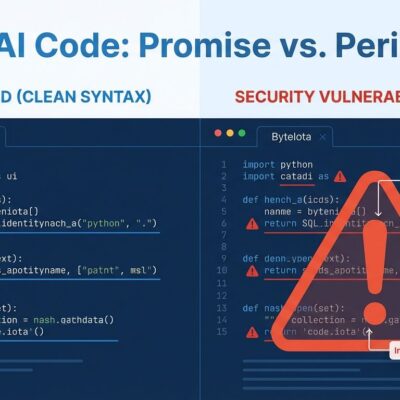
In February 2026, Microsoft published an AI-generated diagram on Microsoft Learn that turned “continuously merged” into “continvoucly morged” and “feature” into “featue.” The diagram was supposed to explain Git workflows to millions of developers. Instead, it became a viral meme and a symbol of corporate negligence. Vincent Driessen, creator of the original Git Flow diagram that Microsoft’s AI mangled, called it “careless, blatantly amateuristic, and lacking any ambition.” He’s right. And this isn’t just Microsoft’s problem—it’s a warning about what happens when trillion-dollar companies replace human expertise with AI tools to cut costs.
This Is Cost-Cutting, Not a Tech Problem
Microsoft didn’t ship AI slop because the technology isn’t ready. They shipped it because someone decided AI-generated documentation was “good enough” without human review. This wasn’t a technology failure. It was a management failure.
Microsoft has a Responsible AI Standard emphasizing “quality control requirements for sensitive applications.” They preach that “AI governance is not optional—it is regulatory.”
Yet Microsoft Learn published a broken diagram riddled with hallucinated text. No human review. No quality gates. No accountability. The irony is stunning: Microsoft demands AI governance from everyone else but didn’t apply it to their own developer documentation.
Driessen Wanted Respect, Not Revenge
Vincent Driessen released his Git Flow diagram in 2010 for free use. It became legendary—adopted by thousands of development teams worldwide. Fifteen years later, Microsoft took his work, ran it through AI, broke it, and published it without attribution.
Driessen isn’t angry about copyright. As he wrote, Microsoft chose to “take someone’s carefully crafted work, run it through a machine to wash off the fingerprints, and ship it as your own.” No link. No acknowledgment. No quality check.
After 15 years of helping millions of developers, Microsoft couldn’t spare five minutes for credit—or thirty seconds to catch “continvoucly morged.” That’s not a technology problem. That’s a respect problem.
The AI Slop Epidemic Goes Beyond Microsoft
Microsoft’s “morged” disaster isn’t isolated. Across tech, companies ship AI-generated content without review, creating what developers call “AI slop”—content that looks professional but is broken.
Nature reported a “crisis in computer science” from AI-generated submissions flooding preprint repositories. Stack Overflow warned AI creates new categories of tech debt. Technical writers face layoffs, replaced by engineers with AI tools. Over 30,000 workers faced AI-driven layoffs in 2026, including experienced technical writers replaced by “engineers using AI.”
The pattern: Companies cut costs, not improve quality. Microsoft’s diagram is just the most embarrassing example yet.
Developers Deserve Better
Microsoft Learn is supposed to be authoritative. When developers hit roadblocks, they rely on official docs for correct answers. But when docs contain AI hallucinations like “morged,” trust collapses.
Microsoft Learn already struggles. Search for “Teams bot authentication” and you’ll find four approaches—only one recommended. Developers complain: “Which documents can I trust? Some contradict each other.” AI hallucinations make existing chaos catastrophic.
Experienced developers cite official documentation as their first resource 30% of the time. When that’s broken, where do they turn? Community wikis? LLMs trained on corrupted docs?
Trust matters. Microsoft just told millions of developers their documentation isn’t worth a human review.
AI Should Augment Expertise, Not Replace It
AI can be valuable for documentation when used responsibly. Successful teams combine AI speed with rigorous human validation. AI drafts content. Humans review for accuracy before publication.
Microsoft’s mistake wasn’t using AI. It was shipping without human oversight. If one technical writer had reviewed that diagram, “continvoucly morged” would never have shipped. Or better yet, Microsoft could have properly licensed Driessen’s original with attribution.
The technology isn’t the problem. The process is. Humans must validate before reaching millions of developers. That’s not anti-AI. That’s basic quality control.
What Developers Can Do
Microsoft removed the broken diagram after Driessen and the community called it out. But they haven’t addressed the process failure that allowed AI slop to ship in the first place. Developers have power here:
Call out AI-generated errors when you find them in official documentation. Report issues. Tag the company publicly. Make noise. The “morged” meme worked because developers refused to let it slide.
Demand transparency about AI usage in documentation. If docs are AI-generated, say so. If they’re human-reviewed, say that too. Readers deserve to know what quality standards apply.
Support alternatives when official docs fail. Community-maintained resources like MDN Web Docs maintain quality because contributors actually care about accuracy over cost savings.
Microsoft has the resources to do documentation right. They choose not to. Until that changes, developers will keep encountering “morged” and wondering if they can trust anything they read.
The AI slop era is here. It’s time to demand better.