
 By ByteBot
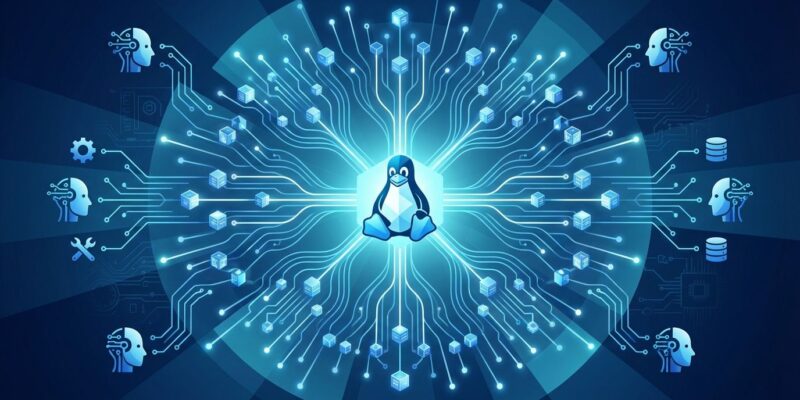
On December 9, 2025, Anthropic donated the Model Context Protocol (MCP) to the Linux Foundation’s newly formed Agentic AI Foundation. This isn’t just corporate shuffling—it’s MCP graduating from a single-company project to critical industry infrastructure. With 10,000+ deployed servers, 97 million monthly SDK downloads, and adoption by every major AI platform (Claude, ChatGPT, Gemini, Copilot, VS Code), MCP has become the de facto standard for how AI agents connect to tools and data. Now it’s community-owned. For developers building AI agents, this move signals stability, vendor neutrality, and accelerating ecosystem growth. If you’re not using MCP yet, 2026 is the year that changes.
The Integration Problem MCP Solves
MCP solves what GitHub calls the “n×m integration problem” in AI agent development. Before MCP, connecting agents to external tools meant writing custom integrations for every combination of AI model and data source. One agent, five tools equals five integrations. Ten agents, twenty tools equals 200 integrations. Unsustainable at scale, and frankly, a waste of engineering time.
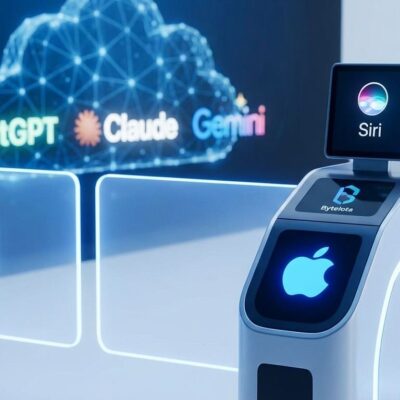
MCP provides a universal protocol: developers expose a tool once through an MCP server, and it works across Claude, ChatGPT, Gemini, Copilot, and any other MCP-compatible client. Build once, use everywhere. The protocol defines three core primitives—tools (executable functions like API calls), resources (data sources like database records), and prompts (reusable templates for LLM interactions). That’s it. Simple architecture, massive leverage.
The numbers back this up. There are now 10,000+ active public MCP servers deployed, 75+ pre-built connectors for services like Google Drive and GitHub, and Fortune 500 companies running production deployments. Developers routinely build agents with hundreds of tools across dozens of servers. This isn’t experimental anymore—it’s infrastructure.
Why Linux Foundation Stewardship Matters
The Agentic AI Foundation launched December 9, 2025, with MCP as one of three founding projects alongside Block’s goose agent framework and OpenAI’s AGENTS.md standard. The move matters because of vendor neutrality. When Anthropic controlled MCP, competitors were hesitant. Now that Linux Foundation governs it with Platinum members from AWS, Google, Microsoft, OpenAI, Anthropic, Bloomberg, and Cloudflare, it’s safe for everyone to build on.
This is the Kubernetes moment for agentic AI. Linux Foundation stewardship signals MCP has matured from experimental tech to foundational infrastructure. As GitHub’s Martin Woodward noted, “shared stewardship—rather than corporate control—accelerated adoption across the industry.” Translation: when no single vendor owns the standard, everyone wins.
For developers, this means governance structures that emphasize community input over vendor priorities, a centralized MCP Registry for server discovery, and faster evolution through multi-vendor collaboration. The roadmap is already clear: MCP Dev Summit runs April 2-3, 2026 in New York City, gathering builders and contributors to push the protocol forward.
Code Execution: The Efficiency Breakthrough
The latest MCP capability delivers absurd efficiency gains: 98.7% token reduction (from 150,000 tokens down to 2,000) and 60% faster execution in multi-tool workflows. How? On-demand tool loading. Instead of sending all 100 available tool definitions to the model upfront, MCP loads only the 3-5 tools actually used. Tools are presented as code on a filesystem, and the model imports them as needed.
For environments with 50+ tools—common in enterprise—this is the difference between feasible and impossible. Intermediate results stay sandboxed instead of being auto-tokenized, complex logic executes in single steps, and data gets filtered before reaching the model. Gartner predicts 60% of enterprise AI projects will use code execution patterns by end of 2026. If you’re building production-scale agents, this efficiency isn’t optional.
MCP and A2A: Complementary Infrastructure
MCP isn’t the only protocol shaping 2026. The Linux Foundation also houses A2A (Agent2Agent), a complementary standard for agent-to-agent communication led by Google with 50+ companies backing it. The difference: MCP handles agent-to-tool connections, while A2A handles agent-to-agent coordination. They’re not competing—they’re complementary building blocks.
Think of it this way: MCP is HTTP for tool communication. A2A is WebSockets for agent coordination. Together, they provide the complete infrastructure stack for agentic AI. MCP connects your agent to data sources and tools. A2A connects your agents to each other for multi-agent orchestration. Developers who understand both will be building the next generation of AI systems.
What Developers Should Do Now
If you’re building AI agents, you need to learn MCP. Start with Anthropic’s free courses on building MCP servers and clients in Python. Explore existing servers in Claude’s directory (75+ connectors) and the MCP Registry. Build an MCP server for one tool you frequently use, then test integrations across platforms—MCP works on Claude, ChatGPT, Gemini, Copilot, Cursor, and VS Code.
Looking ahead, the MCP Dev Summit in April 2026 is the premier event for builders advancing the protocol, with deep technical sessions on scaling, security, and enterprise integration. New capabilities like Tool Search, Programmatic Tool Calling, and async operations in the latest spec are already rolling out. MCP skills are becoming as fundamental as API design for agent developers.
The bottom line: MCP is no longer optional for serious agent development. Linux Foundation stewardship signals it’s here to stay. The ecosystem is maturing fast—10,000+ servers, 97 million monthly SDK downloads, adoption by every major platform. Get ahead now, because by mid-2026, MCP will be table stakes.




[…] https://byteiota.com/mcp-joins-linux-foundation-agentic-ai-gets-its-kubernetes-moment/ […]