By ByteBot
Lovable Raises $330M at $6.6B Valuation
Lovable, a Swedish AI startup that builds software from plain English prompts, raised $330 million at a $6.6 billion valuation on December 18, 2025. The “vibe-coding” platform tripled its valuation in five months while hitting $200 million in annual recurring revenue—making it the fastest company in history to reach $100 million ARR. But the funding comes as industry leaders including OpenAI’s Sam Altman and Google DeepMind’s Demis Hassabis warn about an AI valuation bubble, with startups earning 50-100x revenue multiples versus historical 10-20x norms.
What Is “Vibe Coding” Worth $6.6 Billion?
Vibe coding means you describe what you want in plain English, the AI writes the code, and you trust it without reading the implementation. Lovable’s platform takes natural language prompts and generates full-stack applications—frontend, backend, databases, authentication, deployment—through a chat interface.
CEO Anton Osika positions Lovable as “the last piece of software” companies will ever need to buy. The pitch: democratize software engineering by eliminating the need to write or understand code. Just type what you want, and the AI builds it.
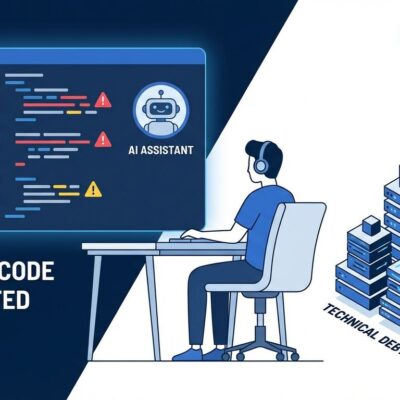
Developer reaction? Skeptical. A 2025 survey found 72% of developers don’t consider vibe coding part of professional work, and 45% don’t trust the accuracy of AI-generated code. Hacker News users describe vibe coding as “mostly used by non-technical people who make insecure, unmaintainable, and messy code.” The criticism isn’t about productivity—it’s about code quality, technical debt, and security flaws that emerge when nobody understands what the AI generated.
The Bubble Warning Nobody’s Heeding
Sam Altman said it plainly in November 2025: “Investors are overexcited about AI. It’s insane that some startups with three people and an idea are receiving funding at such high valuations.” Demis Hassabis agreed: “There’s obviously a bubble in the private market. Seed rounds with just nothing being tens of billions of dollars seems unsustainable.”
The math supports their concern. In Q1 2025 alone, AI startups raised $80.1 billion—70% of all venture capital activity. Lovable’s $6.6 billion valuation against $200 million ARR represents a 33x revenue multiple. Historical SaaS norms sit at 10-20x. Companies earning $10-20 million annually are securing valuations exceeding $1 billion, representing revenue multiples of 50-100x.
Lovable isn’t an outlier—it’s the norm in AI coding. Cursor, an AI code editor, raised $2.3 billion at a $29.3 billion valuation in November 2025 on $1 billion ARR. That’s a 29.3x multiple. Both companies show extreme growth despite the bubble warnings. Cursor is 4.4x larger by valuation but only 5x larger by revenue.
The Growth Metrics Are Real
Lovable’s numbers aren’t imaginary. The company reached $100 million ARR in eight months, breaking the record for fastest company to that milestone. Four months later, it doubled to $200 million ARR—12 months total from commercial launch.
The platform claims 8 million users, 180,000+ paying subscribers, and over 100,000 new projects created daily. More than 50% of Fortune 500 companies have employees using Lovable. CapitalG Managing Partner Laela Sturdy, whose firm led the Series B, said: “The demand we’re seeing from Fortune 500 companies signals a fundamental shift in how software gets built.”
Enterprise use cases are emerging: companies building core business systems entirely on Lovable, internal tools that stalled in development backlogs for months, and product teams using it for rapid prototyping instead of static designs. The $330 million will fund deeper third-party integrations, enterprise features, and infrastructure for full-fledged applications.
The Code Quality Reality Check
Here’s the uncomfortable truth: vibe coding generates technical debt at scale. Developers accepting AI-generated code without fully understanding its logic create maintenance nightmares. AI produces non-idiomatic or overly complicated code that passes initial tests but becomes impossible to extend. Security vulnerabilities emerge because AI can’t consistently recognize secure versus insecure coding patterns.
Critics call vibe coding “the birthplace of technical debt”—hard to read, harder to maintain, impossible to scale. The risk of skill erosion hits especially hard for junior developers who overdepend on AI without learning underlying fundamentals.
Lovable counters that it generates real, human-readable code (not a black box), and Fortune 500 adoption proves enterprise trust. But developer surveys say otherwise: 45% don’t trust AI output, and 72% don’t consider it professional work. The gap between enterprise adoption and developer skepticism reveals a coming reckoning when technical debt bills come due.
Innovation or Bubble?
Lovable’s $6.6 billion valuation represents a bet that AI will democratize software development—that natural language interfaces will replace coding as we know it. The growth metrics are undeniable: fastest to $100M ARR in history, $200M ARR in 12 months, Fortune 500 adoption.
But the warning signs are equally undeniable: 33x revenue multiples versus 10-20x historical norms, industry leaders calling it a bubble, and developer concerns about code quality and security. The bubble will pop if overfunded startups can’t turn a profit or grow into their lofty valuations.
Is Lovable building the future of software development or riding a valuation bubble destined to burst? The numbers are real. The concerns are real. The valuation might not be.