 By ByteBot
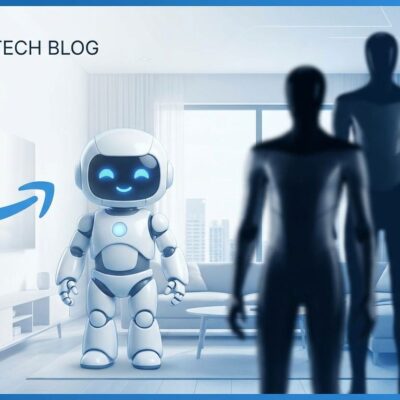
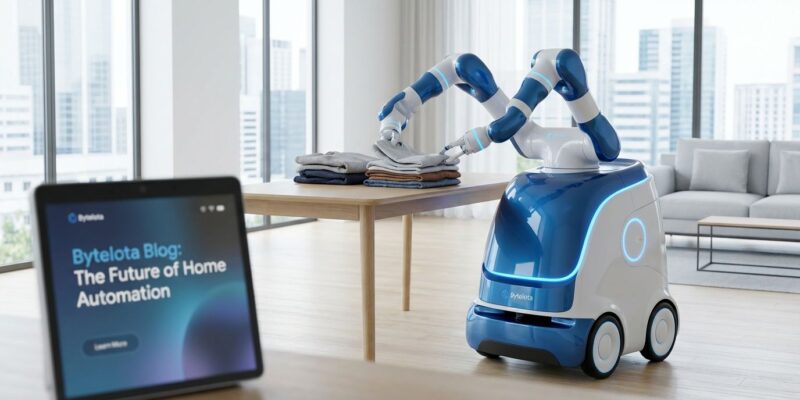
LG Electronics unveiled LG CLOiD at CES 2026, a two-armed home robot promising the “Zero Labor Home.” During live demonstrations in January 2026, CLOiD folded laundry, coordinated meal preparation through LG’s ThinQ smart appliances, and maneuvered autonomously. The robot features 7-degree-of-freedom arms with five-fingered hands capable of fine manipulation. The catch? Multiple observers noted the demonstrations ran very slowly, and LG disclosed no pricing or shipping timeline. This is a vision signal, not a product announcement.
What CLOiD Actually Does
Each arm has seven degrees of freedom matching human arm mobility, with five independently actuated fingers for dexterous tasks. Unlike Boston Dynamics Atlas or Tesla Optimus, CLOiD moves on a wheeled base rather than walking. The brains run Physical AI combining Visual Language Models with Vision Language Action, trained on tens of thousands of hours of household task data.
At CES 2026, CLOiD retrieved milk from refrigerators, placed croissants in ovens, unloaded dishwashers, and folded laundry. The key differentiator is ThinQ ecosystem integration. CLOiD doesn’t just perform tasks manually—it orchestrates automation across LG appliances already in millions of homes. It learns living patterns and coordinates appliance sequences: starting wash cycles while you’re away, timing oven operations for meal prep, managing smart home workflows.
That ecosystem advantage matters more than arm dexterity. If CLOiD can command your LG washer remotely, it doesn’t need to physically load clothes. Integration beats standalone capability when the appliances are already installed.
The Consumer Robotics Race
LG joins a crowded field with diverging strategies. Boston Dynamics announced Atlas entered commercial production in January 2026, deploying tens of thousands of units at Hyundai factories. Atlas costs $140,000-150,000, lifts 50kg, and runs autonomously or via teleoperation. Boston Dynamics frames it as a research vehicle with a long-term home vision, but the near-term play is industrial.
Tesla’s Optimus targets $20,000-30,000 for consumer affordability. The problem? Tesla’s 2025 production claims—5,000 to 10,000 units—never materialized, and sources suggest Optimus likely lacks genuine autonomous capabilities. It’s vaporware with impressive demos.
LG split the difference. No pricing, no timeline, no purchase availability—but working hardware demonstrating real tasks. The bet is ecosystem leverage. Atlas chases agility, Optimus chases price, CLOiD chases integration.
Reality Check: Cost, Privacy, and the Gap
Consumer home robots face brutal economics. The 1X NEO launched at $20,000 upfront or $499 monthly. Atlas runs $140,000-150,000. Market analysts identify high costs as the primary adoption barrier making robots “non-affordable and unpopular.” Mass market penetration requires sub-$5,000 price points—currently unachievable without massive manufacturing scale.
Then there’s the privacy problem. CLOiD packs cameras, microphones, and sensors mapping your home continuously. MIT Technology Review exposed how Roomba development photos—including a private image of a woman on a toilet—ended up on social media. Eufy marketed “local storage only” for security cameras, then researchers discovered footage uploaded to cloud servers without encryption. Trust is fragile, and manufacturers keep breaking it.
The more capable the robot, the creepier it feels. CLOiD watching your toddler, overhearing late-night conversations, accessing your laundry—convenience comes with surveillance. The household robotics market is projected to grow from $17 billion in 2026 to $71-107 billion by 2034 at 19-25% CAGR, but consumer willingness to pay lags interest. People want automation, not cameras roaming their homes.
Technical limitations compound the problem. Engadget observed CLOiD moved “very slowly” during CES demos. Early home robots need human intervention for edge cases: dropped items, spills, messy environments. The 1X NEO ships with strict constraints—no sharp objects, no hot items, no homes with children in initial phases. These aren’t products ready for chaotic real homes.
What “Zero Labor Home” Really Means
LG’s positioning is aspirational: “Zero Labor Home, Makes Quality Time.” Technology reduces chore burden so you focus on what matters. Noble vision. But LG isn’t committing to product launch. They describe CLOiD as a “signal of interest” in home robotics, not a shipping schedule.
The gap is obvious. Technical capability exists—CLOiD works, live demonstrations prove it. But economic viability and consumer trust don’t. Before “Zero Labor Home” becomes reality, three things must happen:
- Technical maturation: Faster task execution, reliable edge case handling, all-day battery life
- Economic viability: Manufacturing scale driving prices below $5,000, proven ROI on time savings
- Social acceptance: Privacy frameworks, regulatory clarity, demonstrated security safeguards
The question isn’t “Can we build home robots?” Yes—CLOiD, Atlas, and Optimus exist. The question is “Will consumers pay for them?” That answer remains unknown.
LG’s Smart Play
LG is playing the long game intelligently. Demonstrate capability at CES to build brand awareness. Gauge consumer response without product pressure. Wait for component costs to decline and consumer readiness to mature. Leverage the installed ThinQ base for faster commercialization when economics align.
The home robotics market shows strong growth potential driven by aging populations, smart home integration demand, and convenience expectations. But 2026 is the demonstration phase. Early adopters might see products in 2028-2030 at premium prices. Mass market adoption waits until 2030+ if costs drop and trust builds.
LG showed impressive engineering. CLOiD folds laundry and coordinates smart appliances. But until LG answers the hard questions—price, privacy, and purchase availability—the “Zero Labor Home” remains a demo, not a destination.