 By ByteBot
JetBrains Central: The Infrastructure Layer Agentic AI Was Missing
JetBrains announced Central on March 24, 2026, and it’s not another AI coding assistant. It’s production infrastructure that turns autonomous agent workflows from experimental prototypes into enterprise-ready systems with governance, cost control, and observability built in. With 90% of developers using AI tools and 72% of enterprises deploying agents, the bottleneck isn’t capabilities – it’s infrastructure.
The Governance Gap Is Real
80% of organizations report risky agent behaviors like unauthorized data access and unexpected system interactions. Only 21% have mature governance models. The problem isn’t that AI agents don’t work – they do. The problem is individual agents lack coordination, cost visibility, and centralized control.
Finance teams see invoices but can’t attribute costs to specific teams or projects. Multi-agent systems amplify errors up to 17× when mistakes propagate unchecked. Companies want to scale AI adoption but can’t deploy at enterprise scale without a control layer.
What Central Actually Is
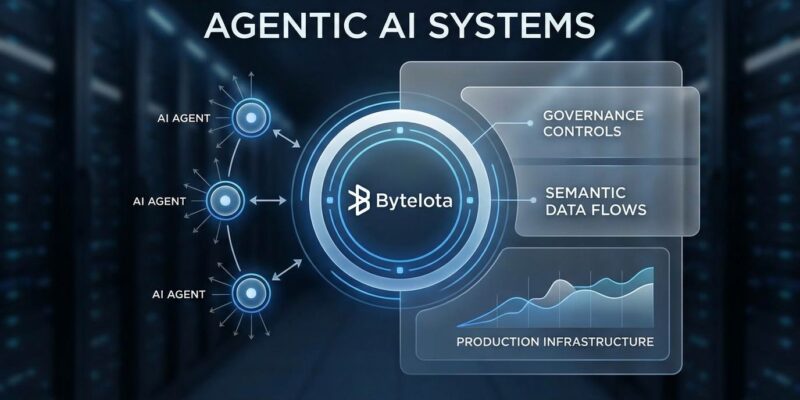
Central is a unified control layer for agentic workflows built on three components:
The semantic layer continuously aggregates code repositories, architecture, runtime behavior, and organizational knowledge. This enables agents to operate with system-level understanding rather than just responding to prompts. Shared semantic context means agents can reason about how software is designed and what outcomes are expected.
The execution infrastructure provides cloud runtimes connecting agents to repositories, knowledge bases, pipelines, and infrastructure. It works with JetBrains Air and Junie CLI, supporting OpenAI, Anthropic, Google, and Grok models.
The governance layer handles policy enforcement at execution time, identity management, observability, auditability, and cost attribution. Every policy execution is traced end-to-end, providing clear attribution of costs, errors, and bottlenecks.
InfoWorld notes Central is designed as an open system with no vendor lock-in, integrating existing tools and preserving current systems.
Why March 2026 Is the Inflection Point
March 2026 marked the shift from conversational AI to autonomous agentic systems. GPT-5.4 scored 75% on the OSWorld benchmark, above the human baseline of 72.4%. Claude Sonnet 4.5 hit 61.4% and can maintain focus for 30+ hours on complex tasks.
Enterprise adoption accelerated: 65% progressed from experimentation to pilot programs (up from 37% one quarter prior). 81% say adoption is fully scaled or expanding, and 100% of surveyed enterprises plan to expand agentic AI in 2026.
Capabilities are solved. Adoption is accelerating. But infrastructure was missing. Palo Alto Networks observes “most organizations are deploying AI agents faster than they can govern them.”
Launch Partners Signal Industry Recognition
Central launched with Google Cloud, Anthropic, and OpenAI as partners. This signals industry acknowledgment that governance infrastructure is the next required layer. Google Cloud provides infrastructure, while Anthropic and OpenAI bring AI model capabilities.
Early Access Starts Q2 2026
JetBrains will launch Early Access in Q2 2026 with design partners testing Central in real-world agentic workflows.
Who should care now? Enterprise dev teams juggling multiple AI tools without unified governance. Organizations with compliance requirements making ungoverned agent deployment impossible. Teams running multi-agent workflows facing coordination overhead. Anyone blocked on AI deployment because governance concerns outweigh capability benefits.
Central is to agentic AI what Kubernetes was to containers. Individual coding assistants are solved technology – the interesting problem now is production infrastructure. JetBrains is betting autonomous agents need infrastructure before becoming the default development paradigm. Based on the governance gap and adoption trajectory, that bet looks increasingly correct.