
 By ByteBot
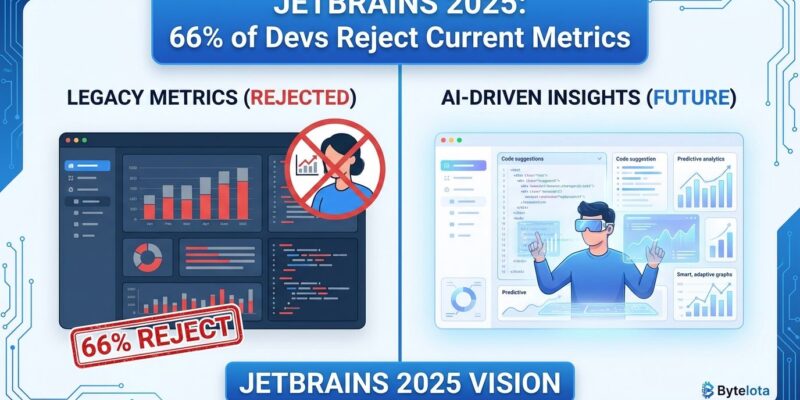
JetBrains surveyed 24,534 developers across 194 countries and found an industry in transition. The State of Developer Ecosystem 2025 reveals the most significant shift in software development measurement since DORA metrics emerged: 66% of developers don’t believe or aren’t sure that current metrics reflect their real contribution. When two-thirds of your workforce thinks measurement is broken, measurement is broken. The industry is abandoning deployment frequency as the primary success indicator and embracing developer productivity, experience, and human factors instead.
The Productivity Metrics Crisis
The 66% figure isn’t dissatisfaction—it’s an indictment. Developers demand transparency in how their work is measured, and organizations aren’t delivering. The disconnect gets worse: 89% cite non-technical factors as critical to productivity (job design, communication, peer support, feedback) versus 84% citing technical factors (tool performance, reliability). Non-technical concerns outweigh technical ones, yet most companies lack dedicated productivity measurement roles. Responsibility falls on team leads without training or resources.
The investment mismatch is stark. Technical managers want 2x more focus on communication issues and 2x more investment in technical debt reduction than companies currently provide. Meanwhile, DORA metrics show their limitations: they measure team capabilities, not individual productivity. DORA prioritizes speed and stability while ignoring workload, technical debt, and business priorities. It doesn’t capture developer experience, collaboration, or cognitive load—the factors 89% of developers say actually matter.
Here’s the uncomfortable truth from the 2025 DORA Report: AI coding assistants boost individual output by 21% and increase merged pull requests by 98%, yet organizational delivery metrics stay flat. AI acts as an amplifier, not a universal productivity booster—magnifying the strengths of high-performing organizations and the dysfunction of struggling ones. Individual productivity gains don’t translate to business value without fixing broken processes, communication gaps, and organizational dysfunction first.
The AI Adoption Paradox
The JetBrains data reveals a paradox: everyone talks about AI adoption, but few acknowledge the trust erosion happening alongside it. 85% of developers regularly use AI tools for coding, and 62% rely on at least one AI coding assistant. Yet sentiment is declining: 60% positive in 2025, down from 70%+ in 2023-2024. High adoption doesn’t mean high trust.
The time savings are real. Nearly 90% of developers save at least one hour weekly using AI tools, and 20% save a full workday (8+ hours). But as the DORA findings show, individual gains don’t equal organizational improvement. Developers worry about inconsistent code quality, limited understanding of complex logic, and privacy risks. They fear losing control and competence. They want to delegate mundane tasks to AI but stay in control of creative and complex problem-solving.
JetBrains summarized the state of AI integration perfectly: “AI has come, seen, but not yet conquered.” AI is tested nearly everywhere, but full integration remains rare. Most usage is pilots and partial rollouts, not embedded in core workflows. Meanwhile, 68% of developers anticipate AI proficiency will become a job requirement—a future where AI literacy is table stakes, but trust must be rebuilt first. Stack Overflow’s 2025 survey confirms the trust crisis: 46% actively distrust AI accuracy versus just 33% who trust it.
Language Shifts: Where Growth Lives
The JetBrains Language Promise Index ranks TypeScript, Rust, and Go as the three languages with the highest perceived growth potential in 2025. JetBrains called TypeScript’s trajectory the “most dramatic rise in real-world usage over the past five years.” Meanwhile, JavaScript, PHP, and SQL have reached maturity plateaus—they’re stable, ubiquitous, and not going anywhere, but growth and momentum live elsewhere.
Go continues strong adoption momentum: 11% of all developers plan to adopt Go in the next 12 months. Rust and Kotlin show steady gains, though less dramatic than TypeScript’s surge. On the decline side, PHP (despite some reports suggesting maturity), Ruby, and Objective-C face long-term erosion.
Here’s the career insight: maturity isn’t death, but if you’re choosing where to invest learning time for maximum career growth, the data is clear. TypeScript, Rust, and Go are where momentum lives. And niche expertise still commands premium compensation—Scala represents only 2% of primary language usage but 38% of top-paid developers. Deep specialization pays.
Non-Technical Factors Dominate
The finding that surprises most: 89% of developers cite non-technical factors as critical to productivity, outweighing the 84% who cite technical factors. Non-technical includes job design, communication quality, peer and manager support, actionable feedback, team processes, organizational culture, and overall well-being. The industry’s obsession with technical prowess ignores what nearly nine out of ten developers say matters most.
Developers want input on team processes, communication improvements, and well-being considerations—not just output-focused measurement. Yet companies underfund these areas, creating the investment mismatch highlighted earlier. Organizations investing only in better tools while ignoring team dynamics, culture, and communication will fail. The data proves it: soft skills aren’t soft—they’re critical.
What This Means
The JetBrains report isn’t just data—it’s a roadmap. For developers: learn TypeScript, Rust, or Go for career growth. Adopt AI tools but maintain critical thinking, especially with 68% seeing AI proficiency as a future job requirement. Push for measurement transparency at your organization (66% don’t trust metrics, and you’re likely one of them). Develop communication and collaboration skills—89% cite them as critical, so they’re not optional extras.
For organizations: evolve beyond DORA-only measurement. Invest 2x more in communication and technical debt reduction, as your managers are requesting. Address AI privacy, security, and quality concerns with clear policies—teams need guidance, not just tools. Create dedicated productivity measurement roles instead of dumping responsibility on team leads. Prioritize developer experience and well-being, because the factors that matter aren’t just technical.
The immediate future (2025-2026) is clear: AI proficiency becomes table stakes, non-technical skills command increasing premiums, measurement transparency becomes a competitive advantage, and TypeScript/Rust/Go adoption accelerates. Organizations with clear AI policies will outperform those still figuring it out. This is consensus from 24,534 developers across 194 countries. Ignoring these trends means betting against momentum. Smart developers and organizations align with where the industry is heading, not where it’s been.


