Oracle released Java 26 on March 17, 2026, delivering 10 JDK Enhancement Proposals focused on AI integration and post-quantum cryptography. The release adds a Vector API for AI inference workloads, post-quantum JAR signing to future-proof software supply chains, and performance improvements including reduced G1 garbage collector synchronization. Oracle simultaneously announced the Java Verified Portfolio (JVP)—a commercial support bundle offering JavaFX (extended through March 2028 for JDK 8) and the Helidon microservices framework, free for Java SE subscribers and Oracle Cloud customers.
Java maintains 15-16% market share and powers 90% of Fortune 500 companies, but faces pressure from Go’s lower memory footprint and Rust’s safety guarantees. This release positions Java for modern enterprise priorities—AI workloads and quantum-resistant security—while JVP doubles down on ecosystem lock-in through commercial support bundling.
The Developer Sentiment Divide
Hacker News discussion reveals the Java paradox: developers praise technical improvements like virtual threads and structured concurrency, but criticize ecosystem pain points that refuse to die. Build systems remain “extraordinarily terrible”—Gradle earns universal complaints while Maven shows its age. Memory footprint runs 3-5x higher than Go equivalents, with production reports showing Java services consuming 600-700MB where Go rewrites achieve 100-200MB for identical workloads.
One developer’s benchmark is particularly damning: a Java service handling ~80 requests per second at 1GB RAM, replaced by a Go version delivering 400 rps with one-fifth the memory. Even reactive stacks (Vert.x, Mutiny) struggled to reach 120 rps. Cultural issues persist despite “FactoryFactory patterns going mostly extinct”—the reputation for verbose enterprise code and annotation festivals lingers, driving developers toward Kotlin, Go, or Rust.
Oracle’s response? Deliver cutting-edge features (Vector API, post-quantum crypto) while ignoring the ecosystem friction driving talent away. Technical excellence matters only if developers stay long enough to use it.
Positioning Java for AI Inference
JEP 529’s Vector API (11th incubator iteration) targets production AI inference by compiling to optimal SIMD instructions—AVX on x86, Neon on ARM—at runtime. Oracle claims 4-8x speedups for number-crunching workloads compared to scalar code, positioning Java as viable for enterprise ML inference without rewriting to Python or C++. Combined with primitive types in patterns (JEP 530) that reduce boxing overhead, and lazy constants (JEP 526) for memory-efficient initialization, Java 26 makes its play for AI workloads.
The strategy is sound: Python dominates ML training, but production inference increasingly shifts to performant compiled languages. If enterprises can run inference on existing Java infrastructure rather than managing polyglot stacks (Python for training, C++ for inference), that’s compelling. Helidon’s AI extension with LangChain4j integration for agent-building reinforces the vision.
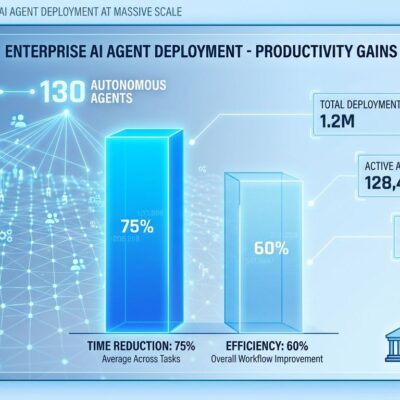
Related: BNY Mellon Deploys 20,000 AI Agents at Enterprise Scale
However, the Vector API remains in its 11th incubator iteration—years from production stability. When does it finalize? 2027? 2028? Oracle’s rushing toward AI relevance, but the maturity timeline raises questions about real-world readiness.
Post-Quantum Cryptography Arrives
Java 26 introduces post-quantum JAR signing and HPKE (Hybrid Public Key Encryption) to defend against “harvest now, decrypt later” attacks—adversaries collecting encrypted data today to decrypt once quantum computers mature. This addresses a 5-10 year threat timeline as NIST post-quantum standards finalize, giving enterprises lead time to test and deploy quantum-resistant signing before quantum computing becomes practical.
Post-quantum JAR signing protects software supply chains at the source: libraries, frameworks, and enterprise applications. Combined with HPKE’s hybrid approach (quantum-resistant algorithms paired with traditional crypto) and PEM encoding standardization (JEP 524), Java 26 offers a complete quantum-ready cryptography stack. For organizations with 5+ year software lifespans—financial services, healthcare, government contractors—adopting post-quantum crypto now is risk management, not paranoia.
Oracle’s Ecosystem Play
The Java Verified Portfolio bundles commercial support for JavaFX (through March 2028 for JDK 8), Helidon microservices framework, and the VS Code Java extension—all “free” for Java SE subscribers and Oracle Cloud customers. Translation: bundled with existing subscriptions, which Oracle hopes makes JVP sound generous rather than extractive.
JVP centralizes Oracle-backed tools with clear support timelines and JDK compatibility mappings, reducing software supply chain risk. That’s genuine value. But it’s also vendor lock-in: by standardizing on Oracle-supported components, enterprises tie themselves more tightly to Oracle’s ecosystem. Helidon’s release cadence now aligns with Java SE roadmap—convenient for Oracle customers, potentially limiting for shops wanting framework independence.
The play is transparent: offer commercial support that provides real value (JavaFX through 2028, Helidon enterprise backing) while increasing switching costs. It’s smart business, but enterprises should recognize the tradeoff between reduced supply chain risk and increased Oracle dependency.
Key Takeaways
- Java 26 delivers technical progress (AI integration via Vector API, post-quantum cryptography, G1 GC improvements) but ecosystem pain persists—build systems remain terrible, memory footprint runs 3-5x Go equivalents
- Vector API targets production ML inference to compete with Python/C++ stacks, but 11th incubator iteration means years before production stability (2027-2028 timeline likely)
- Post-quantum JAR signing addresses 5-10 year quantum computing threat—early adoption for enterprises with long software lifespans is prudent risk management
- Java Verified Portfolio bundles commercial support (JavaFX through March 2028, Helidon, VS Code extension) free for Oracle customers—reduces supply chain risk but increases vendor lock-in
- Developer sentiment divided: technical quality improving (virtual threads, structured concurrency), but Go/Rust/Kotlin alternatives gaining ground due to ecosystem convenience
Oracle’s bet is clear: double down on enterprise market with AI features and commercial support while accepting that developers frustrated by build systems and memory overhead will migrate to simpler alternatives. Java 26 strengthens the fortress but doesn’t expand the territory.