By ByteBot
India’s $4.6B Electronics Bet Won’t Fix Your 2026 RAM Costs
DDR5 RAM costs 50% more than six months ago. NVMe SSDs jumped 30-50% per quarter. On January 2, 2026, India approved $4.6 billion in electronics projects—Samsung, Foxconn, and Tata Electronics among 22 companies—targeting the supply chain squeezing developers worldwide.
The goal? Break China’s electronics stranglehold. India imports 40% of electronic components from China, including 88% of integrated circuits and 96% of portable computers. This investment aims to build an alternative. But will it help developers, or is this a geopolitical play with a 2030 payoff?
What India Just Approved
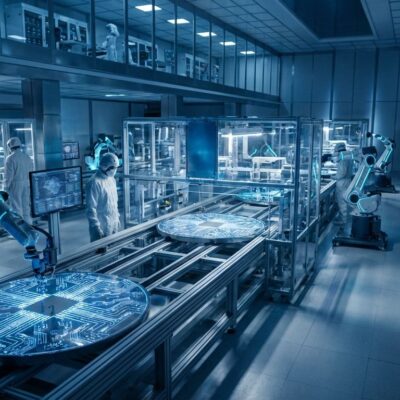
The $4.6 billion Electronics Component Manufacturing Scheme approval includes Samsung (displays), Foxconn (mobile enclosures, 16,200 jobs in Tamil Nadu), Tata Electronics, Dixon Technologies, and Apple ecosystem vendors. These 22 projects span eight states, manufacturing PCBs, capacitors, connectors, camera modules, and Li-ion cells. Expected production: $30+ billion. Jobs: 33,791.
Reality check: these are components, not finished products. India is building capability, not flooding stores with cheap laptops in Q3 2026.
The China Dependency India Is Breaking
India’s reliance on Chinese electronics is extreme. From 2017 to 2024, imports doubled from $72 billion to $129 billion. First half of 2025: up 18.5% to $70 billion.
- 88% of integrated circuits from China
- 96.6% of portable computers from China
- 94% of lithium-ion batteries from China
- 99.5% of semiconductor machinery from China
This isn’t about cost—it’s a single point of failure. One geopolitical flare-up and India’s tech sector halts. The $4.6 billion is about supply chain sovereignty.
The US-India Partnership Behind This
In February 2025, the US and India launched the TRUST Initiative (Transforming Relationship Utilizing Strategic Technology) for semiconductor cooperation. The US CHIPS Act allocates $500 million over five years—$100 million annually—for US-India projects.
Micron’s $2.75 billion DRAM facility in Gujarat ships today. Shakti Fab, a US Space Force partnership, will produce gallium nitride semiconductors for military applications.
This is geopolitical chess. The US wants supply chain diversification from China. India is the democratic alternative. Developers benefit—eventually.
Timeline Reality: When Developers Feel This
If you expect India’s $4.6 billion to drop DDR5 prices in 2026, prepare for disappointment.
2026: Projects start. Four semiconductor plants (Micron, CG Power, Kaynes, Tata) begin production. Hardware costs stay high—AI data centers outbid consumers.
2027-2028: Production ramps. Supply diversification becomes measurable. Component availability improves. Prices stabilize (not drop).
2029-2030: India becomes a meaningful hub. China dependency falls below 20%. Developer hardware ecosystem healthier.
This is a three-to-five year play. The $4.6 billion buys 2030s resilience, not 2026 savings.
What This Means for Developers
Short-term: nothing changes. RAM and SSD costs stay elevated through 2027. AI infrastructure demand dominates.
Medium-term (2027-2028): Supply diversification reduces geopolitical risk. Shortages become less likely. Availability improves before costs drop.
Long-term (2029+): A healthier supply chain with India as a China alternative could stabilize costs. India’s IT hardware market grows from $21.17 billion (2025) to $29.84 billion (2030)—capacity benefiting global developers.
The catch? Execution. India faces infrastructure gaps, skilled labor shortages, and higher production costs than China. India’s Production Linked Incentive delivered results—mobile production grew 58 million (2014-15) to 330 million units (2023-24), net importer to exporter. But scaling semiconductors is harder.
The Bigger Picture
India’s $4.6 billion bet is necessary. A supply chain dominated by one country is fragile. Developers paid the price in volatility and shortages. Building alternatives takes years and billions.
But let’s be honest: this is a long-term geopolitical play. It will eventually benefit developers, but “eventually” means 2028 at earliest. Meanwhile, your DDR5 RAM stays expensive, and the AI boom outbids you for chips.
India is making the right move. Just don’t expect it to fix your 2026 hardware budget.