 By ByteBot
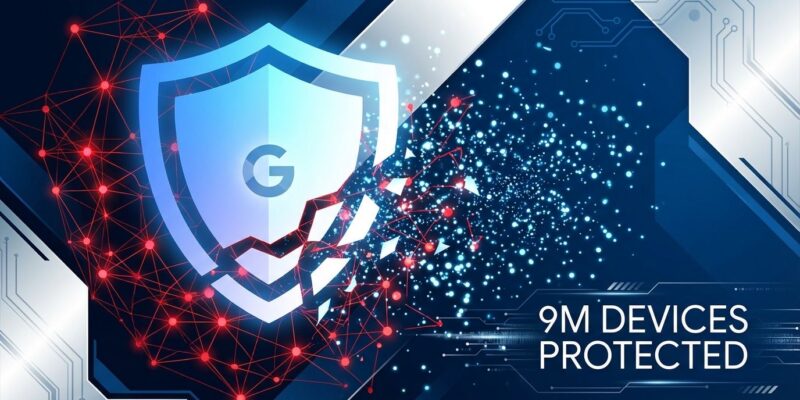
Google dismantled IPIDEA on January 29, 2026, freeing 9 million Android devices and millions more Windows systems from the world’s largest residential proxy network. The China-based operation had turned unsuspecting users’ phones and computers into cybercrime infrastructure used by 550+ threat groups—including nation-state actors from China, North Korea, Iran, and Russia.
Here’s what should worry developers: 600+ legitimate Android apps unknowingly shipped IPIDEA’s malware because they integrated SDKs marketed as “passive income” monetization tools. This wasn’t some obscure supply chain attack—it could have been your app.
IPIDEA’s Massive Technical Infrastructure
IPIDEA operated a sophisticated two-tier command-and-control system with approximately 7,400 servers managing millions of hijacked devices globally. The operation distributed its malware through two primary vectors: 600+ Android apps embedded with four malicious SDKs (Packet, Castar, Hex, and Earn), and 3,075+ Windows executables disguised as legitimate software like OneDriveSync or Windows Update.
These SDKs were marketed to developers as legitimate bandwidth-sharing or monetization tools. Apps using them had perfectly normal functions—games, utilities, content viewers—but secretly activated proxy behavior that turned user devices into exit nodes for criminal traffic.
The scale connects to major botnet operations: BadBox 2.0, Kimwolf (which infected 2 million devices through IPIDEA), and Aisuru (which launched a record-breaking 297 Tbps DDoS attack). This wasn’t small-time malware. It was enterprise-grade cybercrime infrastructure.
The SDK Trust Problem Every Developer Faces
The 600 apps that shipped IPIDEA’s malware weren’t built by bad actors. They were created by developers who integrated third-party SDKs without adequate vetting—exactly what most mobile developers do every day.
IPIDEA’s SDKs appeared legitimate. They promised passive income. They had documentation. They worked as advertised—at least on the surface. The malicious proxy behavior was hidden deep enough that standard app testing wouldn’t catch it.
This exposes the fundamental weakness in mobile app supply chains: developers trust third-party code they haven’t fully audited. When an SDK provider goes rogue or gets compromised, thousands of apps become malware distributors overnight. There’s no easy solution here, because manually auditing every dependency is impractical for most teams.
Google’s Platform-Level Takedown Strategy
Google’s response went beyond typical malware removal. They coordinated legal action to seize IPIDEA’s control domains, shared threat intelligence with law enforcement and platform providers across the industry, and deployed a permanent solution: Google Play Protect now automatically detects and blocks any application containing IPIDEA SDKs—past, present, and future.
This automated protection is the critical difference. Previous botnet takedowns removed infrastructure but didn’t prevent rebuilds. By blocking the SDKs themselves at the platform level, Google eliminated IPIDEA’s ability to recruit new devices through Android apps. The company claims this “reduced the available pool of devices for the proxy operators by millions.”
The approach sets a template for future takedowns: coordinate across industry, share intelligence broadly, and implement automated protections that persist after initial disruption.
Who Used IPIDEA and Why
In just seven days of January 2026, Google observed 550+ distinct threat groups actively using IPIDEA exit nodes to mask their activities. This included APT29, a Russian state-sponsored group, along with cybercriminal organizations from China, North Korea, and Iran.
Residential proxy networks like IPIDEA enable criminal activity that IP-based security can’t stop: credential stuffing attacks that rotate through millions of legitimate residential IPs, phishing campaigns that appear to originate from the victim’s own country, ad fraud generating fake clicks from “real” users, and chargeback fraud bypassing e-commerce fraud detection.
The legitimate-looking IPs make detection nearly impossible through traditional means. When traffic comes from a residential IP in the right geographic location, automated systems have no reason to flag it as suspicious.
What Developers Need to Do Now
The IPIDEA takedown proves SDK security can’t be an afterthought. Here’s what actually works:
Minimize third-party SDKs. Only integrate what’s absolutely necessary for core functionality. Every additional SDK expands your attack surface.
Vet before integrating. Research the provider’s reputation, review their security track record, and check for past vulnerabilities. If an SDK promises easy monetization or passive income, scrutinize it twice as hard—that’s exactly how IPIDEA marketed its malware.
Implement continuous monitoring. Use automated vulnerability scanning tools like Snyk or Black Duck in your CI/CD pipeline. They scan dependencies against known CVE databases and can catch compromised SDKs before they reach production.
Red flags to watch for: obfuscated code that hides what it’s actually doing, permissions requests that don’t match the SDK’s stated purpose, and network connections to undocumented third-party servers. If you can’t clearly explain what an SDK does and where it sends data, don’t ship it.
For detailed guidance on SDK security best practices, check Android’s official SDK security guidelines. IPIDEA’s operators remain unidentified, and while Google’s takedown significantly degraded the network, no arrests have been announced. The criminal infrastructure will likely rebuild under new domains and SDKs. The only real defense is better vetting on the developer side and continued vigilance from platform providers.