 By ByteBot
Meta is testing a new restriction that would make even the most cynical platform critic pause: Facebook creators can now only post two links per month unless they pay $14.99 for Meta Verified. Hyperlinks—arguably the web’s most fundamental feature—are being put behind a paywall.
This isn’t an isolated move. It’s the latest escalation in “paywall creep”: platforms taking free features, restricting them, and selling them back as premium. Twitter charges $8-200/month for visibility. YouTube gates background play behind Premium. Now Meta wants $15/month just to share more than two external links.
Here’s the uncomfortable truth: this is platform rent extraction disguised as value creation.
The Playbook: How Platforms Monetize Your Audience
The pattern is remarkably consistent. First, launch free to attract users and achieve network effects. Second, lock users in—your audience is here, so you can’t leave. Third, reduce organic reach through algorithm changes. Fourth, introduce a “premium” tier that sells back the reach you once had. Fifth, profit.
The numbers tell the story. Facebook Pages now average 2.6% organic reach. Instagram hit 4.0%, down 18% year-over-year. One LinkedIn marketer tracked their reach collapsing from 35,000 views in 2017 to just 500 by late 2024.
Meta’s justification? Their Q3 data shows “98% of U.S. feed views come from posts without links.” Of course they do—Meta spent years crushing link reach through algorithm changes. Now they’re using the problem they created to justify restricting links entirely. That’s circular logic at its most brazen.
Platform Capitalism: You Built It, They Rent It
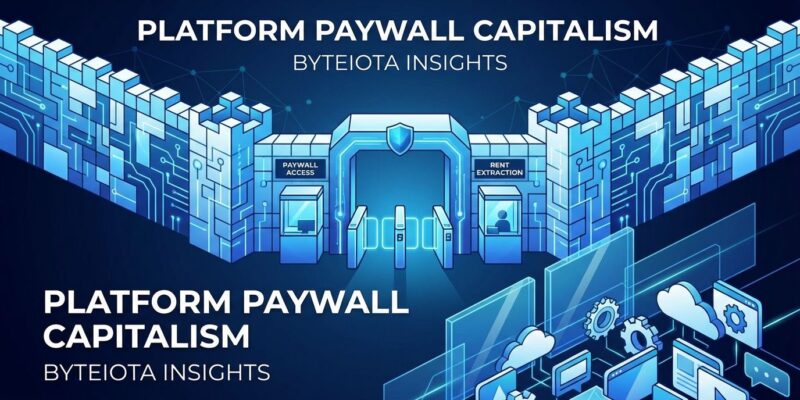
Tim Wu’s recent book “The Age of Extraction” nails what’s happening. Big Tech platforms have become landlords, turning what was envisioned as a “universal commons” into a “rentier’s paradise”—private plazas ringed with turnstiles.
Meta didn’t create your audience. You did, through years of creating content. Meta didn’t invent hyperlinks. The web did, decades before Facebook existed. What Meta did was reduce your access to your own audience through algorithmic suppression, then sell that access back as “premium value.”
Look at the rates: Amazon takes 15-45% from sellers, Apple takes 30% from app developers, Uber takes 25-40% from drivers. These platforms insert themselves between you and your audience, then charge tolls.
Creators are calling Meta’s move “extortion for a feature that was once free” and a “tax on sharing.” The backlash has been swift, particularly among independent journalists and small businesses who relied on Facebook to drive traffic without massive marketing budgets.
The Un-Linking of the Web
Meta’s link paywall is part of a larger trend: the systematic dismantling of the open web. Three forces are converging. First, AI summaries are replacing click-throughs—Google’s SGE, Perplexity, and ChatGPT keep users on-platform. Second, algorithms now actively demote links. Twitter/X ranks link posts lower to keep users scrolling. Third, platforms are explicitly restricting links behind paywalls.
For developers, this matters beyond abstract principles. It’s harder to share documentation, tutorials, and open source projects when platforms actively suppress external links.
What Developers Should Do
The answer isn’t resignation. It’s strategic diversification and platform resistance.
Build owned audiences. Your email list is the only thing you truly own. Platforms control algorithms and policies—but they can’t touch your subscriber list. RSS feeds work the same way: direct subscription with no platform mediation.
Diversify platforms. Relying on one gatekeeper is strategic suicide. Algorithm changes can crater your reach overnight. Spread your presence to reduce vulnerability.
Support open protocols. ActivityPub and Mastodon aren’t just alternatives—they’re fundamentally different models. With 7 million users across 6,000 instances, the Fediverse proves that decentralized social media works. No single platform controls your audience.
Push back vocally. Platforms do respond to collective action. Twitter reversed course on API restrictions after developer backlash. Silence is interpreted as acceptance.
Vote with your time. Spend less time building on rent-seeking platforms. The economics are clear: they’ll extract more value over time, not less.
The Stakes
Meta’s 2-link limit isn’t just about convenience or cost. It’s a test balloon for how much rent platforms can extract before users revolt. If this passes without significant resistance, expect more restrictions.
Developers and creators built the value these platforms monetize. We created content and built audiences. Now they’re charging us tolls to access what we created. That’s not a sustainable relationship. It’s extraction.
The open web isn’t dead yet, but it’s losing ground every quarter. Whether that continues depends on whether we accept platform rent extraction as inevitable, or whether we build alternatives and vote with our feet.
Meta’s $15 link tax is a line in the sand. Choose accordingly.