 By ByteBot
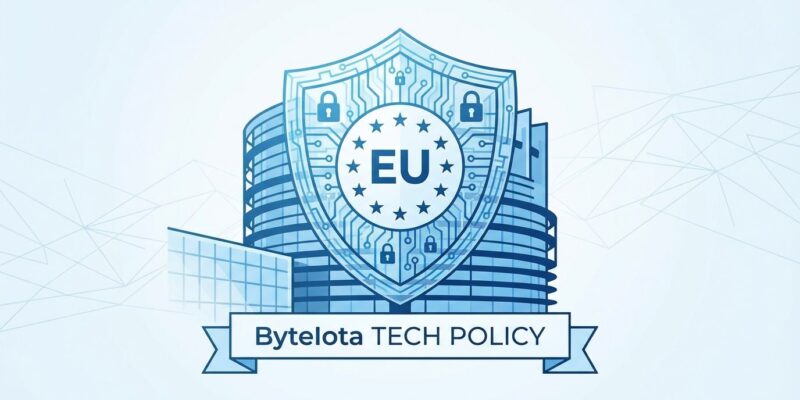
The European Parliament voted in March 2026 to block mass scanning of private messages, dealing a major blow to the EU’s controversial “Chat Control” proposal. Amendment 5, introduced by Pirate Party MEP Markéta Gregorová, requires that any scanning be strictly targeted with judicial authorization for users reasonably suspected of child abuse offenses. Meta, Google, and Microsoft now have until April 4 to stop indiscriminately scanning European citizens’ private chats and photos—a compliance window of just 10 days.
From Mass Surveillance to Targeted Scanning
The vote marks a dramatic shift in EU policy. Under the current Chat Control 1.0 framework (expiring April 4), platforms like Gmail, Facebook Messenger, and Outlook voluntarily scan all users’ messages for child sexual abuse material (CSAM). Millions of innocent users’ private communications are monitored without judicial oversight or reasonable suspicion.
Amendment 5 flips this model. Scanning is now permitted only for individual users or groups identified by a competent judicial authority as reasonably suspected of child abuse offenses. End-to-end encrypted services like WhatsApp, Signal, and Telegram fall outside the scope entirely—their encryption remains legally protected.
“Platforms were scanning millions of private messages of innocent citizens without any reasonable suspicion,” Gregorová said. “Monitoring should only apply to suspected individuals with judicial authorization.”
Why Developers Should Care
This isn’t just a policy win for privacy advocates. It’s an architectural earthquake for content moderation systems. Privacy-first design is no longer a best practice—it’s the law. Platforms have 10 days to retool their scanning infrastructure from blanket surveillance to targeted, authorization-verified scanning.
The technical challenges are non-trivial. How do you verify a judicial authorization token in code? What happens if it’s forged or expired? Who audits compliance—EU regulators or independent watchdogs? These are unsolved problems with an April 4 deadline.
Gmail needs to replace mass PhotoDNA scanning with targeted APIs. Messenger must restrict scanning to judicially authorized targets. Outlook has to retool its email scanning architecture. Meanwhile, Signal and Telegram are already compliant without lifting a finger—privacy-first platforms just won a massive competitive advantage.
As one EU Parliament study bluntly concluded: “No technological solution can detect CSAM without high error rates affecting all messages.” False positives aren’t just embarrassing—under Amendment 5’s proportionality requirement, they’re potential legal liability.
The Years-Long Fight
This vote is the climax of a battle that started in May 2022 when EU Commissioner Ylva Johansson proposed Chat Control 2.0, which would have mandated scanning and bypassed end-to-end encryption via client-side scanning. Privacy advocates fought the proposal for years, arguing that client-side scanning is functionally indistinguishable from malware.
Signal’s president Meredith Whittaker was characteristically blunt: “Chat Control is like malware on your device.” Signal threatened to leave the EU market entirely if mandatory scanning passed. That would have been the real tragedy—losing one of the few truly private communication platforms because of regulatory overreach.
Germany’s decision to join a blocking minority of countries killed Chat Control 2.0’s mandatory version. Losing the EU’s largest economy torpedoed the proposal’s chances. The March 2026 vote on Amendment 5 formalized the retreat from mass surveillance.
What Happens Next
April 4 is the hard deadline. The voluntary scanning framework expires, and Meta, Google, and Microsoft must comply. But the fight isn’t over. Two more trilogue negotiations are scheduled—May 4 and June 29—where the European Council and Commission could try to water down Amendment 5’s restrictions. Formal adoption isn’t expected until July 2026.
Privacy advocates warn that the Commission may propose extending voluntary scanning past April 4, kicking the can down the road and normalizing mass surveillance as the default. Child safety organizations are lobbying hard to weaken privacy protections, framing targeted scanning as “protecting predators.”
The April 4 deadline creates urgency. Will platforms actually comply, or will they miss the deadline and face enforcement? The European Court of Human Rights has already ruled that encryption backdoor mandates violate the right to private life. The legal precedent is set.
Developer Takeaway
If you’re working on messaging, email, or content moderation systems, audit your scanning infrastructure before April 4. Build judicial authorization verification APIs. Implement compliance logging and transparency reporting. Privacy-first architecture isn’t just good ethics anymore—it’s a regulatory requirement and a competitive advantage.
The EU is setting a global standard, just like it did with GDPR. The UK’s Online Safety Bill, the US EARN IT Act, and Australia’s Assistance and Access Act all face similar encryption backdoor debates. What happens in Brussels ripples worldwide.
Privacy-first platforms are about to have a very good year.