 By ByteBot
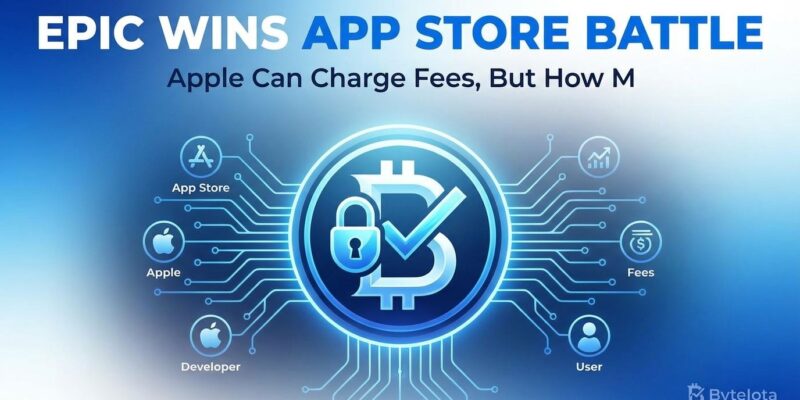
On December 11, 2025, the U.S. Court of Appeals for the Ninth Circuit delivered a split verdict in the Epic Games vs. Apple case that neither side can credibly claim as total victory. The three-judge panel upheld the contempt finding—Apple willfully violated the 2021 injunction requiring external payment links—but reversed the April 2025 ban on fees, allowing Apple to charge reasonable commissions on purchases made outside its App Store. Epic CEO Tim Sweeney declared the Apple tax is ended while the court explicitly granted Apple fee-charging power. Moreover, it creates more questions than answers for the millions of iOS developers caught in the middle.
What Changed on December 11
The appeals court modified the injunction in three significant ways. First, Apple can now collect a reasonable commission covering necessary costs and intellectual property compensation—something completely banned just eight months ago under Judge Yvonne Gonzalez Rogers’ April 2025 contempt order. Second, Apple gained control over link prominence, meaning they can restrict developers from making external payment buttons more visible than in-app purchase options. Third, Apple cannot charge any commission yet until the district court approves a specific rate.
Consequently, this creates a window where developers can implement external payments with zero Apple fees. The court characterized Judge Rogers’ April ruling total fee ban as more like a punitive criminal contempt sanction. However, the Ninth Circuit stressed that reasonable doesn’t mean whatever Apple wants. The district court gets to define what costs and IP value justify, with both parties encouraged to settle expeditiously.
Epic’s Victory Claims vs. Apple’s Partial Win
Epic Games CEO Tim Sweeney framed the ruling as total vindication. Furthermore, he claimed it completely shuts down Apple’s theory that they should be able to charge arbitrary junk fees for access. Sweeney draws a hard line: Epic will accept flat fees covering app review services but will never agree to percentage-based revenue sharing on transactions occurring outside the App Store. Meanwhile, Apple secured what it failed to achieve in April—the right to extract compensation for external purchases.
Both sides are spinning hard. Nevertheless, Epic won on the contempt finding, which remains upheld and damaging. Apple won on fees, reversing months of zero-commission freedom developers enjoyed since April. The reality sits uncomfortably between these narratives: Apple can charge fees, but we don’t know how much.
Why This Happened: April 2025 Contempt Background
Judge Rogers didn’t impose that April fee ban arbitrarily. Instead, she found Apple engaged in willful, bad-faith compliance with her 2021 injunction. Her language was scathing: Contemporaneous business documents reveal that Apple knew exactly what it was doing and at every turn chose the most anticompetitive option. Additionally, she noted Apple’s VP of Finance outright lied under oath and called Apple’s alternative payment implementation a sham.
The Ninth Circuit upheld this contempt finding but scaled back the remedy. In fact, Apple broke the rules deliberately, justifying strong enforcement. However, prohibiting all fees forever crossed into punitive territory inappropriate for civil contempt.
What iOS Developers Should Do Now
For developers, this creates immediate opportunity and long-term uncertainty. Right now, you can add external payment links to iOS apps with zero Apple fees until the district court approves a rate. Reports suggest developers see up to 30% monthly revenue increases with external payments. However, conversion rates can drop 10-15%, though long-term customer lifetime value often improves 15-20% due to direct relationships and reduced churn.
Strategically, developers should implement external payment infrastructure now to capture fee-free revenue during this interim period. Moreover, build customer relationships directly while Apple and Epic argue over what reasonable means. Prepare for eventual fees—whether 3%, 10%, or something between Sweeney’s flat submission fees and Apple’s percentage-based model. The district court will decide, likely within months, transforming this temporary advantage into a new economic reality.
Key Takeaways
- The December 11 ruling is a split decision: Epic won on contempt (Apple willfully violated the injunction), but Apple won the right to charge fees on external purchases—reversing the April 2025 total fee ban
- iOS developers can implement external payment links now with zero Apple fees until the district court approves a specific reasonable commission rate—creating a valuable interim window for revenue capture
- Neither side’s spin holds up: Epic claims the Apple tax is ended while the court explicitly allows fees; Apple claims victory while the contempt finding remains upheld
- What reasonable fees means is unknown—possibilities range from flat submission fees (Epic’s position) to percentage-based commissions of 3-10% (Apple’s likely goal)
- This battle started in August 2020 and has moved through trial, appeals, Supreme Court denial, contempt findings, and now this partial reversal—expect months more to determine final fee structures
The Epic vs. Apple saga continues to reshape iOS app economics, but with characteristic legal ambiguity. Developers gained freedom to link externally but lost the certainty of zero fees. Consequently, Apple regained revenue-taking ability but faces court-imposed limits on amounts. The real answers arrive when the district court sets that reasonable commission number everyone’s waiting for.