 By ByteBot
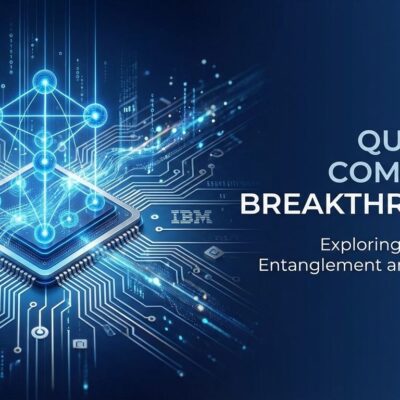
D-Wave Quantum Inc. announced yesterday it’s acquiring Quantum Circuits Inc. for $550 million, marking the first time a single company will offer both quantum annealing and error-corrected gate-model systems. The deal, expected to close by late January 2026, positions D-Wave as the only player with a comprehensive quantum computing platform—while competitors like IBM, Google, and IonQ remain locked into single approaches. This is how industry consolidation looks when billion-dollar bets collide with technical reality.
The Quantum Fork in the Road
Quantum computing has spent years split between two camps. Quantum annealing, D-Wave’s specialty, excels at optimization problems—think logistics routing, financial portfolio balancing, and AI model training. It’s robust against errors and can scale to thousands of qubits, but it’s specialized. Gate-model quantum computing, championed by IBM and Google, promises universal quantum computation for everything from drug discovery to cryptography. The catch? It’s extremely sensitive to errors and decoherence, making fault tolerance the industry’s Everest.
D-Wave just bought the map to both paths. Quantum Circuits Inc. brings dual-rail qubit architecture with built-in error detection, developed by Dr. Rob Schoelkopf at Yale University over nearly three decades. The dual-rail approach dramatically reduces the physical resources needed to create logical qubits—the error-corrected building blocks of fault-tolerant quantum computers. Translation: higher quality qubits, fewer headaches.
Why This Matters Now
The quantum computing industry raised over $2.7 billion in the first half of 2025 alone. That’s not research grant money—that’s commercial capital betting on near-term returns. McKinsey projects a $72 billion market by 2035, with potential for $1 trillion in economic value over 15 years. But here’s the reality check: nearly two-thirds of organizations are experimenting with quantum agents, yet fewer than one in four have scaled them to production.
The consolidation wave explains why. IonQ has been on an acquisition spree, snapping up ID Quantique, Qubitekk, and Vector Atomic to build a complete quantum ecosystem. Quantum Computing Inc. dropped $110 million on Luminar Semiconductor for photonics expansion. Google absorbed Atlantic Quantum, an MIT-founded startup. The pattern is clear—pure-play quantum startups need scale, capital, or an exit strategy. The days of niche quantum companies are ending.
The Competitive Stakes
IBM is pushing toward a 4,158-qubit system and targeting fault tolerance by 2029—200 logical qubits processing 100 million gates. Google’s Willow chip achieved exponential error reduction as qubit counts increased, completing a benchmark in five minutes that would take a classical supercomputer 10^25 years. IonQ leads on accuracy with 99.99% fidelity, roughly a year ahead of competitors on that metric.
D-Wave’s bet is different. Instead of racing toward a single quantum architecture, they’re hedging by owning both. Developers get the optimization muscle of quantum annealing and the universal computing promise of error-corrected gate-model systems under one roof. It’s a pragmatic move in an industry where nobody actually knows which approach will dominate—or whether the answer is “both.”
When Developers Should Care
The timeline matters more than the hype. D-Wave and Quantum Circuits plan to launch their first dual-rail system in 2026—within months. That’s the near-term deliverable. Fault-tolerant quantum systems capable of solving problems classical computers can’t? Late 2020s, if the error correction race goes well. Large-scale commercial deployment? Probably the 2030s.
But hybrid quantum-classical workflows are delivering value now. In March 2025, IonQ and Ansys ran a medical device simulation on a 36-qubit system that outperformed classical high-performance computing by 12 percent. That’s not transformative, but it’s real—and it’s the kind of incremental advantage that accumulates. Optimization workloads in logistics, finance, and machine learning are already accessible. Drug discovery simulations are accelerating. Materials science is getting faster molecular modeling.
For developers, the message is: quantum isn’t vaporware anymore, but it’s also not magic. If you’re working on optimization problems, quantum annealing offers near-term wins. If you’re eyeing general-purpose quantum algorithms, gate-model systems are maturing fast. D-Wave’s dual-platform strategy means you don’t have to pick sides prematurely.
What Happens Next
The $550 million deal ($300 million in D-Wave stock, $250 million cash) closes late this month pending regulatory approval. The first dual-rail quantum system hits general availability sometime in 2026. Meanwhile, IBM, Google, IonQ, and the rest keep pushing their own roadmaps. More M&A is inevitable—the quantum ecosystem is consolidating fast, and capital requirements are brutal.
Here’s the take: D-Wave’s acquisition of Quantum Circuits isn’t just another M&A headline. It’s a signal that quantum computing is transitioning from research labs to commercial battlegrounds, and the companies building comprehensive platforms—hardware, software, error correction, multiple architectures—are positioning to own the market. The quantum race is no longer just about who builds the most qubits. It’s about who builds the most useful quantum ecosystem.
And for developers watching this space, it’s time to start experimenting. The learning curve is steep, the tools are immature, but the commercial applications are coming faster than most people think.