Cursor launched “Automations” on March 5, 2026—the first “always-on” agentic coding system that runs autonomously without human prompting. Unlike GitHub Copilot’s interactive autocomplete or Devin’s task execution model, Automations triggers AI agents based on events: code commits, Slack messages, PagerDuty incidents, or timers. Cursor estimates running hundreds of automations per hour in production, handling security reviews, incident response, and bug triage while humans supervise only high-risk findings. This solves the critical bottleneck that emerged as agentic coding matured: engineers managing 10+ AI agents now spend more time prompting and monitoring than actually building.
Human Attention Became the Bottleneck in Agentic Coding
In 2026, 84% of developers use AI coding tools and AI writes 41% of all code. However, a new problem surfaced: engineers can manage 10+ AI agents simultaneously, but human attention became the limiting resource. As Lior Alexander observed on Twitter, “You can’t babysit a dozen agents while also doing your actual job.” The result is a productivity paradox where individual developers report 25-39% gains with AI tools, yet organizational metrics like deployment frequency barely budge.
Anthropic’s 2026 Agentic Coding Trends Report pinpoints the issue: “Code review is the first bottleneck, with code still getting reviewed at the speed of a human even if coding happens at the speed of an agentic team.” Agents take about 20 minutes to return results, forcing developers to rotate attention in cycles aligned with neurological task switching limits. The gains from AI-generated code evaporate in human oversight queues. Cursor Automations addresses this by making agents fully autonomous—only alerting humans for high-risk findings instead of requiring constant monitoring.
How Cursor Automations Works: Event-Driven, Self-Verifying Agents
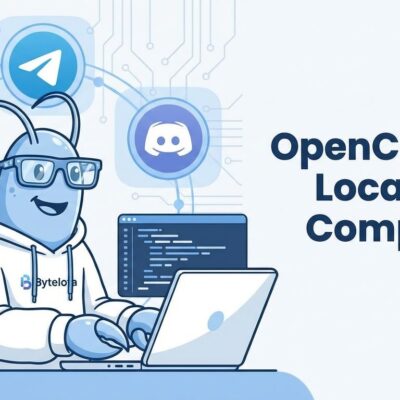
Cursor Automations runs AI agents in cloud sandboxes triggered by events like code commits, Slack messages, PagerDuty incidents, timers, or custom webhooks. When triggered, agents spin up an isolated environment with codebase access and Model Context Protocol (MCP) integrations for services like Datadog, Linear, Notion, and Slack. Agents execute predefined instructions, verify their own output by running tests and checking syntax, store results in a memory tool to learn from past runs, and notify humans via Slack only for high-risk findings or failures.
Real-world examples from Cursor’s internal use demonstrate production-scale impact. A security review automation triggers on every push to the main branch, audits code diffs for vulnerabilities, skips issues already discussed in PR comments, and posts high-risk findings to Slack. Cursor reports this automation has “caught multiple vulnerabilities and critical bugs.” For incident response, a PagerDuty-triggered automation uses the Datadog MCP to investigate logs, scans the codebase for recent changes, and sends a Slack message to the on-call channel with monitor details plus a proposed fix PR. This has “significantly reduced incident response time.”
The memory system sets Automations apart from one-shot task execution. Agents store patterns like “this type of commit usually causes X error” or “similar bug reports were duplicates,” improving accuracy over time. Unlike static AI tools where every task starts fresh, Automations gets smarter with repetition. Security reviews reduce false positives, bug triage accelerates duplicate detection, and incident diagnosis speeds up through learned root cause correlations.
Related: AI Coding Tools Hit 73% Adoption But Developers Don’t Trust
Trust Gap Paradox: 84% Adoption but Only 29% Trust AI Code
Despite 84% adoption and AI writing 41% of all code in 2026, only 29-33% of developers trust AI output—down from 40% in 2024. Stack Overflow’s February 2026 report revealed an 11-percentage-point drop in developer trust year-over-year, with more developers actively distrusting AI tool accuracy (46%) than trusting it (33%). Worse, 96% don’t fully trust AI code to be functionally correct, and 48% admit they don’t always review AI-generated code before committing. Security concerns are real: 38.8% of GitHub Copilot-generated code contains security flaws.
Cursor Automations doesn’t solve the trust problem—it shifts the model. Instead of trusting AI to write perfect code, the system relies on self-verification (agents run tests before alerting humans), selective notification (only high-risk findings go to Slack), memory-based learning (agents improve from past runs), and transparent logging (decisions logged to Notion and Linear for audit trails). Engineers transition from reviewers who examine everything to supervisors who intervene only when agents flag uncertainty or risk. This is fundamentally different from hoping AI generates correct code—it’s designing systems that assume AI needs oversight and automate that oversight at scale.
First Always-On Agentic System Compared to Copilot and Devin
Cursor Automations represents a new category distinct from existing AI coding tools. GitHub Copilot provides interactive autocomplete, requiring humans to write code while it suggests completions. Devin executes autonomous tasks like “Upgrade Python dependencies” end-to-end, but requires humans to assign those tasks. GitHub Copilot Workspace handles semi-autonomous project-wide operations, but requires humans to define the scope. Cursor Automations runs fully autonomously with event-driven triggers—no human initiation needed.
This “always-on” model fundamentally changes how developers interact with AI tools. Copilot helps you code faster but waits for you to start. Devin executes tasks but needs you to assign them. Automations runs continuously in the background: security reviews on every commit, incident response on every PagerDuty alert, test coverage checks on daily timers, bug triage on new reports. The shift moves developers from “prompt engineer” (crafting requests for AI tools) to “supervisor” (monitoring automated systems and intervening only for high-risk decisions).
The memory tool amplifies this shift by enabling compounding productivity gains. Traditional AI tools treat every task as independent. Automations learns patterns over hundreds of runs: which commit types trigger errors, which bug reports are duplicates, which alerts correlate with specific root causes. External adopter Rippling uses Automations for task consolidation, documentation updates, incident triage, and weekly status reports—demonstrating scalability beyond Cursor’s internal use. At hundreds of automations per hour, this is the first production-scale implementation of fully autonomous coding agents that don’t wait for humans to prompt them.
Key Takeaways
- Cursor launched Automations on March 5, 2026—the first “always-on” agentic coding system that runs autonomously based on event triggers (code commits, Slack, PagerDuty, timers) without human prompting.
- Human attention became the bottleneck in agentic coding: 84% of developers use AI tools, but engineers managing 10+ agents spend more time prompting and monitoring than building, causing organizational productivity gains to stagnate despite individual 25-39% improvements.
- Automations runs in cloud sandboxes with MCP integrations (Datadog, Linear, Slack), verifies its own output, learns from past runs via memory tools, and alerts humans only for high-risk findings—Cursor reports catching “multiple vulnerabilities” and “significantly reducing incident response time.”
- Despite 84% AI adoption, only 29-33% of developers trust AI output (down from 40% in 2024), and 38.8% of Copilot code has security flaws—Automations shifts the model from trusting AI to automating oversight at scale through self-verification and selective notification.
- Cursor Automations creates a new category distinct from Copilot (interactive), Devin (task-driven), and Copilot Workspace (semi-autonomous)—it’s the first production-scale always-on system running hundreds of automations per hour with memory-based learning that compounds accuracy over time.
The shift from “prompt-and-monitor” to “supervise only when needed” fundamentally changes software engineering workflows. Cursor Automations demonstrates that the future of AI coding tools isn’t smarter autocomplete or better task execution—it’s autonomous systems that run continuously in the background, learn from patterns, and escalate only when human judgment is required. For more on AI coding tool adoption trends, see Cursor’s official announcement at cursor.com/blog/automations.