 By ByteBot
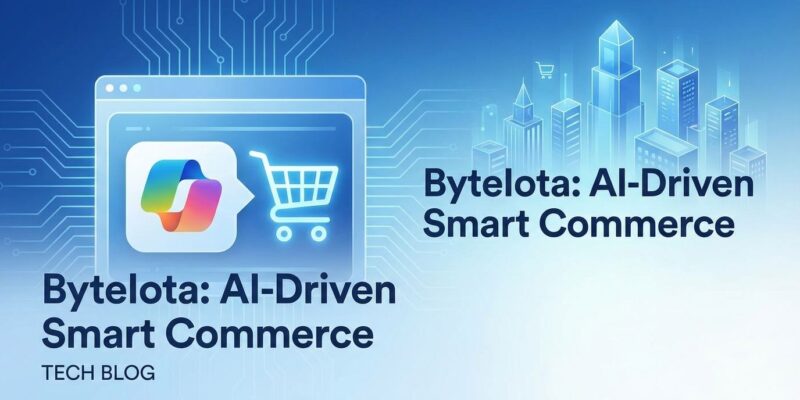
Microsoft just turned conversations into checkout lanes. Copilot Checkout, announced January 8, lets you complete purchases without leaving the chat—no website redirect, no shopping cart, no traditional checkout flow. This is “agentic commerce,” where AI assistants don’t just recommend products but complete transactions on your behalf. The race is on: Microsoft joins OpenAI, Google, and Amazon in fighting to become your default shopping interface.
How Copilot Checkout Works
The mechanics are straightforward: ask Copilot for a product recommendation, select an option, and a purchase panel appears directly in the conversation. Complete the transaction without ever visiting the merchant’s website. The merchant remains the merchant of record, but Microsoft controls the interface.
Live now on Copilot.com for U.S. users, the feature is powered by partnerships with PayPal, Shopify, and Stripe. Shopify merchants are being auto-enrolled with an opt-out window, and no technical integration is required on their end—it’s designed for seamless onboarding using the Agentic Commerce Protocol open standards.
The Numbers Tell the Story
Microsoft isn’t just launching a feature—it’s betting on a fundamental shift in how people shop online. The performance data suggests that bet might pay off. Shopping journeys involving Copilot are 33% shorter than traditional search paths, with 53% more purchases completed within 30 minutes of interaction. When shopping intent is already present, conversions are 194% higher.
The broader market agrees this is significant. McKinsey estimates agentic commerce could redirect $3 to $5 trillion in global retail spend by 2030, with nearly $1 trillion from the U.S. alone. AI-referred traffic to U.S. retail sites spiked 805% year-over-year on Black Friday 2025, and shoppers arriving from AI services were 38% more likely to convert.
Microsoft Joins a Crowded Race
Microsoft isn’t first to market here—it’s late. OpenAI launched Instant Checkout in ChatGPT back in September 2025, partnering with Shopify and Stripe to reach over a million merchants. The company has since signed deals with Target, Instacart, and DoorDash to enable purchases directly within ChatGPT.
Google followed in November with its “Buy for Me” feature in Gemini, letting the assistant purchase on a user’s behalf. The competitive dynamics are already shifting: ChatGPT’s share of AI chatbot traffic fell from 87% to 68% between August and November 2025, while Gemini’s rose from 5% to 18%. Amazon, meanwhile, released its own “Buy For Me” tool that lets users shop other retailers without leaving Amazon’s app.
Microsoft’s advantage isn’t being first—it’s leverage. The company is betting its enterprise technology footprint, retailer relationships, and integration with Dynamics 365 and Microsoft 365 will give it an edge in what’s shaping up as a multi-player race with no clear winner yet.
Developer Tools and Integration Opportunities
For developers building commerce solutions, Microsoft is rolling out practical tools beyond just Copilot Checkout itself. Brand Agents, now available for Shopify customers, let merchants bring their authentic voice into AI-driven interactions. Trained on a brand’s product catalog, these agents answer detailed product questions with minimal setup and can deploy across Microsoft Teams, Copilot Studio, and the Microsoft 365 ecosystem.
The Catalog Enrichment Agent template, in public preview in Copilot Studio, handles the grunt work of extracting product attributes from images, automating taxonomy alignment, and enriching metadata. It integrates with Dynamics 365, SAP, and Salesforce, providing a foundation for developers building their own agentic commerce solutions.
The Security Elephant in the Room
Here’s what Microsoft’s announcement glosses over: the gap between what agentic commerce can do and what consumers trust it to do. Only 34% of people are willing to let an AI assistant make a purchase on their behalf, according to recent surveys. That trust problem is well-founded.
Visa’s Payment and E-commerce Risk Center reported a 450% increase in dark web posts mentioning “AI Agent” over the past six months. Barracuda Security identified 43 different agent framework components with embedded vulnerabilities introduced via supply chain compromise in November 2025. Memory poisoning—where adversaries implant false information into an agent’s long-term storage—is particularly insidious because it persists across sessions.
The developer security gap is equally concerning. While 65% of organizations view real-time enforcement as critical for agentic systems, fewer than half have actually implemented it. Only 21% have complete visibility into agent behaviors, permissions, and data access. There’s a reason only 11% of projects have moved from pilot to production: governance, security, and trust haven’t caught up to capability.
What Developers Should Watch
2026 is being called the “show me the money” year for AI—the year enterprises demand real ROI and consumers decide whether they’re comfortable clicking “buy” inside these platforms. The EU AI Act enforces strict rules starting in August, with fines reaching up to 7% of global revenue for noncompliance. Over 20 U.S. states have enacted regulations impacting targeted ads and data handling.
For developers, the question isn’t whether to engage with agentic commerce—it’s when and how. Early integration offers first-mover advantages in a market McKinsey says could reshape trillions in spending. But the real winners won’t be determined by who ships first. They’ll be the platforms that solve for trust, security, and standards while delivering the conversational convenience everyone’s racing toward.