 By ByteBot
On December 24, 2025, CodeRabbit CEO Harjot Gill responded to developer Aiden Bai’s constructive feedback with “you clearly have no idea what you’re talking about,” sparking a controversy that generated over 6 million impressions. The incident wasn’t just a PR mishap. It exposed how one of the fastest-growing AI code review startups—valued at $550 million and serving 8,000+ businesses—prioritizes growth metrics over customer experience. When a CEO can’t handle honest product criticism without attacking the user, it reveals deeper problems than any code review tool can catch.
When $550M Valuation Meets 44% Accuracy
CodeRabbit raised $60M at a $550M valuation in September 2025, grew revenue 10x year-over-year to $15M+ ARR, and doubled headcount in under a quarter. The numbers scream success. However, third-party benchmarks tell a different story: CodeRabbit catches only 44% of bugs, the lowest among major competitors. Greptile catches 82%. Cursor catches 58%. CodeRabbit optimizes for speed (206 seconds average review time) and low noise (just 2 false positives in testing), but it misses the majority of issues it’s supposed to find.
Moreover, when Aiden Bai raised concerns about the tool’s limitations, CEO Gill deflected with growth numbers—”we have more users than everyone you mentioned combined”—instead of acknowledging the accuracy gap. This is hypergrowth culture at its worst: confusing user acquisition with user satisfaction. In immature markets, you can have explosive growth despite mediocre customer experience. Nevertheless, as the AI code review market matures and competition increases, customer experience becomes the differentiator. CodeRabbit’s CEO controversy is an early warning of what happens when companies can’t transition from “move fast” to “build trust.”
The Product Doesn’t Match The Promise
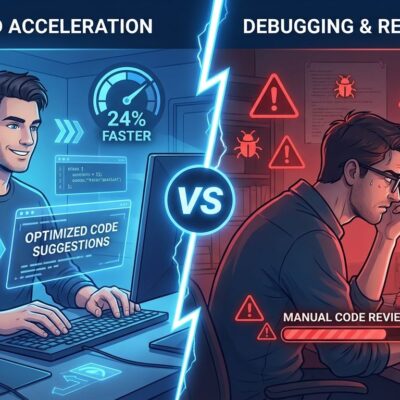
CodeRabbit markets itself as solving the “code review bottleneck”—the problem where AI coding assistants generate code 10x faster but human review capacity can’t keep up. The bottleneck is real: developers using AI complete 21% more tasks and merge 98% more PRs, but review time increases 91%. Furthermore, 96% of developers don’t trust AI-generated code, according to Sonar’s 2026 State of Code survey of 1,100+ developers. Only 48% always check AI code before committing.
When the tool meant to verify AI code catches only 44% of bugs, you’ve compounded the problem instead of solving it. Additionally, 38% of developers report AI code requires MORE review effort than human code. CodeRabbit’s speed advantage—206 seconds vs Greptile’s 288 seconds—doesn’t matter if you’re missing over half the bugs. This explains why users like Aiden Bai were frustrated enough to share feedback publicly. When a tool promises to solve a critical problem but only delivers a partial solution, and the CEO responds with defensiveness instead of acknowledgment, it signals the company isn’t being honest about product limitations.
Customer Feedback 101: What CodeRabbit Got Wrong
Customer feedback management research identifies seven core best practices: assume customers are right, talk to customers directly and daily, embrace all feedback—positive and negative, close the feedback loop, share feedback across the team, filter and analyze before acting, and secure stakeholder buy-in. CodeRabbit’s CEO violated all of them. He assumed the user was wrong, responded publicly instead of privately, treated criticism as a personal attack, didn’t close the feedback loop, and cited growth metrics to deflect instead of analyzing the feedback.
Research shows 72% of customers view brands more favorably when they ask for input and respond to it. CodeRabbit had an opportunity to turn a critic into an advocate by listening and acting. Instead, the CEO’s response—”you have no idea what you’re talking about”—turned a user into a viral case study of what NOT to do. Consequently, the 6 million impressions became negative CEO behavior marketing, not product marketing. This isn’t just about CodeRabbit—it’s a pattern across hypergrowth AI startups. CEOs who can’t separate product criticism from personal attacks will struggle as markets mature. For developers evaluating dev tools, CEO behavior is a signal of company culture. If a founder treats honest feedback as ignorance, that company won’t iterate effectively.
AI Reviewing AI: Why The Bottleneck Persists
The problem CodeRabbit claims to solve is legitimate. AI coding assistants help developers complete 21% more tasks and merge 98% more PRs, but PR review time increases 91%. Review capacity, not code generation speed, now determines delivery velocity. However, AI code review tools create new problems. As mentioned, 38% of developers say AI code requires MORE review effort than human code, and only 48% always check AI-generated code before committing. CodeRabbit’s 44% catch rate means it catches less than half of bugs, creating false confidence that code is “reviewed” when it’s not.
In fact, research shows AI doesn’t eliminate verification work—it shifts it. Developers spend 23-25% of time on toil with or without AI tools. AI code review tools become another layer to verify, not a replacement for human review. The industry is selling tools to fix problems created by other tools, but the full stack still requires human oversight at every level. Therefore, developers need to understand the AI code review market is immature. Current tools supplement human review; they don’t replace it. The bottleneck persists because AI reviewing AI still requires human verification. This context makes CodeRabbit CEO’s defensiveness even more problematic—when your tool only partially solves the problem, you should welcome feedback to improve it, not dismiss users as ignorant.
Choosing Code Review Tools: Product AND Team Matter
After the December 2025 controversy, developers shared alternative recommendations: Greptile for accuracy-first teams (82% catch rate, $30/user/month), Cursor Bugbot for teams already using Cursor IDE (58% catch rate, built-in), and Cubic and Qodo as alternatives with reportedly better customer support. However, the lesson isn’t just “switch tools”—it’s to evaluate tools holistically. Look at product performance (catch rate, false positives, speed) AND team responsiveness (how they handle feedback, iterate on criticism).
Here’s the decision framework from post-controversy discussions: test multiple tools before committing, measure actual catch rates (not marketing claims), track false positives to assess noise vs value, assess customer support responsiveness, and check how the CEO or team handles criticism publicly. As developers noted in the thread, “If the CEO can’t handle honest feedback, that’s a red flag about the company.” Tools are only as good as the teams building them. If a company dismisses feedback, it won’t iterate effectively, and you’ll be stuck with a tool that doesn’t improve. CodeRabbit’s incident provides a template for what to watch for: does the CEO or team listen, acknowledge limitations, and act on criticism?
Key Takeaways
- CodeRabbit’s December 24, 2025 CEO controversy exposed how hypergrowth culture prioritizes metrics over customer satisfaction—$550M valuation and 8,000+ customers don’t equal product quality when the tool catches only 44% of bugs
- AI code review tools are immature—CodeRabbit catches 44%, Greptile catches 82%, and the industry still requires human verification at every layer, meaning the bottleneck persists despite vendor promises
- CEO behavior signals company culture and iteration capacity—when founders treat honest feedback as personal attacks instead of valuable data, the product won’t improve and customers will leave for responsive competitors
- Evaluate dev tools holistically by testing catch rates, tracking false positives, assessing customer support responsiveness, and watching how teams handle public criticism
- Consider alternatives: Greptile for accuracy-first (82%), Cursor Bugbot for IDE integration (58%), or Cubic/Qodo for better support—but always verify performance claims and test before committing