By ByteBot
Cloud spending hit $723 billion in 2025, but here’s the uncomfortable truth: organizations waste 32% of it—over $225 billion annually—on unused resources, overprovisioned instances, and poor visibility. Despite a decade of FinOps evangelism, 84% of companies still struggle to manage cloud costs. And the problem’s getting worse as AI workloads push GPU costs 5-10x higher than standard compute.
Cloud costs are now the second-largest expense at midsize IT companies, trailing only payroll. Yet most organizations have no idea where the money goes.
Why Traditional FinOps Isn’t Working
The FinOps industry has spent years selling tools, frameworks, and consultants. The result? 91% of organizations still report cloud waste, and only 6% achieve zero avoidable spending. Four systemic problems explain why traditional FinOps is stuck:
Poor visibility tops the list. Over half of companies cite lack of visibility as the main reason for waste. Only 30% have a clear understanding of where their cloud spend goes. You can’t optimize what you can’t see, and most organizations are flying blind.
Complex pricing makes planning impossible. Half of companies say multi-tier pricing models make cost control too hard. When pricing changes by region, by second, and by commitment type, even experienced teams struggle to predict costs accurately.
Overprovisioning is rampant. Organizations on average provision 33% more cloud resources than they actually use. Worse, 40% of instances are at least one size larger than needed—an easy fix that could save 50% per instance, yet most teams never right-size because there’s no real-time feedback loop.
Manual processes can’t scale. Monthly cost reviews, spreadsheet tracking, and manual tagging worked when cloud was simple. They fail when resources spin up and down by the second. Traditional FinOps asks humans to review spending after the money’s already gone. That’s not optimization—it’s accounting.
AI Workloads Make Everything Worse
Just as FinOps was failing to solve the original cloud waste problem, AI threw gasoline on the fire. AI and ML workloads now represent 22% of total cloud costs and they’re growing faster than any other category.
GPU instances cost 5-10x more than standard compute, yet only 7% of companies achieve above 85% GPU utilization during peak periods. Training a modern foundation model costs millions of dollars per run, and 44% of enterprises either manually assign GPU workloads or have no specific strategy at all.
The numbers get worse. Hyperscalers are spending over $600 billion in 2026 on infrastructure, with $450 billion directly tied to AI—a 36% increase over 2025. Meanwhile, data center electricity demand is rising 15% annually, driven entirely by AI workloads.
Organizations are racing to adopt AI without understanding the cost implications. Consequently, the result is predictable: massive waste on top of existing waste.
What Actually Works: The Case for Radical Automation
McKinsey estimates the FinOps-as-Code opportunity at $120 billion. That’s not a typo—automating cloud cost optimization could recover more than half of the current waste.
The companies that are winning don’t rely on monthly reviews and manual processes. Instead, they treat cloud costs like code: automated, real-time, developer-owned.
Dropbox saved $75 million over three years by taking control of infrastructure. Adobe achieved $10 million in annual savings by empowering developers to own costs through self-service dashboards. Twitter cut cloud bills 35% with auto-scaling. Atlassian saved $2 million annually by giving engineers visibility into usage. Furthermore, Nubank reduced on-demand costs by 53.59% through automation.
The pattern is clear: automation-first approaches deliver 25-35% savings, while manual FinOps delivers reports and blame.
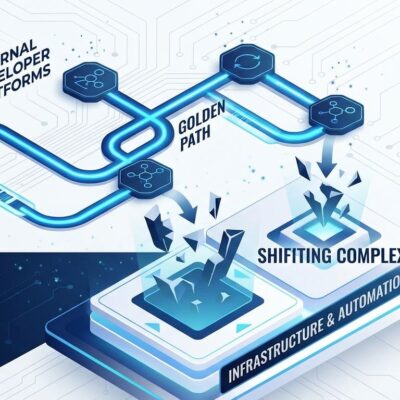
What changed? These companies moved from reactive to proactive. Instead of humans reviewing costs monthly, intelligent systems optimize continuously. Instead of FinOps teams owning budgets, developers see costs in real-time and make smarter architecture decisions. Instead of generic best practices, code-based policies enforce guardrails automatically.
What Developers Should Do Right Now
You don’t need to wait for your company to fix FinOps. Your architecture decisions directly impact cloud costs, and you have more control than you think:
Demand real-time cost visibility. Monthly reports are useless. You need costs in your dashboard, attributed to your team and services. If you can’t see what each deployment costs in real-time, you can’t make informed decisions.
Right-size aggressively. 40% of instances are oversized. Downsize by one instance size and save 50%. Downsize by two sizes and save 75%. Challenge every “provision for peak” assumption—that’s what auto-scaling is for.
Turn off non-production resources. Non-production workloads represent 44% of cloud spend, yet they’re only needed 40 hours per week. That’s 76% idle time. Therefore, automate scheduling to shut down dev and test environments nights and weekends.
Track AI costs separately. If you’re running AI workloads, instrument them. GPU instances cost 5-10x more than standard compute, and only 7% of companies achieve good utilization. Challenge every GPU request. Make sure training runs are necessary and optimized.
Own your spend. Don’t wait for the FinOps team to tell you what you already know. You control which services you use, which instance sizes you choose, and whether resources run 24/7. Take responsibility for the costs you generate.
FinOps Needs Automation, Not More Tools
The $225 billion cloud waste crisis won’t be solved by better dashboards, more consultants, or monthly cost reviews. It requires a fundamental shift from manual processes to automated systems that optimize in real-time.
FinOps-as-Code, developer empowerment, and intelligent automation aren’t future trends—they’re the only approaches that have proven to work at scale. The companies saving millions aren’t the ones with the best FinOps frameworks. They’re the ones that automated the problem away.
Cloud costs will keep rising. AI workloads will keep growing. The question is whether your organization will keep wasting 32% of the budget, or whether you’ll demand the automation and visibility needed to fix it.