Eighty-three percent of enterprises are planning to move workloads out of AWS, Azure, and Google Cloud, according to recent Barclays survey data—marking the highest cloud repatriation rate ever recorded. Moreover, 86% of CIOs now plan to shift public cloud workloads back to private infrastructure or on-premises environments, a rate that exceeds any previous measurement. This isn’t cloud failure. It’s strategic correction after a decade of “cloud-first” migrations revealed a widening gap between cloud’s promise and its actual economics at scale.
The numbers tell a story that challenges tech’s prevailing orthodoxy. Companies like GEICO spent a decade moving 600+ applications to the cloud, only to watch costs balloon by 2.5x. They’re now reversing course. 37signals exited AWS entirely and now saves $2 million annually. Even Dropbox, which built itself on Amazon’s infrastructure, quietly moved 90% of customer data back to self-managed systems by 2016.
The Numbers Don’t Lie
Twenty-five percent of UK organizations have already repatriated half or more of their cloud workloads. However, this isn’t wholesale cloud rejection—only 8% are moving their entire portfolio, according to IDC. What we’re seeing is strategic optimization, not reactionary retreat.
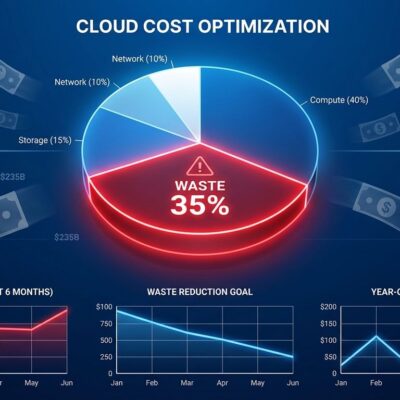
The financial case is straightforward. Companies report 30-60% cost reductions through targeted repatriation. Furthermore, for GPU-intensive workloads, the savings run deeper: equivalent performance costs 50-70% less on owned infrastructure compared to AWS or GCP. These aren’t projections. They’re measured outcomes from production deployments.
Public cloud spending continues growing—Gartner projects $723.4 billion in 2025, up 21% from the previous year. AWS, Azure, and GCP are expanding at 20-35% annually. Both trends coexist because they represent different strategic choices: growth in cloud-native startups and variable workloads, contraction in enterprises with stable, predictable infrastructure needs.
Real Companies, Real Savings
37signals provides the clearest case study. Their cloud costs hit $3.2 million in 2022. They invested $600,000 in Dell servers, deployed them in colocation facilities, and cut their annual infrastructure spend to roughly $840,000—including rack space and power. The hardware investment paid for itself in under six months. Consequently, they project $10 million in savings over five years.
GEICO’s journey illustrates the other side: the cost of getting cloud wrong. After migrating 600+ applications over a decade, they faced a 2.5x cost increase alongside reliability problems and vendor dependency concerns. Now they’re building a private cloud on OpenStack and Kubernetes, repatriating workloads they spent years moving to AWS.
Dropbox recognized the pattern earlier. By 2016, they had relocated approximately 90% of customer data off AWS to hybrid infrastructure they built and managed themselves. The driver was simple: operational cost optimization at their scale made self-managed infrastructure economically superior to cloud services.
Three Drivers Fueling Cloud Repatriation
Cost optimization dominates. Data egress fees—often priced at 100-1000x the cost of equivalent IP transit—can represent 90% of seven-figure AWS bills. The premium charged for on-demand flexibility makes sense for variable workloads. For stable, predictable infrastructure, it’s dead weight. Additionally, AI and GPU-intensive processing intensify the pressure, with cloud GPU costs running 50-70% higher than owned equivalents.
Compliance and control concerns rank second. GDPR and national data protection laws require knowing exactly where data physically resides. Financial services, healthcare, and government sectors face data residency mandates easier to satisfy with owned infrastructure. In fact, regulatory compliance costs can eclipse any cloud savings.
Performance needs drive the remainder. Database workloads with consistent high I/O demands, real-time systems requiring sub-10-millisecond latency, and applications processing large local datasets perform better on dedicated hardware. Shared cloud infrastructure can’t match purpose-tuned systems for these specific workloads.
Hybrid Cloud Architecture: The New Default
Gartner predicts 40% of enterprises will adopt hybrid compute architectures for mission-critical workflows—up from just 8% previously. This isn’t incremental change. It’s a fundamental strategy shift from “cloud-first” dogma to “right-place-first” pragmatism.
The framework is straightforward. Steady, predictable workloads with high storage or I/O demands belong on owned infrastructure. Database systems, mature applications with infrequent changes, latency-sensitive services, and compliance-critical data fit this profile. Meanwhile, variable, bursty workloads with spiky traffic patterns remain ideal cloud candidates. Rapid development projects, geographically distributed applications, and small-scale deployments still benefit from cloud’s flexibility.
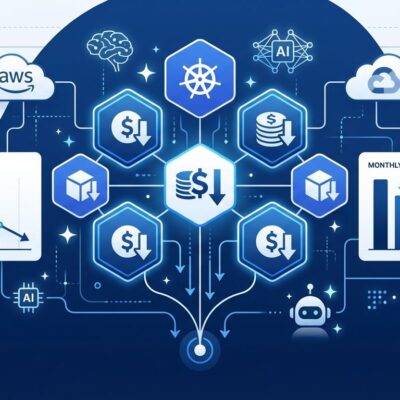
Kubernetes has emerged as the enabling technology. It provides a consistent orchestration layer across private data centers, public clouds, and edge deployments. Containers deliver portability. OpenStack powers private clouds (as GEICO demonstrates). Unified control planes let workloads flow between environments based on real-time policies governing cost, performance, and compliance.
The viability threshold sits around $50,000 monthly in cloud infrastructure costs. Below that, cloud’s operational simplicity typically wins. Above it, repatriation economics start favoring owned infrastructure, especially for stable workloads.
What Cloud Repatriation Means for Developers
The skill requirements are shifting. Cost optimization has graduated from operations concern to core engineering competency. Developers need to understand unit economics—cost per transaction, per gigabyte stored, per compute hour. Total cost of ownership analysis informs architecture decisions just as much as performance or scalability considerations.
Hybrid architecture expertise has become essential rather than optional. Design for portability. Avoid deep integration with cloud-specific services for workloads that might repatriate. Therefore, Kubernetes and container proficiency are table stakes now, not differentiators.
On-premise infrastructure knowledge is valuable again. Skills once dismissed as legacy—managing physical hardware, understanding data center operations, optimizing bare-metal performance—command new market premiums. The pendulum has swung back.
Strategic thinking trumps dogma. “Cloud-first” made sense when cloud was novel and enterprises needed pushing to modernize. In 2026, the question isn’t “should we use cloud?” but “which workloads belong where?” Evidence-based placement decisions, backed by measurement and continuous 12-36 month reassessment cycles, replace reflexive cloud adoption.
The Strategic Correction
Cloud repatriation isn’t cloud rejection. It’s the market correcting after a decade of overcorrection toward cloud-first strategies. The 83% of enterprises planning workload repatriation aren’t abandoning cloud—they’re optimizing workload placement based on economics rather than ideology.
The hybrid future is already here. Forty percent enterprise adoption of hybrid architectures represents a 5x increase from previous norms. Kubernetes provides the portability layer. Cost optimization and strategic placement drive the decisions. Developers who understand when not to use cloud will be as valuable as those who mastered cloud deployment.
Cloud providers will keep growing. However, the “move everything to cloud” era has ended. What’s emerging is more nuanced: strategic workload placement that optimizes for cost, performance, and compliance across hybrid infrastructure. That’s not regression. That’s maturity.
Key Takeaways
- 83% of enterprises plan cloud repatriation, with 86% of CIOs planning workload moves—the highest rate ever recorded
- Real savings: 30-60% cost reductions proven by companies like 37signals ($2M/year) and GEICO (2.5x cost spike reversed)
- Hybrid cloud architecture is the new default, with Gartner predicting 40% enterprise adoption (up from 8%)
- Developers need new skills: cost optimization, hybrid architecture expertise, and strategic workload placement
- The shift from “cloud-first” to “right-place-first” strategy represents industry maturity, not cloud failure