 By ByteBot
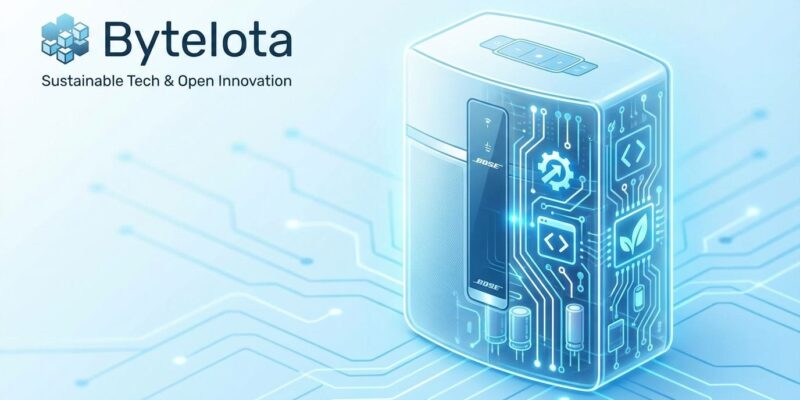
On January 7-8, 2026, Bose open-sourced the SoundTouch API documentation instead of bricking $600+ smart speakers when cloud support ends May 6, 2026. The move—which came after customer backlash—became the #1 trending story on Hacker News with 2,010 points and 301 comments. This is what responsible end-of-life for IoT hardware looks like. It should be the industry standard, not a rare exception.
Most Companies Just Brick Your Hardware
Bose’s approach stands in stark contrast to how the IoT industry typically handles product end-of-life. The default playbook: sunset the cloud service, brick the hardware, force customers to buy new devices. The result is mountains of e-waste and betrayed customers who paid premium prices for devices that worked perfectly fine—until the manufacturer decided they shouldn’t.
Sonos perfected this approach in 2020. The company required users to activate “Recycle Mode” to get trade-in discounts—a 21-day countdown that permanently bricked the speakers. An e-recycler working at a facility called it “the most environmentally unfriendly abuse and waste of perfectly good hardware I’ve seen in five years.” After massive backlash, Sonos apologized and changed the policy. But speakers already bricked? They stayed dead.
Wyze gave Cam v1 owners seven days notice before ending support in 2022. The camera still worked locally, but cloud features vanished after just five years on the market. Industry research shows 95% of IoT products fall victim to planned obsolescence or company abandonment. This isn’t a technical problem—it’s a business model.
What Bose Actually Did
Bose’s SoundTouch speakers launched in 2013 with a $600+ price tag. When the company announced in October 2025 that cloud support would end February 18, 2026, customers revolted. The backlash forced Bose to extend the deadline to May 6, 2026, and—more importantly—release the SoundTouch API documentation as open-source.
Before cloud support ends, the SoundTouch app will auto-update with local controls. Features that survive: AirPlay, Spotify Connect, Bluetooth, AUX input, remote control functions, and multi-speaker grouping. All work locally without pinging cloud servers. Lost features: cloud music services like Pandora and Deezer, plus security and software updates.
The API documentation gives developers HTTP command access on port 8090. Independent developers can now build custom control apps, integrate with Home Assistant and other smart home platforms, and create community tools to replace Bose’s official software. One Reddit developer captured the mood: “Kudos to them on the open sourcing. That’s a real investment to prepare an SDK for public release. I’m excited to see what cool features the community cooks up.”
This Wasn’t Bose’s Original Plan
Let’s be clear: Bose didn’t proactively choose this path. The October 2025 announcement mentioned nothing about API access or local controls. Customers took to forums, Reddit, and Hacker News, some “swearing off buying Bose products for life.” Only after sustained pressure did Bose reverse course.
That’s frustrating, but it’s also instructive. Community pressure works. Companies respond when backlash threatens their brand. Bose deserves credit for listening, but this should have been the default approach from day one, not a reluctant concession after public shaming.
Right-to-Repair Laws Are Coming
Bose’s move comes as four US states enacted right-to-repair laws on January 1, 2026: Colorado, Washington, Oregon, and Nevada. Texas follows on September 1. These laws require manufacturers to provide repair parts, tools, and documentation for consumer electronics.
There’s a gap, though. Most right-to-repair legislation focuses on physical repair—replacing batteries, screens, components. It doesn’t address firmware, software, or cloud dependencies. IoT devices are vulnerable precisely because they rely on manufacturer-controlled cloud infrastructure. When the company pulls the plug, the hardware becomes useless regardless of its physical condition.
Bose’s precedent could inform the next wave of legislation. If lawmakers want to tackle e-waste from IoT devices, they’ll need to mandate API access and local control options for cloud-dependent products. The technical capability exists—Bose just proved it. The question is whether we make it legally required.
The Limitations: Not True Open-Source
Bose’s solution isn’t perfect. The license is proprietary and revocable, not a true open-source license. The company released API documentation—not the actual firmware source code. Security updates stop on May 6, creating vulnerability risks for devices that remain online. Bose could theoretically revoke the API license later, though that would trigger another backlash.
It’s better than bricking the hardware, but it’s not the gold standard. True open-source would mean releasing the complete firmware source code under a permissive license, allowing the community to maintain security updates and add features indefinitely. Bose took a step in the right direction. They didn’t go all the way.
Key Takeaways
- Bose open-sourced SoundTouch API documentation instead of bricking $600+ speakers when cloud support ends May 6, 2026
- This came after customer backlash—the original October 2025 announcement offered no API access or local controls
- Preserved features: AirPlay, Spotify Connect, Bluetooth, multi-speaker grouping all work locally. Lost: cloud music services and security updates
- Contrast with competitors: Sonos bricked speakers via Recycle Mode (2020), Wyze gave 7 days notice for Cam v1 EoL (2022)
- Four US states enacted right-to-repair laws January 1, 2026, but most don’t address cloud/firmware dependencies
- Limitation: Proprietary license, no source code released, no security updates after EoL—better than bricking, but not true open-source
Bose did better than its competitors, but only after community pressure. This precedent should become legally required. Developers now have opportunities to build community tools. And customers who paid $600 in 2013 get to keep using their hardware. That’s how end-of-life should work.