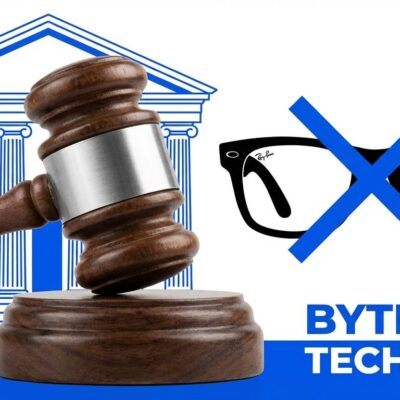
On March 4, 2026, seven tech giants—Amazon, Google, Meta, Microsoft, OpenAI, Oracle, and xAI—signed the White House’s “Ratepayer Protection Pledge,” promising to pay all AI data center power costs and infrastructure expenses rather than passing them to residential electricity bills. The timing isn’t coincidental. These companies plan $690 billion in AI infrastructure spending for 2026, nearly double 2025’s $380 billion, while electricity costs near existing data centers have spiked up to 267% in five years compared to a 40% national average. The catch? The pledge is nonbinding, unenforceable, and has no penalties for non-compliance.
The Pledge Has No Teeth
The Ratepayer Protection Pledge is voluntary with zero enforcement mechanisms. The White House has no authority over state electricity markets, and no penalties exist for companies that reneg on commitments. Ari Peskoe, director of Harvard Law School’s Electricity Law Initiative, dismisses it as “political theater” aimed at sweeping the problem under the rug rather than solving it.
Harvard Law research documents 50+ cases where utilities gave data centers discount rates while forcing ratepayers to subsidize Big Tech infrastructure through secret contracts. Moreover, just two days after the pledge was signed, Oracle and OpenAI canceled their Stargate expansion in Texas on March 6 when financing negotiations failed. Commitments collapse under financial pressure.
States don’t trust the pledge either. Over 300 bills across 30 states were introduced in February and March 2026, shifting from incentive-focused policies to regulatory oversight. Maryland requires separate rate schedules subject to Public Service Commission approval, with collateral posted to protect ratepayers. Alabama’s SB 270 goes further: data centers must pay infrastructure costs AND prove statewide benefit. This legislative wave started before the pledge was signed, showing governments anticipated it wouldn’t be enough.
Why This Matters: Electricity Costs Explode Near Data Centers
Bloomberg analysis reveals the scale of the problem. Electricity costs have increased up to 267% over five years in areas near significant data center activity, compared to a 40% national average. That’s a 6.7x disparity directly traceable to data center demand.
Baltimore residents saw bills jump $17 per month after one PJM power auction reached a record high, with another $4 monthly increase coming mid-2026 after a second record auction. Wholesale electricity spikes get passed to households via utility bills. The political pressure is real: Virginia and New Jersey elections swung to Democrats in 2025 due to voter anger over electricity price increases near data centers.
AI data centers consume 50-200 megawatts, with some facilities reaching 500 MW—compared to 1-2 MW for traditional data centers. This isn’t a marginal increase. It’s a fundamental infrastructure challenge that utilities address by building expensive power generation and transmission lines before data centers even exist, then spreading costs to all ratepayers.
The Unprecedented Scale: $690B in AI Infrastructure
The five largest cloud and tech companies are spending $690 billion on AI infrastructure in 2026, up from $380 billion in 2025—an 82% year-over-year increase. Amazon alone is investing $200 billion, with Google at $175-185 billion, Meta at $115-135 billion, and Microsoft at $145 billion. Oracle’s $50 billion represents a 136% increase over 2025.
This spending requires gigawatts of new power generation. The Stargate Texas project planned 2,000+ megawatts (equivalent to a mid-size city) before scaling back to 1.2 GW. Google signed a 15-year Power Purchase Agreement with Total Energies for 1,000 MW of solar capacity in February 2026. Elon Musk’s xAI built a hybrid data center and gas turbine power plant in Memphis without waiting for coordinated approaches.
The timing problem is acute. Utilities must build infrastructure 3-5 years before data centers come online. Data centers become operational in 12-18 months. That mismatch creates a gap where ratepayers fund expensive infrastructure for facilities that don’t exist yet, driving the electricity cost spikes Bloomberg documented.
The Cloud Pricing Question and State Backlash
Even if tech companies pay infrastructure costs upfront, they may recover expenses through cloud pricing increases. OVH Cloud is already forecasting 5-10% price increases for April-September 2026, with analysts expecting AWS, Azure, and GCP to follow. Cloud providers typically lag 3-6 months between procurement cost changes and retail pricing adjustments.
For developers, cloud pricing is the real test of whether this pledge means anything. AI and ML Savings Plans launched in 2025 for GPU workloads (AWS P4d/Trn1 instances, Azure OpenAI services) because GPU costs are 5-10x regular compute. Optimization can reduce costs 30-60% through spot instances and mixed-precision training, but base prices are rising. Watch for new line items: “infrastructure fees” or “power surcharges” could appear in 6-12 months.
Related: Cloud Waste 31% in 2026: $280B Lost to Idle Resources
States aren’t waiting to see what happens. The 300+ bills introduced across 30 states show governors and legislatures want legal requirements, financial guarantees, and regulatory oversight. At least 18 states introduced bills creating special rate classes for data centers. Maryland and Alabama models require collateral posting, Public Service Commission approval, and public benefit tests. This state-level activity is where real accountability will come from, not the nonbinding federal pledge.
Key Takeaways
- The Ratepayer Protection Pledge is nonbinding political theater with no enforcement mechanisms—Harvard Law found 50+ prior cases where companies signed similar agreements while negotiating secret utility discount deals
- Electricity costs spiked 267% near data centers versus 40% nationally (Bloomberg analysis), driving voter anger that swung Virginia and New Jersey elections in 2025
- Big Tech’s $690B in 2026 AI spending nearly doubles 2025’s $380B, requiring gigawatts of new power generation that utilities traditionally spread across all ratepayers
- Cloud pricing is the real test: Watch AWS, Azure, and GCP for “infrastructure fees” or base price increases in the next 6-12 months that pass costs to developers instead of shareholders
- States don’t trust voluntary pledges—300+ bills across 30 states demand legal requirements, collateral posting, and PSC oversight, showing that real accountability will come from state regulation, not federal promises