 By ByteBot
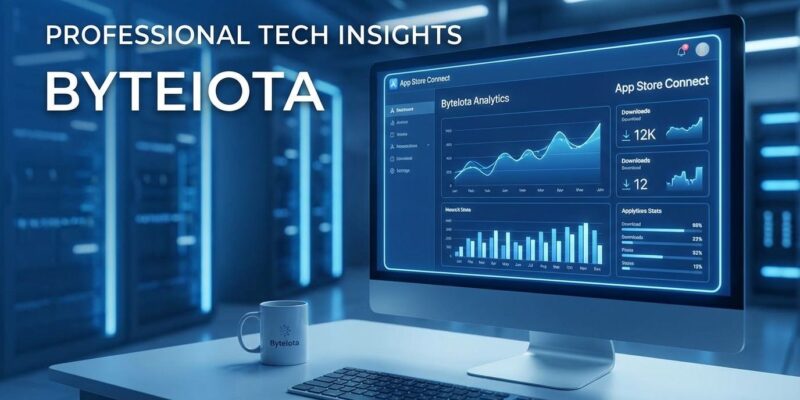
Apple quietly dropped its biggest App Store Connect update ever on March 25, 2026. Over 100 new metrics just landed in the developer dashboard, giving iOS developers first-party data they’ve been requesting for years. Apple calls it “the biggest update since launch,” and for once, the marketing isn’t overselling it. Developers can now see exactly where users abandon purchase flows, which subscription tiers actually convert, and how pricing changes impact retention over time. This is the data that third-party analytics tools have been estimating. Now it comes straight from Apple.
First-Party Data Beats Guesswork
The headline feature is simple: first-party data from Apple’s actual transaction systems. No more relying on Sensor Tower estimates or paying for Mixpanel’s user tracking. If you sell through the App Store, Apple now shows you the ground truth.
This matters most for indie developers and small teams who couldn’t justify enterprise analytics subscriptions. They get the same monetization insights that billion-dollar apps pay third-party vendors thousands per month to approximate. One indie developer noted, “Apple’s expanded analytics are incredibly empowering, especially for indie developers and small teams.”
The update tracks three core areas: monetization (where revenue comes from), subscriptions (conversion and retention), and in-app purchases (funnel analysis). Apple added filters that let developers drill down with up to seven parameters at once. Want to see trial conversion rates for iOS 18 users in Japan who downloaded from organic search in March? Now you can.
Cohort Analysis Unlocks User Segmentation
The most powerful addition is cohort analysis. Developers can now group users by download date, acquisition source, offer start date, and other attributes, then track how those groups perform over time.
Practical example: You launch your app in Japan in March 2026. Create a cohort for “Japan, March downloads” and track their 30/60/90-day subscription conversion compared to existing markets. Did your localization work? Does pricing need adjustment? The data tells you.
This isn’t new technology. Google Play Console has offered cohort analysis for years. But Apple closing the gap matters because iOS users spend significantly more than Android users on apps and subscriptions.
API Access Means Real Integration
Two new subscription reports are now available via the Analytics Reports API. Translation: Enterprise teams can finally pull App Store data into their existing business intelligence tools.
Before this update, developers manually exported CSV files from App Store Connect and uploaded them to data warehouses. That’s fine for monthly reviews, but useless for real-time optimization. API access enables automated feeds into Tableau, Looker, or custom dashboards that combine App Store data with web analytics, customer support tickets, and marketing attribution.
This is table stakes. Google Play Console has offered API access for years. Apple catching up doesn’t deserve applause, but it does remove a legitimate developer pain point.
Peer Benchmarking Without Privacy Invasion
Apple added two benchmarks: download-to-paid conversion and proceeds per download. Both use differential privacy techniques, which means you can see how you stack up against similar apps without Apple exposing anyone’s individual performance.
This addresses a real question developers have: “Is my 3% trial conversion rate good or terrible?” Now you know. If peers are hitting 8%, you have work to do. If the average is 2%, you’re winning.
Google Play Console offers up to 250 peer comparisons. Apple’s implementation is more limited but follows the same logic: Competitive context makes metrics actionable.
What’s Still Missing
This update doesn’t eliminate third-party analytics tools. Apple’s walled garden is better lit, but it’s still a garden wall.
Cross-platform analysis remains impossible. Want to compare iOS and Android user behavior side-by-side? You need a third-party tool. Custom event tracking beyond purchases and downloads? Not here. Marketing attribution beyond basic source tracking? Still requires Adjust, AppsFlyer, or Branch.
Apple also won’t let you export user-level data, which limits sophisticated funnel analysis and predictive modeling. Everything is aggregated metrics, which protects privacy but constrains advanced analytics.
Developers will still use Firebase for behavior tracking, Mixpanel for retention analysis, and RevenueCat for subscription management. Apple just reduced the gap between “what I can see” and “what I need to know.”
Better Late Than Never
Apple’s App Store Connect update delivers features that Google Play Console has offered for years and third-party tools have estimated for longer. It’s not revolutionary. It’s Apple finally meeting baseline expectations for a platform that generated $1.1 trillion in developer billings in 2023.
But for the 36 million registered Apple developers, better late than never means something. First-party data is more accurate. Cohort analysis enables smarter targeting. API access unlocks integration with existing workflows. These aren’t bleeding-edge features, but they’re the right features, delivered when developers need them most.
The App Store is still a walled garden. At least now developers can see what’s growing inside.