
 By ByteBot
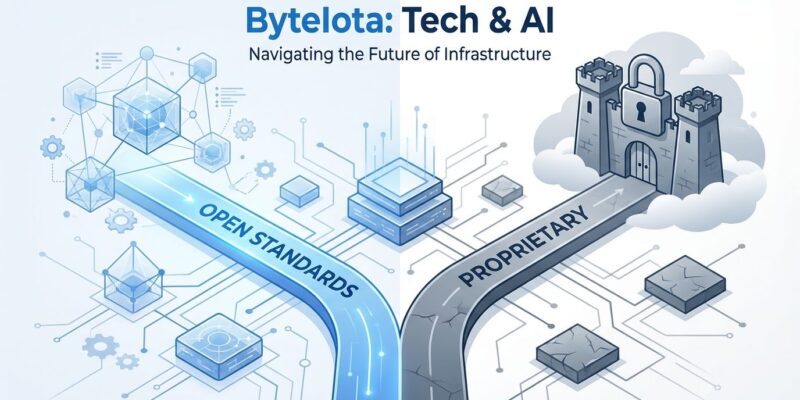
On December 18, 2025, Anthropic made Agent Skills an open standard. Within 24 hours, GitHub developers pushed it to the #1 trending Python repository with 974 stars. This isn’t a routine product launch. It’s a strategic bet that open standards will beat proprietary lock-in in AI developer tools. The move directly challenges OpenAI’s proprietary “Skills in Codex” and tests whether Anthropic can replicate the massive success of its Model Context Protocol, which OpenAI, Google, and Microsoft all adopted within a year.
What Agent Skills Actually Does
Agent Skills are folders of instructions that teach AI coding assistants repeatable workflows. Think custom code review processes, deployment scripts, or brand guideline enforcement. Before Skills, developers manually re-prompted Claude or ChatGPT for repetitive tasks. With Skills, you define the workflow once. The AI loads it dynamically and follows your exact process.
The open standard means these Skills work across platforms. Write a skill once, use it on Claude, OpenAI, Google Gemini, or any AI that adopts the agentskills.io specification. It’s Docker containers for AI workflows. Anthropic’s repository launched with partners including Atlassian, Figma, Notion, and Cloudflare. The 974 stars in 24 hours suggest developers see this as infrastructure, not just an Anthropic feature.
MCP Success Proves Open Strategy Works
Anthropic launched the Model Context Protocol in November 2024. Within one year, MCP became the de-facto standard with 97 million monthly SDK downloads. ChatGPT, Cursor, Gemini, Microsoft Copilot, and VS Code all adopted it. The critical moment came in March 2025 when OpenAI adopted MCP across all products—a competitor’s open standard won because ecosystem effects outweighed proprietary control.
Skills follows the same playbook. MCP handles the plumbing—how to connect to an API. Skills provides the manual—how to use that connection to achieve specific goals. If MCP adoption is precedent, Skills could become universal infrastructure within months.
Anthropic vs OpenAI: Strategic Divergence
Anthropic chose open. OpenAI chose proprietary. OpenAI’s Skills in Codex works only within their ecosystem. The divergence reflects broader strategies: Anthropic targets enterprises with open standards, hitting 32% enterprise LLM market share in 2025 (up from 12% in 2023). OpenAI dominates consumers with 800 million weekly ChatGPT users.
Enterprise customers demand interoperability. They won’t accept vendor lock-in for critical workflows. Open standards build trust. MCP proved it. Skills is the next test. The question isn’t which company is bigger—it’s which approach wins in AI developer tools.
When Open Standards Won vs Lost
Open standards won when interoperability mattered more than features. JavaScript became ECMAScript; Microsoft’s VBScript died. TCP/IP became the internet foundation; proprietary networks faded. USB standardized connectors; Apple’s Lightning is being phased out. As one analysis noted, “there are no successful proprietary standards” in wireless communications.
Proprietary won when UX and ecosystem polish dominated. iOS captured the premium market with a closed ecosystem. Photoshop beat open-source GIMP. Single-vendor innovation delivered better products than open collaboration.
AI developer tools sit at the intersection. Many developers use GitHub Copilot primarily, then switch to Claude for complex problems. That hybrid workflow demands interoperability. Skills standardization makes it smoother.
The Test: Will OpenAI Adopt Skills?
If OpenAI adopts the Skills standard like they did MCP, Anthropic’s strategy validates. Open standards become infrastructure. Developer lock-in decreases. If OpenAI refuses, it’s a competitive battleground: proprietary polish versus open interoperability.
GitHub’s response matters. The 974 stars in 24 hours represent developers forking, building, testing. That’s adoption signal, not press enthusiasm. Anthropic’s MCP took four months to reach OpenAI adoption. Skills launched December 18. By April 2026, we’ll know if the pattern repeats.
This isn’t about one feature. It’s about who controls AI tooling infrastructure. Anthropic’s bet: open standards create durable moats through ecosystem leadership. MCP proved it works. OpenAI adopted a competitor’s standard because the ecosystem demanded it. Skills tests whether that success was luck or strategy.
If it works, Anthropic becomes the infrastructure layer for AI developer tools—not flashiest, but the foundation everyone builds on. If it fails, we learn single-vendor innovation trumps interoperability in AI tooling. Either way, developers need to decide: optimize for one vendor’s features or bet on cross-platform portability? Anthropic’s Skills announcement forces that choice. Watch what happens next.


