 By ByteBot
Anthropic acquired Bun, the high-performance JavaScript runtime, on December 2, 2025, marking the AI company’s first acquisition since its founding in 2021. The deal comes as Claude Code, Anthropic’s AI coding assistant, hit a $1 billion run-rate revenue milestone just six months after its May 2025 public launch. Anthropic has been using Bun internally since July to power Claude Code’s rapid execution and now fully owns the infrastructure behind its fastest-growing product.
This signals a strategic shift in the AI industry. Companies are moving beyond building models to vertically integrating the entire developer tooling stack. By owning Bun (runtime) plus Claude Code (IDE) plus Claude models (AI), Anthropic controls the full coding infrastructure – raising questions about vendor lock-in, open source independence, and how competitors will respond.
Claude Code’s Explosive Growth Drives Strategic Acquisition
Claude Code reached $1 billion in run-rate revenue in six months. That’s one of the fastest growth trajectories in enterprise software history. Anthropic’s total revenue grew from $1 billion in January 2025 to $7 billion by October, with Claude Code likely representing a substantial portion according to AI analyst Simon Willison.
The enterprise customer list tells the story: Netflix, Spotify, KPMG, L’Oreal, and Salesforce. These aren’t small pilot programs – they’re production deployments generating serious revenue. Meanwhile, GitHub Copilot charges $10/month per user, and Cursor charges $20/month. Claude Code’s pricing and execution speed advantage, powered by Bun since July, helped it dominate this market.
This acquisition isn’t a side experiment. Anthropic is doubling down on its most successful product by owning the entire stack. When you control runtime plus models, you can optimize performance and user experience in ways competitors using borrowed infrastructure cannot.
AI Companies Move Beyond Models to Own Infrastructure
This is Anthropic’s first acquisition in four years. They chose a developer tool over an AI model company or research lab. That choice reveals strategy: AI companies no longer just build better models – they’re eating the entire development stack.
Compare the approaches. GitHub Copilot is owned by Microsoft, uses OpenAI models, but relies on Node.js and Deno (doesn’t own runtime). OpenAI has no coding IDE or runtime ownership – it partners with tools like Cursor. Cursor is independent but lacks infrastructure control. Anthropic now owns runtime, IDE, and models.
Developer tools have historically been neutral. npm works for everyone. Node.js is platform-agnostic. However, what happens when an AI company with competitive interests owns a core piece? Anthropic competes directly with GitHub Copilot and Cursor. Can Bun stay neutral, or will it optimize for Claude Code first?
Related: AI Coding Assistant Productivity: The 19% Slowdown Data Reveals
Open Source Commitment Meets Corporate Ownership
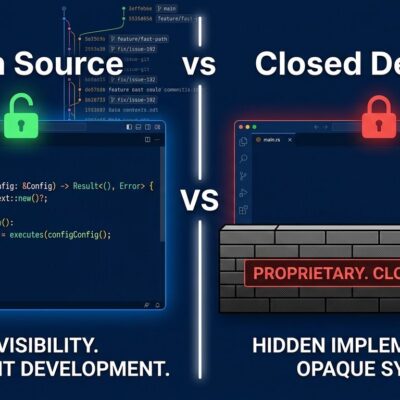
Bun remains MIT open source. The same team continues development “in public” on GitHub. Jarred Sumner, Bun’s founder, says the acquisition lets them “skip that chapter entirely and focus on building the best JavaScript tooling” – referring to typical VC monetization pressures that would have forced Bun to find revenue soon.
However, reality matters more than promises. Bun’s roadmap now serves Anthropic’s strategic interests. It will power Claude Code, Claude Agent SDK, and future AI coding products. With 7.2 million monthly downloads and 25% month-over-month growth, Bun was venture-funded ($26 million) with zero revenue before this deal. Deal terms weren’t disclosed, but sources estimate “low hundreds of millions.”
Developers want assurance Bun won’t become “Claude Code-only” optimized. The MIT license and team continuity are positive signals. Nevertheless, when a company owns infrastructure, priorities shift. Will Bun prioritize features benefiting Claude Code over general JavaScript developers? History suggests corporate owners serve corporate interests first.
Developer Trust and Market Dynamics
Hacker News reaction (680 points, 313 comments) splits between excitement and concern. Some developers see validation – Bun gets resources and can accelerate. Others see the beginning of vendor lock-in. “This is how it starts,” one comment warned. “Bun becomes Claude Code-optimized, and we’re back to choosing tools based on vendor strategy.”
The concern is legitimate. Developers spent decades avoiding vendor lock-in. Choosing an AI company-owned JavaScript runtime means trusting that company to prioritize ecosystem health over product optimization. Consequently, Anthropic must prove Bun can serve both their strategic interests and remain a neutral, general-purpose runtime.
Meanwhile, competitors face pressure. If owning the runtime gives Anthropic performance advantages, GitHub/Microsoft and OpenAI will need infrastructure responses. Watch for acquisitions of Deno or new custom runtimes. The AI coding wars just escalated from models to infrastructure.
Related: AI Code Debt Crisis: Why “10x Faster” Became “10x Broken”
Key Takeaways
- Anthropic’s first acquisition signals a strategic shift from models-only to vertical integration – owning runtime, IDE, and models gives infrastructure advantages competitors lack
- Claude Code hit $1 billion run-rate in six months, validating massive market demand for AI coding tools and justifying the Bun acquisition
- Bun remains MIT open source with the same team, but its roadmap now serves Anthropic’s products first – developer trust depends on balancing corporate interests with ecosystem health
- Competitors like GitHub Copilot, OpenAI, and Cursor lack runtime ownership and may need infrastructure responses to compete with Anthropic’s integrated stack
- The next 6-12 months will reveal whether corporate ownership enhances or erodes Bun’s value as a neutral JavaScript runtime