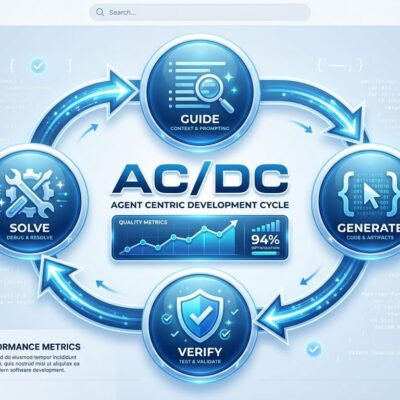
Eighty-four percent of developers use AI coding tools in 2026, yet only 29% trust them. This isn’t just sentiment—hard data backs it up. GitClear’s analysis of 211 million lines of code found AI usage correlates with a 4x increase in code duplication, while CodeRabbit’s study of 470 real-world pull requests revealed AI-generated code introduces 1.7x more issues than human code across logic, security, maintainability, and performance.
Developers are caught in an impossible dilemma: management pushes AI adoption for speed, but engineers see the quality issues firsthand. The numbers don’t lie, and they tell a story management doesn’t want to hear.
The Data Behind the Distrust
GitClear analyzed 211 million changed lines of code from 2020 to 2024 and found code duplication jumped from 8.3% in 2021 to 12.3% by 2024—a 4x increase that correlates directly with AI adoption. Moreover, an 8-fold increase in code blocks with five or more duplicate lines occurred in 2024 alone.
Meanwhile, refactoring—a cornerstone of software engineering—dropped from 25% of changed lines in 2021 to under 10% by 2024. GitClear’s finding is stark: “For the first time in history, developers are pasting code more often than they’re refactoring or reusing it.” This isn’t just about bugs. Consequently, it represents a fundamental shift away from best practices.
CodeRabbit’s study of 470 open-source pull requests confirmed the AI code quality gap. AI-generated code produces 10.83 issues per pull request versus 6.45 for human code—1.7x more problems. Logic and correctness errors rose 75%, security vulnerabilities increased 1.5-2x, and performance inefficiencies appeared 8x more often in AI-generated code. Additionally, readability issues tripled.
Why “Almost Right” Is Worse Than Wrong
Sixty-six percent of developers report AI produces solutions that are “almost right, but not quite”—code that looks correct but contains subtle bugs that only surface in production. This is worse than obviously broken code, which gets rejected immediately. Furthermore, “almost right” code slips through code review and creates the hardest-to-debug issues.
The pattern is consistent: AI code handles 100 users perfectly but fails at 1,000. It works in dev/test environments but breaks under production load. One team found they’d added 23 npm packages in a single month of heavy AI usage—seven were unmaintained, two had known vulnerabilities, and four duplicated functionality already in their codebase. Clearly, AI doesn’t understand your existing stack.
Forty-five percent of developers say debugging AI code takes longer than writing code themselves. This explains the trust crisis: you can’t blindly accept AI suggestions because the code looks right but contains fiendishly subtle flaws. In fact, Stack Overflow calls this “history’s most difficult-to-discharge technology debt.”
The Productivity Mirage
Developers self-report 25-39% productivity gains with AI coding tools and claim to save an average of 3.6 hours per week. However, controlled studies tell a different story. Researchers found developers actually took 19% longer to finish tasks with AI—the extra time spent checking, debugging, and fixing AI-generated code.
The gap between perception and reality is jarring. Self-reported productivity gains evaporate when you factor in debugging time. This isn’t to say AI has no value, but it challenges the entire productivity narrative. If developers take longer to complete tasks when AI assistance is included, where exactly are the gains?
The industry is catching on. CodeRabbit’s analysis captured the shift: “2025 was the year of AI speed. 2026 will be the year of AI quality.” Engineering organizations are realizing that shipping fast matters less than shipping confidently.
84% Use It, 29% Trust It
Trust in AI coding tools dropped from 40% in 2024 to 29% in 2025—an 11-point decline despite usage climbing to 84%. The paradox deepens: 96% of developers believe AI-generated code is not fully functionally correct, yet 52% don’t always check it before committing. Half of developers know the code might be broken but commit it anyway.
This isn’t irrational behavior. Indeed, it’s developers caught between management mandates for AI adoption and their own quality standards. Organizational pressure to “move faster with AI” conflicts with personal responsibility for production stability. Therefore, the declining trust trend suggests quality issues are getting worse, not better, as AI tools mature.
A Framework for the Dilemma
Best practice emerging from the wreckage: treat AI as a junior developer who needs supervision, not an expert to trust by default. The two-minute rule provides a simple decision framework: accept AI suggestions you can verify in under two minutes, flag anything longer for human review, and reject suggestions you have to explain to yourself why they’re correct.
Multi-tool validation helps calibrate trust. Run AI code through multiple static analysis tools—agreement across tools signals higher confidence, while disagreement flags items for closer human review. Over time, log accepted versus rejected AI suggestions to build reliability data specific to your codebase. This data-driven approach replaces blind trust with informed skepticism.
Certain areas require extra scrutiny regardless of AI confidence scores: security-critical code (authentication, authorization, cryptography), API integrations with third-party services, architectural decisions, and performance-critical paths. Ultimately, AI excels at boilerplate and routine tasks you fully understand. It breaks on security, architecture, and compliance-regulated code where context and constraints matter more than syntax.
Key Takeaways
- Don’t blindly trust AI code – 96% of developers know it’s not fully correct, yet 52% don’t always check before committing. Be the 48% who verifies.
- Use the two-minute rule – Accept suggestions you can verify quickly, flag everything else for human review, and reject code you have to rationalize.
- Avoid AI for critical paths – Security, architecture, and performance-critical code needs human expertise. AI doesn’t understand your constraints.
- Track acceptance rates – Log which AI suggestions work for your codebase to build empirical trust data over time.
- Remember the shift – 2026 is the year of quality, not speed. The 84% adoption / 29% trust gap exists for a reason: the data shows real problems.