 By
By On December 17, 2025, the open-source AI agent platform “sim” gained 1,357 GitHub stars in a single day, rocketing to number four on GitHub Trending. Launched just 11 months ago, sim now commands 23.4k stars and 2.9k forks. This isn’t just another repository going viral—it signals a fundamental shift in how developers approach AI agents. Code-heavy frameworks like LangChain are giving way to visual, drag-and-drop workflow builders. Developers are voting with their stars for accessibility over complexity.
This is the Docker moment for AI agents. Docker made containers accessible to mainstream developers through simple commands. Sim makes AI agents accessible through visual canvases. LangChain has 100k+ stars but requires AI/ML expertise most teams don’t have. Meanwhile, sim lets frontend developers, product managers, and engineers build agents in minutes without writing boilerplate code.
The Visual Workflow Revolution That LangChain Didn’t See Coming
LangChain dominates AI agent development with 100k+ GitHub stars and 90 million monthly downloads. However, it has a dirty secret: most developers bounce off the learning curve. Understanding chains, agents, tools, and memory abstractions requires dedicated study. Consequently, teams either hire AI specialists or abandon agents entirely.
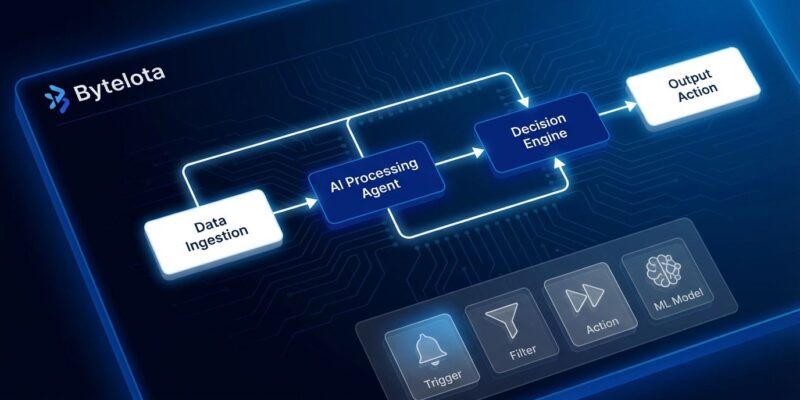
Sim eliminates this barrier with a ReactFlow-based canvas where users connect agents, tools, and logic blocks visually. No boilerplate. No framework expertise required. Moreover, if you think visual tools are for amateurs, Docker would like a word—it democratized containers precisely because developers didn’t want to write deployment scripts manually.
The numbers validate this approach. For instance, n8n, a visual workflow automation platform, hit 47k+ stars by making automation accessible. Sim applies the same philosophy to AI agents. Historical pattern: visual tools expand markets rather than cannibalizing existing users. Therefore, sim captures developers who would’ve skipped LangChain entirely.
Production-Ready Infrastructure, Not a Weekend Project
Skeptics dismiss visual tools as toys. However, sim’s technical foundation proves otherwise. Built on Next.js App Router, Bun runtime (2-3x faster than Node.js), PostgreSQL with pgvector for vector search, and Socket.io for real-time agent streaming, this is 2025-era infrastructure. Furthermore, Apache 2.0 license with Docker Compose configs means enterprises can self-host from day one.
The platform includes everything production systems need: Better Auth for authentication, built-in vector database via pgvector (no separate Pinecone or Weaviate), multi-model support (Ollama for local LLMs, vLLM for self-hosted, cloud APIs for OpenAI and Anthropic), and real-time execution with streaming responses. Additionally, with 2,861 commits in 11 months, this isn’t abandonware—it’s actively developed infrastructure.
Deployment flexibility matters for enterprise adoption. IT teams need on-premise deployment for data privacy. Sim delivers with Docker Compose, NPX one-liners for local development, dev containers for VS Code integration, and managed cloud hosting at sim.ai for teams wanting zero DevOps. As a result, prototypes become production systems without migration.
The Copilot Advantage: AI Builds AI Workflows
Sim’s killer feature is integrated Copilot. Users describe desired workflows in natural language—”Build me an agent that monitors GitHub issues, summarizes them, and posts to Slack”—and Copilot generates the visual structure. Agent nodes, tool integrations, and logic blocks appear on the canvas. Subsequently, users refine connections, then deploy.
This collapses development time dramatically. LangChain requires writing Python or TypeScript, understanding framework abstractions, configuring chains and retrievers, and debugging code. Time to first working agent: hours to days. In contrast, sim with Copilot: minutes. That’s not incremental improvement—it’s 10-100x faster iteration.
This finally delivers the “no-code” promise for AI agents. Previous no-code tools like Zapier handle simple automations. AI agent workflows involve LLM reasoning, tool calling, memory management, and context handling—far more complex. Nevertheless, Copilot generation makes this complexity manageable. Teams prototype internally without hiring AI specialists, then bring in experts only for production optimization.
Market Positioning: The Pragmatic Developer’s Alternative
Sim isn’t trying to replace LangChain. Instead, it targets a different segment: developers who prioritize speed over flexibility, visual design over code, and “good enough” over “perfect.” LangChain owns the advanced AI engineers market. Sim wants the pragmatic developers who just need agents working.
The decision framework is straightforward. Choose LangChain for custom logic, production-critical systems requiring LangSmith observability, and teams with experienced AI engineers. LangChain’s enterprise users—Klarna, Elastic, Cisco, LinkedIn—validate its production stability after 2+ years of battle-testing.
Choose sim for rapid prototyping, internal tools (support bots, Q&A systems, data pipelines), teams without AI expertise, and cost-sensitive projects benefiting from self-hosting. However, visual workflows hit complexity ceilings faster than code. At 50-100+ nodes, canvas-based systems become unmanageable. Prediction: 70% LangChain, 30% visual tools by 2026. Both coexist by serving different needs.
Open-Source as Infrastructure Insurance
Sim’s Apache 2.0 license and self-hosting capabilities reflect broader developer distrust of proprietary AI platforms. Developers watched OpenAI, Anthropic, and Google change pricing and terms overnight. Consequently, they want control—over data through on-premise deployment, costs via Ollama local models, and platform longevity through open-source code that can’t be shut down.
The 23.4k stars in 11 months validate this sentiment. Proprietary platforms like Zapier and Make lock users in with vendor-specific workflows and pricing leverage. In contrast, open-source alternatives like n8n and sim provide exit paths. If sim.ai managed cloud shuts down tomorrow, users can self-host forever. Docker succeeded over proprietary container solutions for exactly this reason.
This isn’t ideology—it’s risk management. Companies building on proprietary AI platforms face pricing changes, API deprecations, and shutdown risk. Sim’s open-source model removes these variables. For enterprises with 5-10 year planning horizons, self-hosting capabilities aren’t optional—they’re requirements. Visual tools with open-source licenses win long-term enterprise commitments that closed platforms never secure.
Key Takeaways
- Visual AI agent builders like sim democratize agent development the same way Docker democratized containers—by eliminating expertise barriers
- Sim’s modern tech stack (Bun, Next.js, pgvector, Apache 2.0) makes it production-ready for internal tools, not just prototypes
- Copilot-generated workflows collapse development time from hours to minutes, delivering the “no-code” promise for complex AI systems
- LangChain and sim coexist by serving different markets: flexibility/maturity versus speed/simplicity. Prediction: 70/30 split by 2026
- Open-source licensing with self-hosting options addresses enterprise risk management concerns about vendor lock-in and platform longevity
- The trade-off is real: visual workflows hit complexity ceilings at 50-100+ nodes where code becomes more maintainable
Sim’s viral moment validates market demand for accessible AI agent infrastructure. However, it’s less than a year old—too risky for mission-critical production systems. Use it for internal tools and rapid prototyping. Stick with LangChain’s battle-tested stability for customer-facing systems. The visual tools revolution is here, but maturity takes time.