 By ByteBot
Z.ai released GLM-4.7 on December 22, 2025, an open-source AI coding model priced at $3/month that outperforms Claude Sonnet 4.5 on key benchmarks while costing 98.5% less than Cursor’s $200/month Ultra plan. The Chinese company positions itself as “China’s OpenAI” and plans a Hong Kong IPO to raise $640 million, signaling serious commercial ambition. Can Western developers trust a Chinese AI model with their code?
The Pricing Disruption
GLM-4.7 costs $3 per month. Cursor Ultra costs $200 per month. That’s a 66-to-1 price difference for comparable performance. Or run it free locally under the MIT license.
This isn’t marginal savings. It’s a pricing structure that challenges the entire AI coding tool market. GitHub Copilot at $10/month suddenly looks expensive. Cursor’s $2,400 annual subscription becomes difficult to justify. When an open-source alternative delivers competitive results at 1/66th the cost, Western companies must slash prices or prove their premium is worth it.
Individual developers and startups are price-sensitive. Most will try GLM-4.7. The question isn’t whether GLM-4.7 gains users—it’s whether GitHub and Cursor retain theirs without cutting prices.
The model is available on Hugging Face with straightforward self-hosting instructions. API pricing sits at $0.10 per million tokens. For developers paying $200/month for Cursor, the economics are stark.
Performance: Competitive, Not Perfect
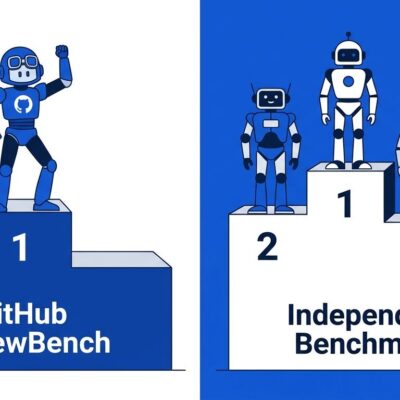
GLM-4.7 scored 84.9% on LiveCodeBench V6. Claude Sonnet 4.5 scored 64.0%. That’s a 32% performance advantage for the open-source model. On SWE-bench Verified, GLM-4.7 hit 73.8%, ranking #1 among open-source models. On AIME 2025 math problems, it reached 95.7%, outperforming both Gemini 3.0 Pro and GPT-5.1 High.
These aren’t cherry-picked benchmarks. LiveCodeBench tests real-world coding ability. SWE-bench evaluates software engineering tasks. AIME measures mathematical reasoning. GLM-4.7 wins on metrics developers care about.
It’s not perfect. Some abstract reasoning benchmarks show gaps versus top-tier proprietary models. But for coding tasks—the use case that matters—GLM-4.7 competes with models costing 66 times more.
The technical foundation: 358 billion parameters with Mixture of Experts architecture activating 32 billion per forward pass. 200,000-token context window. Preserved Thinking that retains reasoning across conversations. Agent-first design integrating with Claude Code, Cline, and Roo Code.
Developer reviews describe it as “engineered to stay on task inside an agent” rather than acting like “a chatty assistant.” That’s high praise for production environments where consistency matters more than conversational flair.
“China’s OpenAI” Ambition
Z.ai (formerly Zhipu AI) was founded in 2019 by Tsinghua University professors. The company raised $1.5 billion from Alibaba, Tencent, Xiaomi, and Saudi Aramco. Revenue grew at 130% CAGR from 2022 to 2024.
The company positions itself as “China’s OpenAI” and plans to become the world’s first publicly-listed large-model company through a Hong Kong IPO targeting $640 million in January 2026. Ambitious branding for a company posting $329 million losses in H1 2025 on $27 million revenue.
This isn’t a research project. Z.ai is commercializing aggressively. The IPO filing shows they’re building a business. If successful, they’ll have $640 million to fund R&D and expansion—a war chest to compete with Western AI companies.
The geopolitical angle is unavoidable. US-China tech competition extends beyond semiconductors into AI infrastructure. If Western developers depend on Chinese models for daily coding, what are the implications? This isn’t about tools in isolation—it’s about who controls software development foundations.
The Trust Problem
Can Western developers trust a Chinese AI model?
NIST’s CAISI evaluation of DeepSeek models found 94% susceptibility to jailbreaking attacks versus 8% for US models. South Korea reported over a million users’ data transferred to China without consent. Italy banned DeepSeek from app stores. Netherlands, Australia, Taiwan, and South Korea blocked it on government devices.
DeepSeek isn’t GLM-4.7. Different company, different model. But it establishes precedent. Chinese AI models have demonstrated security vulnerabilities and data privacy issues Western regulators take seriously.
GLM-4.7’s open-source nature provides mitigation. The MIT license allows independent security audits. Self-hosting eliminates cloud data privacy concerns. You control the infrastructure, data never leaves your systems, and China’s Intelligence Law becomes irrelevant.
For individual developers on non-sensitive personal projects, the risk is manageable. For enterprises handling proprietary code or customer data, it’s different. Security teams won’t approve a Chinese AI model without rigorous evaluation, regardless of performance or price.
When to Use, When to Avoid
Use GLM-4.7 for personal projects where budget matters more than vendor reputation. Experiment alongside GitHub Copilot or Cursor to benchmark performance. Self-host if you have technical infrastructure and want to eliminate data privacy concerns. Consider it for startups where cost savings justify the trust trade-off.
Avoid it for enterprise environments with security and compliance requirements. Skip it for sensitive codebases involving intellectual property or customer data. Don’t use it if you’re a government contractor. Recognize that vendor support, SLAs, and legal accountability matter in production.
The middle ground is self-hosting. Running GLM-4.7 locally under MIT license addresses data privacy while capturing performance and cost benefits. It requires expertise and infrastructure, but for capable teams, it’s the honest approach: test the technology without geopolitical risk.
What Happens Next
GitHub Copilot and Cursor must respond. Options include price cuts, emphasizing trust and integration advantages, or differentiating on enterprise features like compliance certifications. They can’t ignore a competitor offering 98.5% cost savings with competitive performance.
Western developers face a performance-versus-trust trade-off. For individuals and startups, GLM-4.7’s price and capability will be compelling. For enterprises, trust concerns outweigh cost savings. The market will segment.
Z.ai’s IPO tests whether investors believe a Chinese AI company can compete with OpenAI, Anthropic, and Microsoft. Profitability remains distant—$329 million in H1 2025 losses suggest years of cash burn. But $640 million provides runway.
The broader question: does open-source plus low-cost beat proprietary plus expensive in AI coding tools? GLM-4.7 is the strongest test case. If it gains traction, it proves the model. If it stalls due to trust concerns, it validates Western premiums.
Either way, the AI coding tool market just got more interesting.