 By ByteBot
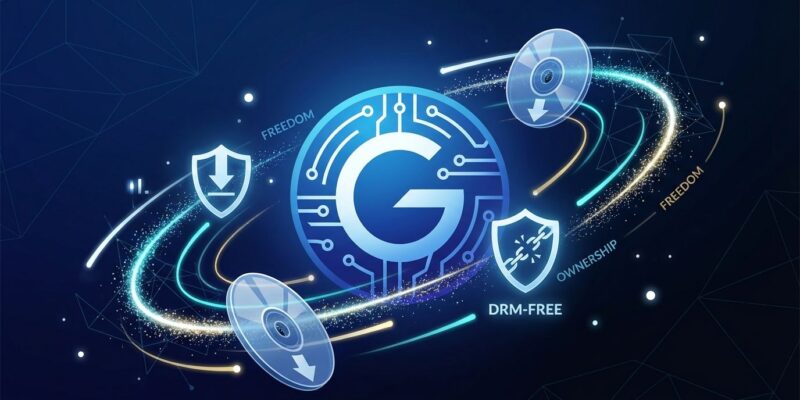
On December 29, 2025, Michał Kiciński—co-founder of both CD PROJEKT and GOG—acquired 100% of GOG shares for $25.3 million, taking the DRM-free gaming platform private. This isn’t your typical tech acquisition. While Microsoft, Sony, Steam, and Epic double down on subscription models and walled ecosystems, Kiciński is betting $25 million that game ownership still matters. For developers and tech professionals, this isn’t just gaming news—it’s a signal about platform freedom, vendor lock-in, and whether ethical tech businesses can survive when margins are razor-thin.
Why a Co-Founder Bought Back His Own Company
Kiciński didn’t just buy any company—he bought back the platform he co-founded in 2008 with a simple mission: ensure that when you buy a game, it truly belongs to you. The acquisition price of PLN 90.7 million (roughly $25.3M USD) represents about 1.8x GOG’s annual revenue, which stood at $51.6 million in 2024. That’s not a bargain by most standards, especially when GOG’s Q3 2025 net margin was just 3.5%—compared to CD PROJEKT’s 55% profitability on game development.
So why divest? CD PROJEKT wants to focus on what it does best: building blockbuster games like Witcher and Cyberpunk. GOG, while mission-critical for DRM-free advocates, was dragging down overall profitability. The companies signed a distribution agreement ensuring future CD PROJEKT games will still release on GOG, but Kiciński now controls the platform’s destiny without shareholder pressure to maximize margins.
“In a PC market that keeps moving toward mandatory clients and closed ecosystems, I believe GOG’s approach is more relevant than ever: no lock-in, no forced platforms, sense of ownership,” Kiciński said in the official CD PROJEKT announcement. This is an ideological bet disguised as a business transaction.
DRM-Free Gaming: Ownership vs Licensing
Here’s what DRM-free actually means: When you buy a game on GOG, you download a standalone installer file—like downloading software in the 2000s. No client required. No internet authentication. No platform dependency. You can backup that installer to an external drive and play the game in 2045 even if GOG shuts down tomorrow.
Contrast this with Steam, Epic, or Xbox: You’re buying a license to access a game through their platform. The platform can revoke access, shut down servers, or remove games from your library. Sure, Steam probably won’t disappear anytime soon, but you don’t own those 500 games in your library—you own permission to play them as long as Valve says so.
This matters more than ever. The Stop Killing Games movement reached 1.4 million signatures in July 2025, pressuring the EU to address game preservation. When Ubisoft’s CEO said “support for all games cannot last forever,” the backlash was swift—because gamers (and developers) are tired of buying “permanent” products that disappear when publishers decide support isn’t profitable.
For tech professionals, this mirrors cloud infrastructure debates: Do you own your infrastructure, or does AWS? GOG’s DRM-free model is like running on-prem vs cloud-only. It’s about control, not just convenience.
Can Ethical Platforms Survive? The Profitability Paradox
Let’s address the elephant in the room: GOG holds less than 5% of the PC gaming market. Steam dominates with 74%, Epic Games Store has carved out 8%, and everyone else fights for scraps. GOG’s 2024 revenue dropped 15.2% year-over-year to $51.6 million, and that 3.5% net margin in Q3 2025 shows this isn’t a growth story—it’s a sustainability story.
This is the ethical tech business paradox: Doing the “right thing”—no DRM, no lock-in, no forced client—sacrifices margins and market share. AAA publishers refuse to release on GOG because they want anti-piracy protection (even though DRM doesn’t actually stop piracy, just annoys paying customers). Developers looking for the largest audience stick with Steam’s 74% market dominance.
But here’s Kiciński’s edge: Independence from public company shareholders means he can prioritize mission over growth. GOG can survive as a niche player serving the DRM-conscious community without quarterly earnings pressure. It’s the same calculus behind open-source projects that run on thin margins but thrive on community support, or on-prem cloud alternatives that cost more but avoid vendor lock-in.
The Hacker News discussion of GOG’s acquisition hit 732 points with 435 comments—developers get it, even if Wall Street doesn’t.
Game Preservation and the Future of Ownership
GOG’s 2026-2027 roadmap promises “more ambitious rescue missions” for game preservation. The platform employs private investigators to track down IP rights holders for classic games lost to legal limbo, then uses reverse engineering (DOSBox, ScummVM) to make pre-2000s games playable on Windows 11 and macOS. This work mirrors broader tech preservation efforts: How do we keep legacy codebases running as operating systems evolve?
GOG Managing Director Maciej Gołębiewski put it simply: “Games should live forever.” That’s not marketing—it’s a technical commitment to backwards compatibility and digital preservation that most platforms have abandoned in favor of forced upgrades and planned obsolescence.
Kiciński’s $25 million bet proves three things: Ethical platforms can exist (even with 3.5% margins), platform independence still matters to developers and power users, and sometimes “worse is better” if you control it. Cloud repatriation trends show the same pattern—86% of CIOs are moving workloads back from cloud providers, citing vendor lock-in concerns.
GOG won’t beat Steam. It doesn’t need to. It just needs to survive—and with a mission-driven owner who’s willing to sacrifice margins for principles, it might outlast the subscription model everyone thinks is inevitable.