 By
By Nvidia’s $20B Groq “Non-Acquisition”: Regulatory Theater at Scale
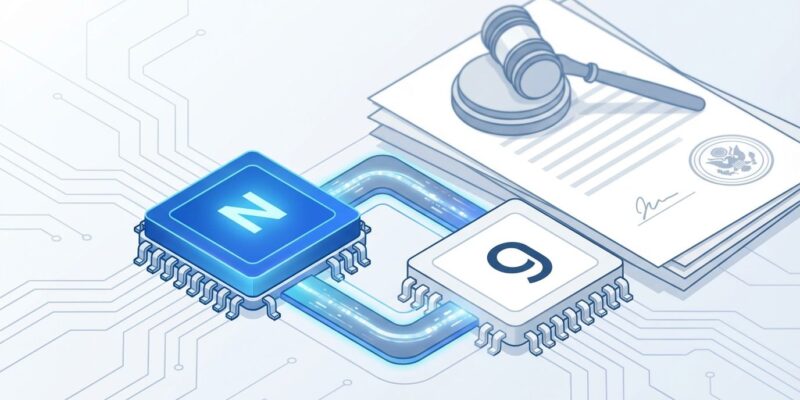
Nvidia just paid $20 billion for something it insists it didn’t buy. On Christmas Eve, the chip giant struck a deal to license AI inference startup Groq’s technology and hire its CEO, president, and 90% of its workforce. The official line? “We are not acquiring Groq as a company,” said Nvidia CEO Jensen Huang. However, when your biggest deal ever involves transferring 90% of a company to your payroll and paying everyone at acquisition prices, calling it “not an acquisition” is either semantics or regulatory theater. Probably both.
What Actually Happened
The deal announced December 24 is structured as a “non-exclusive licensing agreement” for Groq’s LPU (Language Processing Unit) technology. Nevertheless, the mechanics tell a different story. Approximately 90% of Groq employees are joining Nvidia, including CEO Jonathan Ross—the ex-Google engineer who created the original Tensor Processing Unit—and President Sunny Madra. Shareholders get paid at the $20 billion valuation, a near-3x return from Groq’s $7 billion valuation just three months ago. Moreover, employees receive cash for vested shares and Nvidia stock for unvested shares.
What remains at Groq? A skeleton crew of 10%, a new CEO named Simon Edwards, and a legal entity that technically still exists. Whether a company gutted of 90% of its talent can meaningfully compete is left as an exercise for the reader.
Competition Eliminated
Groq wasn’t just another AI chip startup—it was one of the few credible alternatives to Nvidia’s GPU stranglehold. The company’s LPU chips were purpose-built for AI inference, delivering speeds 10x more energy-efficient than GPUs for language model workloads. For developers shopping for AI infrastructure, Groq represented leverage. A way to negotiate with Nvidia. An escape hatch from CUDA lock-in.
That option is now effectively gone. Nvidia already controls an estimated 80-90% of the AI chip market, with near-total dominance (90%+) in training chips. By absorbing Groq’s team and technology, Nvidia eliminates a promising competitor in the inference space just as that market accelerates from $106 billion in 2025 to a projected $255 billion by 2030. Consequently, fewer alternatives mean less pricing pressure, less innovation, and less choice.
For the AI inference market, this isn’t consolidation—it’s elimination.
The “Fiction of Competition”
Bernstein analyst Stacy Rasgon put it bluntly: “Structuring the deal as a non-exclusive license may keep the fiction of competition alive, even as Groq’s leadership and technical talent move over to Nvidia.” He added that Nvidia is “so big now they can do a $20 billion deal on Christmas Eve with no press release and nobody bats an eye.”
This isn’t Nvidia’s first rodeo with regulators. In 2022, the FTC blocked the company’s $40 billion acquisition of chip designer Arm on antitrust grounds. The lesson learned? Don’t call it an acquisition. Instead, structure it as licensing plus talent acquisition—an “acqui-hire” in industry parlance—and avoid triggering the formal merger review process entirely.
Nvidia isn’t alone in deploying this playbook. Furthermore, Microsoft’s 2024 deal with Inflection AI, where it hired the team and licensed the IP, is currently under FTC investigation. Similar structures at Amazon (Adept AI) and Google (Character AI) have drawn scrutiny. The pattern is clear: big tech has figured out how to achieve acquisition outcomes while sidestepping acquisition rules.
What This Signals for the Industry
For Nvidia, the message is unmistakable: we will dominate both AI training and inference. The company generates $51 billion in quarterly data center revenue with 73% gross margins, giving it a $22 billion quarterly cash inflow to eliminate threats before they mature. Groq’s LPU technology now belongs to the very company it was designed to compete against.
For the industry, this deal is a blueprint. License the IP. Hire the team. Pay at acquisition valuations. Avoid the regulatory label. Other tech giants will copy this structure, and promising startups will face a choice: compete or get “non-acquired.”
For regulators, the question is whether they’ll look past the semantics. The legal principle of “substance over form” exists precisely for cases like this. When 90% of a company transfers to a competitor and everyone gets paid at acquisition prices, does it matter what you call it?
Ultimately, Nvidia insists this isn’t an acquisition. Groq “remains independent.” The licensing is “non-exclusive.” But when you strip away the language, what’s left is a $20 billion elimination of a competitor—dressed up as something else. Call it regulatory arbitrage. Call it creative deal structuring. Just don’t call it anything but what it is: an acquisition in everything but name.
—