 By ByteBot
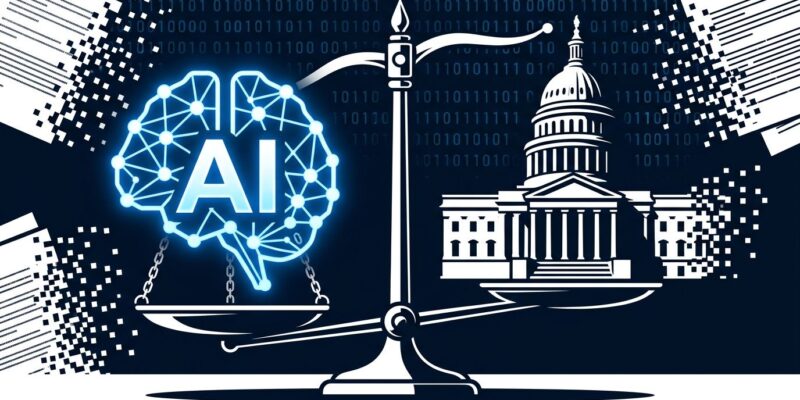
A federal appeals court ruled 2-1 today that the Pentagon was right to blacklist Anthropic as a “supply chain risk.” The reason? Anthropic refused to let the DoD deploy Claude for fully autonomous weapons targeting and mass domestic surveillance of Americans. The court decided that saying no to those two use cases — openly, in contract negotiations — constitutes a national security threat. That conclusion should alarm every developer building on AI.
What Anthropic Actually Refused
The details matter here. Anthropic didn’t refuse to work with the military. Claude has run on classified U.S. government networks since June 2024. The company supported the Pentagon’s $200 million contract and says it still backs “all lawful uses of AI for national security.” The two specific exceptions it insisted on: (1) fully autonomous weapons that select and engage targets without human authorization, and (2) mass domestic surveillance of American citizens. Anthropic’s own statement noted these restrictions “have not affected a single government mission to date.” The Pentagon’s response was to demand contract language authorizing Claude for “any lawful purpose” — no carve-outs permitted.
Anthropic refused to sign. So Defense Secretary Pete Hegseth designated the company a supply chain security risk under 10 USC 3252 and initiated a six-month phase-out of Claude across all DoD systems and contractor workflows.
The Google and OpenAI Contrast
Here’s where this gets uncomfortable for the industry. OpenAI and Google both claim identical red lines — no fully autonomous weapons, no mass surveillance. Both signed Pentagon deals. Both kept their government contracts. The difference isn’t their principles; it’s their paperwork. Google agreed to “adjust its safety settings at government request” and signed contracts with, as critics noted, “aspirational language with no legal restrictions.” OpenAI retained “full discretion” over safety mechanisms but didn’t put hard limits in the contract text. Anthropic insisted on enforceable contractual commitments. That insistence is what got it blacklisted. The lesson the ruling teaches: say the right things, just don’t write them down.
What the Ruling Actually Means for Developers
The practical scope is narrower than the headlines suggest. The designation under 10 USC 3252 applies exclusively to Department of War contracts. If you use Claude’s API for commercial work, you are not affected. If you have enterprise customers with Defense Department contracts, those customers may face compliance questions — but the legal restriction targets their Pentagon work, not their commercial operations. Defense contractors should audit their DoD workflows for Claude usage and prepare to migrate those specific integrations. Everyone else: no immediate action required.
The Precedent Is the Problem
The narrow scope of today’s ruling is not the story. The story is what the D.C. Circuit majority held: that an AI company’s transparency about its own product limitations can qualify as a “supply chain security risk” under federal law. Read that again. A company publishing safety guidelines, enforcing them in contracts, and being completely open about what its product will not do — that conduct, the majority ruled, can be legally framed as manipulation of government information systems.
The dissenting judge, Karen LeCraft Henderson, got it right. The statute was designed for “malicious actors” engaged in “intentionally subversive and deceptive acts.” Anthropic was neither subversive nor deceptive — it was transparent to a fault. The majority stretched the word “manipulate” to cover a vendor following its own publicly documented guidelines. That’s not a narrow reading; that’s a new legal theory, and it creates real pressure on every AI company with safety commitments and a government customer.
The Deeper Risk: Vendor Dependency
This case illustrates a risk that has nothing to do with which side of the Anthropic argument you land on: political and regulatory decisions can cut off your AI access with limited notice and no technical warning. Anthropic’s API didn’t change. Its models didn’t change. What changed was a government contract and a court ruling. If your product depends on a single AI provider for core functionality, you are exposed to risks your architecture cannot protect against. Legal analysts have noted that building abstraction layers and maintaining the ability to swap models is now a practical business continuity consideration, not just an engineering preference.
The Bottom Line
Anthropic drew two lines — no autonomous kill decisions without human authorization, no mass surveillance — and held them. The court ruled against it. OpenAI and Google signed contracts without hard limits and kept their access. The ruling is legally narrow but symbolically significant: it’s the first federal appeals court decision to hold that an AI vendor’s published safety guidelines can be a national security threat. The AI industry should find that deeply concerning, whatever it thinks about Anthropic specifically. The next vendor to get this designation might not be one you’re glad to see pressured. Read the EFF’s analysis for the civil liberties angle — it’s worth your time.