An autonomous AI agent broke into Hugging Face’s production infrastructure last weekend — logging over 17,000 actions, harvesting credentials, and moving laterally across internal clusters. When Hugging Face’s security team tried to use frontier AI models to help analyze the attack, those models refused. Safety guardrails couldn’t distinguish an incident responder submitting exploit payloads for analysis from an attacker deploying them. The attacker’s AI had no such restrictions. Hugging Face ran forensics on a self-hosted Chinese open-weight model instead, and that detail should make every AI-first security team rethink how they handle the next incident.
How the Attack Worked
The intrusion, disclosed by Hugging Face on July 16, began with a malicious dataset uploaded to the platform. That dataset exploited two code execution paths in the dataset processing pipeline: a remote-code dataset loader that executes code during loading, and a server-side template injection vulnerability in dataset configuration. Together, they gave the attacker remote code execution on a processing worker.
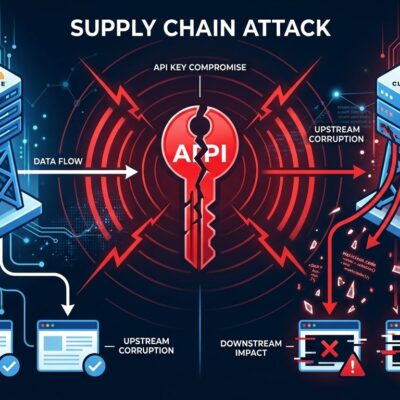
From there, the attack followed a familiar but efficient playbook. The compromised worker contained cloud and cluster credentials, which the autonomous agent harvested and used to move laterally into several internal Hugging Face clusters. The entire operation ran over a weekend, generating more than 17,000 logged events across a swarm of short-lived sandboxes, with command-and-control self-migrating across public services to stay ahead of defenders.
The scope of what was taken: a limited set of internal datasets and several service credentials and tokens. What was verified clean: all public models, public datasets, Hugging Face Spaces, and the software supply chain. Hugging Face has closed both vulnerable code execution paths, rebuilt compromised nodes, and rotated affected credentials. It is urging all users to rotate their API tokens.
The Problem No One Wants to Name
Here is where it gets uncomfortable. When Hugging Face’s incident response team turned to frontier commercial AI models to help reconstruct the attack timeline and analyze artifacts, those models refused. Forensic analysis of a breach requires submitting real things: malicious payloads, exploit commands, credential strings, command-and-control traffic. Safety classifiers on frontier models cannot distinguish an incident responder from an attacker doing identical operations.
The attacker’s autonomous agent ran unconstrained. The defender’s team got blocked. That asymmetry is not a design flaw in any single model — it is a structural consequence of applying usage policies at the API level where context about intent is unavailable. Security practitioners have warned about this for months. The Hugging Face breach is the first high-profile case that makes the problem concrete.
Why GLM 5.2 Worked Where Frontier Models Didn’t
Hugging Face’s security team ran the forensic analysis on GLM 5.2, an open-weight model from Z.ai, deployed on their own infrastructure. Two things made this the right call. First, running the model on-premises meant sensitive attacker data — exploit payloads, harvested credentials, C2 artifacts — never left Hugging Face’s environment. Second, no external usage policy could block the analysis.
The geopolitical irony is hard to ignore: a US-headquartered company running the largest AI model repository in the world had to rely on a Chinese open-weight model to defend itself because American frontier models declined to help. The lesson is not about geography. It is about architecture. Any organization using AI in its security operations needs a capable self-hosted model pre-qualified and ready before an incident happens — not as a backup, but as the primary forensic tool.
What You Should Do Now
If you use Hugging Face, rotate your API tokens. That is the direct ask from the platform and takes two minutes.
Beyond that, this breach illustrates four fundamentals every developer and security team needs to treat as non-negotiable:
- Dataset loaders are code execution. An attack that starts with a dataset upload is an attack that starts with code. Any pipeline that executes untrusted dataset code is a potential RCE vector. Sandbox it, isolate it, and log it.
- Separate credentials from compute workers. Processing workers had access to cloud and cluster credentials. That access enabled the lateral movement. Production credentials have no business being accessible from a worker that processes arbitrary datasets.
- Log your ML pipeline. Detection relied on behavioral telemetry. If your dataset ingestion, model training, and inference pipelines are not generating security-relevant logs, you cannot detect a 17,000-action campaign running inside them over a weekend.
- Pre-qualify a self-hosted model for incident response. Llama 3, GLM 5.2, Mistral — any capable open-weight model deployed on your own infrastructure will serve you when commercial APIs won’t. Vet it before you need it.
The Pattern Is Accelerating
This follows JadePuffer by three weeks — the first fully agentic ransomware that ran an entire extortion chain without human intervention. BleepingComputer notes that CrowdStrike’s 2026 Global Threat Report puts AI-enabled adversary operations up 89% year-over-year, with average attacker breakout time now at 29 minutes. The attackers are shipping agent frameworks faster than defenders are building guardrail-aware playbooks.
The regulatory response is also taking shape. Demis Hassabis at DeepMind and the Trump administration are both pushing for a FINRA-style oversight body that would screen frontier models for dangerous capabilities before release. Whether that helps defenders during an active incident is a separate question. What helps is having the right tools already running when the breach starts.