On July 12, a security researcher documented that xAI’s Grok Build CLI was silently transmitting developers’ entire Git repositories to a Google Cloud Storage bucket — 5.1 GB per session, roughly 27,800 times more data than the actual coding task required. The “Improve the model” privacy toggle had no effect. Three days later, xAI open-sourced the entire Rust codebase under Apache 2.0. The timing is not subtle.
What Grok Build Actually Is
Launched in beta on May 25, 2026, Grok Build is xAI’s terminal-based AI coding agent — a full-screen, mouse-interactive TUI that understands codebases, edits files, runs shell commands, and manages long-running tasks. Its extension system supports skills, plugins, hooks, MCP servers, and subagents, and its parallel agent architecture makes it notably fast on large monorepos. In benchmarks and developer write-ups, it consistently outpaces Claude Code on raw execution speed. Before July 12, the conversation around Grok Build was mostly about how fast it shipped code.
The Upload That Wasn’t Supposed to Happen
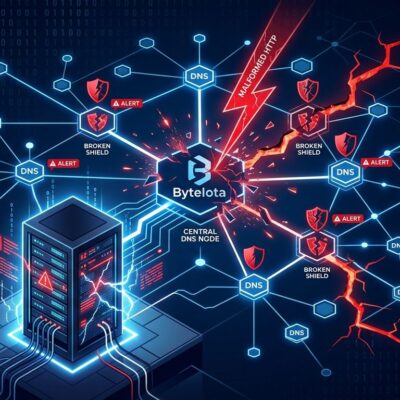
Researcher “cereblab” published wire-level analysis of Grok Build version 0.2.93, and the numbers are specific enough to be worth quoting. The CLI ran two simultaneous network channels: one for the actual coding session (~192 KB of traffic) and a background storage channel that uploaded 5.10 GB in 73 chunks of approximately 75 MB each to a GCS bucket named grok-code-session-traces. The data was transmitted as Git bundles — a format that packages every tracked file in the repository plus the complete commit history. That means secrets you committed three years ago and then deleted are still in there.
The most damaging detail is not the volume. It’s that the privacy toggle didn’t work. Even with “Improve the model” disabled, the server returned trace_upload_enabled: true, and the full upload proceeded. A toggle that doesn’t function is not a privacy control. xAI disabled the uploads server-side on July 13 — one day after the report dropped — without issuing a software update or a security advisory. The code stayed in the binary.
Open Source as a Response
On July 15, xAI published 844,530 lines of Rust at github.com/xai-org/grok-build under Apache 2.0, covering the agent harness, TUI, tool implementations, MCP support, sandboxing, and telemetry layers. The repo pulled 12,100 stars in under 20 hours. The release is genuinely useful: developers can now read exactly how the extension system loads skills, how MCP servers are invoked, and — critically — how the telemetry and upload code works.
But read the repository’s own contributing guide before you get excited about participation. External pull requests are not accepted. GitHub issues are disabled. This is source transparency, not community governance. The upload code remains present in version 0.2.99, dormant only because a server-side flag disables it. xAI can re-enable uploads at any time without shipping a software update. The open-source release does not change that.
The Community Already Acted
Within hours of the open-source announcement, a community fork appeared: gork-build, described as “VSCodium to Grok Build’s VS Code” — vendor telemetry hard-off, community-maintained. That’s exactly what open source is supposed to enable, and credit is due: the Apache 2.0 release made this possible. The fork proves the source drop was at least partially useful, even if it came as reputation repair.
Where It Fits in a Crowded Field
The AI coding agent space is genuinely competitive right now. The Hacker News technical breakdown puts Grok Build’s parallel sub-agent architecture ahead on large monorepos. Claude Code leads on SWE-bench Verified (80.8%), deep codebase understanding, and trust. Cursor is navigating its own post-acquisition turbulence after SpaceX bought Anysphere for $60B in June, with market share sliding from 41% to 26%. Fifty-nine percent of developers now use three or more coding agents in parallel — and this incident is likely to reinforce that hedging instinct.
What to Do Now
If you ran Grok Build before July 13, assume your repository was uploaded in full, including commit history. Rotate any credentials that were ever committed to that repo, even ones you deleted. For new use, the gork-build community fork removes telemetry by default — that’s the safer path until xAI removes the upload code from the binary entirely. The Simon Willison analysis is worth reading for a measured take on what the open-source release actually proves. As The Register put it: SpaceX open-sourced Grok Build in the same week it was found beaming users’ repos to the cloud. The code is now readable. The trust work isn’t finished.