 By
By Your AI agent just spent two minutes and 464 lines building a feature you described in one sentence. Ponytail is a GitHub Agent Skill that hit 74,000 stars in three weeks because developers everywhere recognized the problem immediately: AI interprets “helpful” as “install a library, build an abstraction, write documentation for code nobody asked for.” Ponytail gives your agent the discipline of the senior developer who looks at fifty lines and quietly replaces them with one.
The Problem Has a Name: Overengineering
Here is what a real session looks like without Ponytail. Task: add two endpoints to a FastAPI project. Result: a new static folder, extra endpoints that were never requested, 464 lines of code, 2 minutes 4 seconds of wall time. With Ponytail on the same task: two endpoints in one file, 101 lines, 27 seconds. That four-to-one line count ratio is not hypothetical — it comes from the project’s agentic benchmark, which was rebuilt from scratch after the community pushed back on an earlier, shakier version.
Dietrich Gebert published Ponytail on June 12, 2026. Six days later it had 34,000 stars. Three weeks in, it sat at 74,000 and hit the top spot on GitHub Trending. The r/ClaudeCode thread collected nearly 2,000 upvotes. The reaction was not surprise — it was recognition.
How the Ladder of Laziness Works
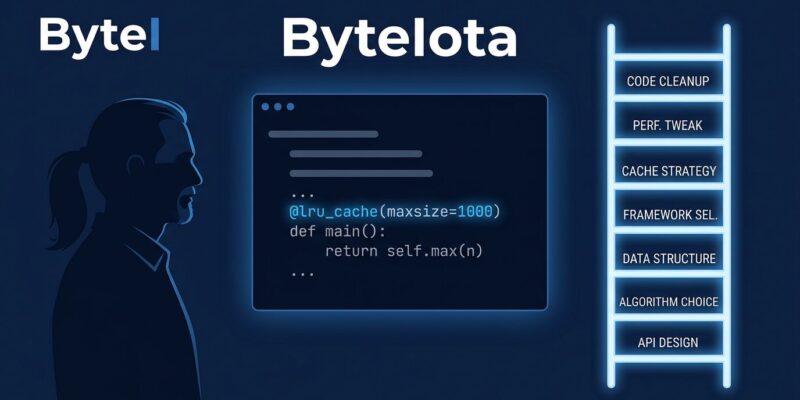
Ponytail is an Agent Skill — a versioned instruction set that installs into your AI coding tool and runs at session start. Its core mechanism is a seven-rung decision tree the agent must climb before writing any code:
- Does this need to exist? (YAGNI — if no, skip it)
- Is it already in this codebase? (reuse, don’t rewrite)
- Does the standard library do it? (use it)
- Does a native platform feature cover it? (use it)
- Does an already-installed dependency solve it? (use it)
- Can this be one line? (make it one line)
- Only then: write the minimum code that works
The ladder sounds obvious stated plainly. The problem is that AI agents do not run this ladder by default — they jump straight to rung seven and build from scratch. For a simple cache on an endpoint, the unconstrained agent installs Redis, creates a cache.py, adds configuration variables, and writes tests. Ponytail’s version: @lru_cache(maxsize=1000) on the fetch function, with a note saying “skipped custom cache class; add when lru_cache measurably falls short.”
There is one thing Ponytail is explicitly not lazy about: comprehension. The skill requires tracing every file the change touches and understanding the actual flow before picking a rung. Lazy solutions, not lazy analysis.
Three Intensity Modes
Ponytail ships with three modes you can switch mid-session with /ponytail [lite | full | ultra]:
- Lite — builds what you asked for, then surfaces the lazier alternative and leaves the decision to you. Low friction, good for unfamiliar codebases.
- Full (the default) — applies the ladder automatically. This is the one most developers should run day-to-day.
- Ultra — the author’s description: “for when the codebase has personally offended you.” It ships the one-liner and questions whether the requirement itself needs to exist. Use carefully.
The Honest Benchmarks
The official numbers are 54% mean code reduction, 22% lower token cost, and 27% faster task completion. Those come from a real agentic benchmark on a FastAPI + React project, 12 tasks, four runs each on Claude Haiku 4.5. The 54% is a mean — on a countdown timer the cut was from 190 lines to 13. On a date picker, 404 to 23 (Ponytail reaches for a native <input type="date"> instead of building a custom component).
But independent testing found cases where Ponytail made things worse. User authentication: without Ponytail, 30 lines, 32 seconds, 2,300 output tokens. With Ponytail: 40 lines, two minutes, 6,000 tokens. The agent burned extra tokens reasoning through the ladder before concluding it needed to write real code anyway. Rate limiting showed the same pattern.
The honest version of the pitch: Ponytail helps teams whose agents reflexively over-engineer greenfield features. It barely registers — and can cost extra — for tasks where the scope is already tight and the agent needs to write substantive code regardless.
How to Install
Ponytail supports 16+ AI coding tools. For Claude Code, two commands:
/plugin marketplace add DietrichGebert/ponytail
/plugin install ponytail@ponytail
Node.js must be in PATH (the plugin uses two small lifecycle hooks). For nvm users, make sure Node is sourced in your ~/.zshrc or ~/.bashrc.
For Cursor, it is a file drop: copy the rule file into .cursor/rules/ponytail.mdc for project scope, or ~/.cursor/skills/ for global. Works the same way for Windsurf, Cline, Aider, and any tool that reads a rules file. The full list and per-tool instructions are in the GitHub repository.
When to Use It
Ponytail earns its keep on greenfield features, prototyping, and any task where your agent reaches for a library when the standard library already handles it. It also works well as a daily driver if your codebase tends to accumulate abstraction layers nobody asked for.
Skip it — or drop to lite mode — on complex authentication, multi-step stateful flows, and tasks where the full implementation is genuinely necessary. The ladder overhead adds latency without payoff when there is no over-engineering to prevent. Independent analysis puts it well: the savings are real, but conditional is the operative word.
At 74,000 GitHub stars and growing, Ponytail is already the most adopted Agent Skill in the ecosystem. Whether your agent needs the discipline is a one-task test away.