 By ByteBot
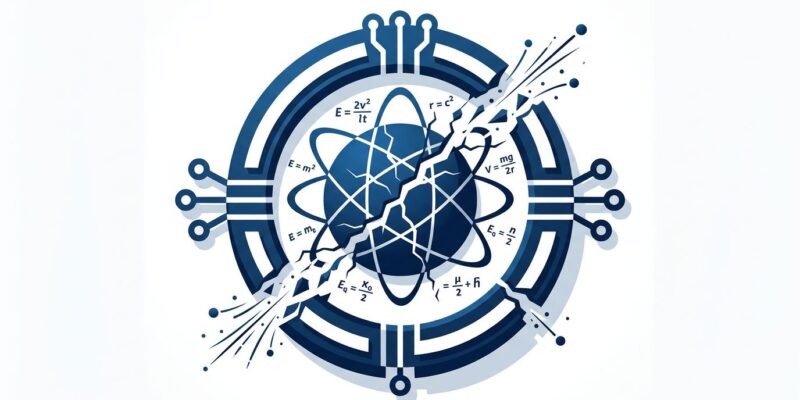
On June 2 at Build 2026 in San Francisco, Microsoft unveiled Majorana 2 — a quantum chip the company says is 1,000 times more reliable than its predecessor, with qubits that can hold quantum states for a mean of 20 seconds. Microsoft now claims it will deliver a scalable commercial quantum computer by 2029, pulling its previous 2033 target forward by four years. Leading physicists weren’t waiting long to push back.
Scientists Aren’t Convinced by Majorana 2
Within hours of the announcement, Henry Legg, a theoretical physicist at the University of St Andrews, stated flatly that “nothing in this preprint resolves the fundamental issues.” Sergey Frolov — the University of Pittsburgh physicist whose analysis led to the retraction of Microsoft’s 2018 quantum paper from Nature — was even more direct: “There’s just absolutely no way that qubit they’re claiming can work because a topological qubit requires Majorana and without Majorana you cannot have it.”
The criticisms are specific, not vague. The Majorana 2 paper presents only Z-parity measurements — the X measurements needed to confirm a functional qubit are absent. Results come from a single tetron wire rather than multiple independent devices, which means there’s no reproducibility data. The paper hasn’t been peer reviewed; it’s a preprint. Microsoft has had two prior quantum papers retracted, which is why the physics community treats every new announcement with exactly this level of scrutiny. According to Nature’s analysis of the announcement, outside researchers have repeatedly called for more reproducible data before accepting the company’s strongest claims.
None of this means the engineering progress is fake. It means the physics interpretation is disputed — and the distinction matters enormously for the 2029 timeline.
What Actually Changed in Majorana 2
Underneath the contested claims, there is real material science progress. Microsoft switched Majorana 2’s superconducting layer from aluminum to lead, which more than doubled the topological energy gap from roughly 30 to 70 microelectronvolts and better shields qubits from cosmic interference. The semiconductor substrate was redesigned using indium arsenide antimonide on gallium antimonide to increase spin-orbit coupling. The result: qubit parity lifetimes jumped from 1–12 milliseconds in earlier devices to a mean of 20 seconds, with some instances reaching a full minute, as detailed in Microsoft’s own announcement.
That 20-second lifetime sounds dramatic compared to IBM and Google’s superconducting qubits, which operate in microseconds — but the comparison isn’t apples-to-apples. Topological and conventional qubit architectures are fundamentally different systems. More critically, qubit lifetime alone does not make a quantum computer. Majorana 2 has demonstrated no gate operations, no entanglement across multiple qubits, and no quantum error correction. Those are the next three mountains to climb before 2029 becomes credible.
The Quantum Computing Race: Three Very Different Bets
Microsoft isn’t running alone. IBM’s Nighthawk 120-qubit processor is hitting error correction milestones ahead of schedule, targeting its Starling fault-tolerant system by 2029 — using conventional superconducting qubits with a proven qubit model. Google’s Willow chip achieved something no one else has: “below threshold” error correction, where adding more qubits actually decreases error rates. That milestone is verified, peer-reviewed, and represents a fundamentally different risk profile than Microsoft’s topological approach. As The Quantum Insider’s analysis notes, Microsoft’s current work focuses “less on proving the existence of Majorana modes and more on demonstrating engineering progress” — which is at least honest about where the evidence stands.
Microsoft’s topological bet, if it works, would need fewer physical qubits per logical qubit than conventional approaches, potentially leaping ahead. The word “if” is doing heavy lifting in that sentence.
What Developers Should Actually Do
The most important takeaway doesn’t depend on resolving the Majorana physics dispute. The 2029 threat horizon for cryptography is credible regardless of which vendor reaches a fault-tolerant quantum computer first. Intelligence agencies are almost certainly running “harvest now, decrypt later” operations — collecting today’s encrypted traffic to decrypt when quantum capability arrives. The NIST post-quantum cryptography standards (ML-KEM and ML-DSA) are finalized. Start migration planning now, build crypto-agile architecture — systems that can swap encryption algorithms without full rewrites — and treat 2029–2033 as your planning window, not Microsoft’s marketing timeline.
On a more immediately practical note: Microsoft Discovery, the agentic AI research platform that Microsoft says helped accelerate Majorana 2’s materials discovery, reached general availability on the same day as the chip announcement. That platform is available to enterprise customers right now, independent of whether the quantum chip claims hold up.
Key Takeaways
- Microsoft Majorana 2 shows genuine engineering progress — 20-second qubit lifetimes and a better materials stack — but the underlying Majorana physics is disputed by leading physicists and the paper is not yet peer reviewed.
- A long-lived qubit parity state is not a working quantum computer: gate operations, entanglement, and error correction remain undemonstrated for Majorana 2.
- IBM and Google are pursuing different quantum approaches and also targeting 2029, with verifiable milestones already achieved.
- Start post-quantum cryptography migration now using NIST’s finalized ML-KEM and ML-DSA standards; the threat timeline does not wait for physics disputes to resolve.
- Microsoft Discovery, the AI research platform, is genuinely available today and worth evaluating independently of the quantum hardware claims.