AI coding agents give different results every time. Ask Claude Code or Cursor to implement a feature, and the next run might skip tests, change file organization, or write PR descriptions that violate team standards. This probabilistic behavior works for solo exploration but breaks down in production environments where consistency matters. Stripe solved this problem and now ships 1,300 AI-generated pull requests weekly using structured workflows. The tool that makes this possible just went open-source.
What AI Coding Harnesses Are
A harness is the complete infrastructure that governs how an AI agent operates—the constraints, tools, guardrails, feedback loops, and observability layers that wrap around the model. The formula is simple: Agent = Model + Harness. You do not control the model. You control everything else.
The term “harness engineering” entered mainstream use in January 2026. If 2025 was the year AI agents proved they could write code, 2026 is the year developers learned the agent is not the hard part. The harness is.
This is not a new concept rebranded. It is borrowed from software testing, where harnesses (test fixtures) create scaffolded environments that control execution. AI agents without harnesses are like unit tests running in production environments—inconsistent, unpredictable, and risky. Harnesses enforce structure.
How Archon Makes AI Coding Deterministic
Archon is an open-source workflow orchestration platform that wraps AI coding agents in YAML-defined workflows. Instead of prompting Claude Code directly and hoping for consistent behavior, you define a workflow: planning, implementation, testing, review, approval gates, and PR creation. The AI still writes the code, but the structure is deterministic. Same workflow, same sequence, every time.
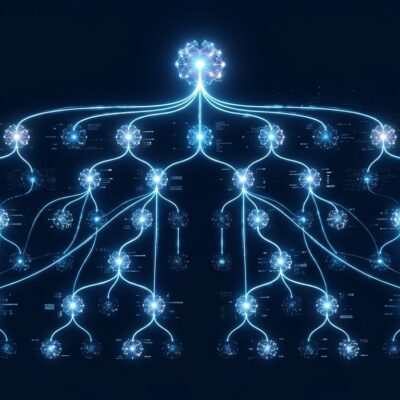
Workflows are directed acyclic graphs composed of four node types:
- AI-powered nodes: Use prompts to invoke reasoning (analyze requirements, write code, generate PR descriptions)
- Deterministic nodes: Execute scripts or git operations (run tests, lint code, commit changes)
- Looping nodes: Iterate until conditions are met (keep running tests until they pass)
- Interactive nodes: Pause for human approval at critical checkpoints
The hybrid design mixes AI intelligence with deterministic validation. AI generates the code. Deterministic nodes enforce quality gates. Loops persist until success. Humans approve before deployment. This is not constraining AI creativity. This is channeling it into reliable production workflows.
Archon underwent a complete rewrite announced April 7, 2026—four days ago—transforming from a Python task manager into a TypeScript workflow engine. The project is trending #2 on GitHub with 15,600 stars and explosive daily growth. The timing is not coincidental. Teams using AI coding agents hit the consistency wall and need solutions now.
Real-World Proof: Stripe Ships 1,300 PRs Weekly
Stripe merges over 1,300 pull requests weekly that contain zero human-written code. These PRs are produced by “Minions,” Stripe’s internal coding agents, which run completely unattended using a harness architecture. The system uses an open-source agent harness called Goose, forked and adapted to Stripe’s infrastructure.
The design principles are simple: hybrid orchestration (deterministic guardrails with agentic flexibility), curated context (feed agents the right information without overwhelming them), fast feedback loops (hard limits on iteration), and human review (all changes are reviewed, none are manually written). Each Minion runs in an isolated environment, cannot touch production systems, cannot push directly to main, and operates within a defined scope. When the agent finishes, the environment is inspected, the diff is extracted, and a PR is opened automatically.
This is not experimental. This is production-grade AI coding at enterprise scale, validated weekly with over 5,000 merged PRs per month.
Harness Quality Matters More Than Model Selection
Two teams using the same Claude or GPT model can see task completion rates of 60% versus 98% based entirely on harness quality. The gap between available models is narrowing—Anthropic Claude, OpenAI GPT, and Google Gemini are converging in capability. The gap between harness quality across teams is widening. In 2026, harness design is the differentiator.
Pull request acceptance rates validate this. For maintenance tasks like documentation, CI config, and build scripts, well-harnessed AI agents achieve 74-92% acceptance. For complex tasks like features, bug fixes, and performance optimizations, acceptance drops to 35-65%. The harness determines whether you land closer to 35% or 65%.
OpenAI’s harness engineering experiment built a production application with over one million lines of code where zero lines were written by human hands. The secret was not a better model. The secret was structured context and deterministic workflows. Harness quality beats model selection when both are deployed at scale.
When to Use Harnesses vs Free Agents
This is not a binary choice. You need both.
Use harnesses for production workflows where repeatability is required, team environments where consistency across developers matters, and multi-step processes that span planning, implementation, testing, and deployment. Use harnesses when onboarding new developers who need workflows that codify best practices. Use harnesses when compliance and governance require auditability.
Use free agents for solo exploration where speed trumps structure, prototyping where flexibility is valuable, one-off tasks where harness setup overhead is not worth it, and learning experiments where you want to observe agent reasoning without constraints.
Most teams adopt a hybrid approach: free agents for exploration and discovery, harnesses for production deployment. This mirrors the manual testing versus automated testing split. You need both, but automated scales better for production.
Getting Started with Archon
Archon ships with 17 default workflows including issue fixing, feature development, PR review, refactoring, and architectural improvements. Installation takes under five minutes:
curl -fsSL https://archon.diy/install | bash
archon --version
cd your-project
archon init
archon run workflows/fix-bug.yml
Workflows are YAML files committed to your repository, version-controlled alongside your code. When a new developer joins the team, they execute workflows without understanding individual steps. When requirements change, you update the YAML file. When compliance audits ask “how did this code get deployed,” you show the workflow definition.
This democratizes what Stripe, OpenAI, and other AI-forward companies built internally. You do not need Stripe-scale infrastructure to get Stripe-level AI coding reliability. You need Archon.
Key Takeaways
Harness engineering is not hype. It is validated at scale by Stripe (1,300 PRs weekly), OpenAI (1 million lines of code), and acceptance rate data showing 40-point gaps between teams using identical models. The discipline emerged in 2026 because AI coding agents matured to production readiness, and teams hit the consistency wall.
Archon is the open-source tool that makes harness engineering accessible. Define workflows as YAML files, wrap AI agents in deterministic sequences, and deploy code with production-grade reliability. Choose harnesses for production, free agents for exploration, and adopt hybrid workflows for maximum leverage.
The rewrite four days ago, the GitHub trending position, and the 15,600 stars signal that the developer community recognizes the need. AI agents can write code. Harnesses make them do it reliably. That shift defines 2026.